

What Makes a School Shoe Comfortable? The Parent's Guide to All-Day Support
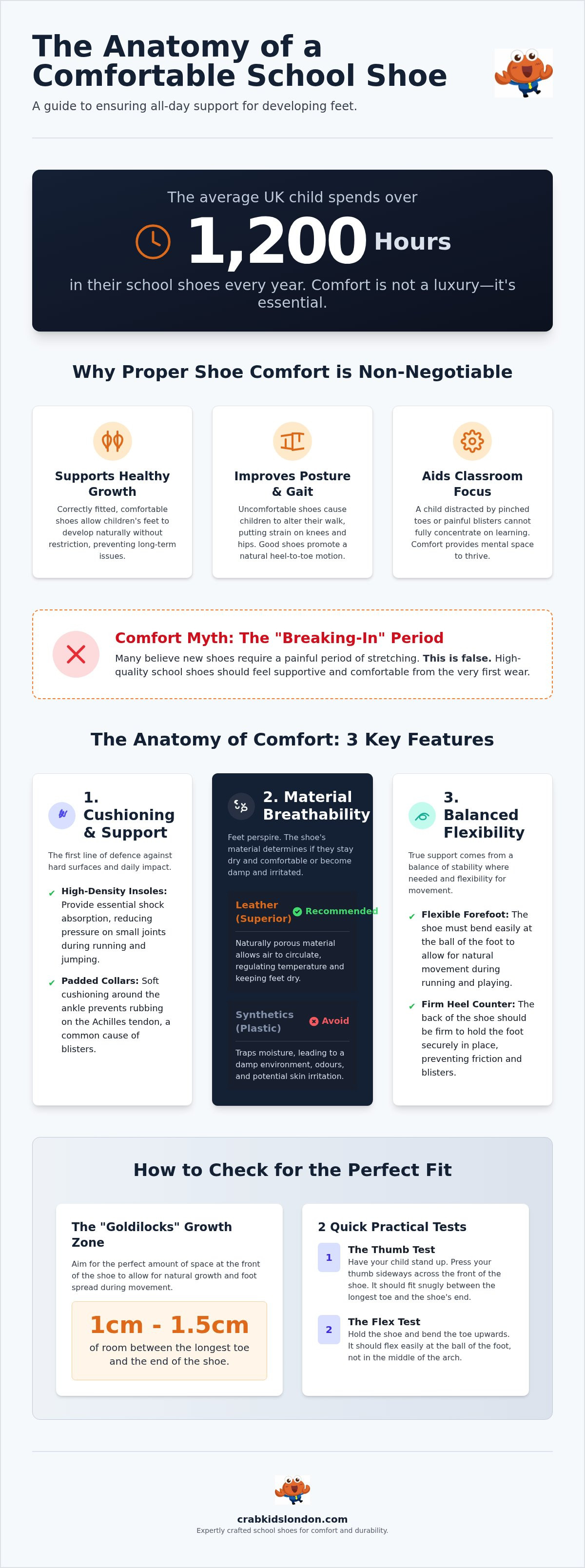
Did you know that the average UK child spends approximately 1,200 hours in their school shoes every single year? That is a staggering amount of time for developing feet to be encased in leather and rubber. It's no surprise that comfort remains the primary driver for parents during the back-to-school season. Most families have faced the frustration of "pinched" toes or the inevitable blisters caused by stiff, unforgiving heel counters that make the walk to class a struggle.
We agree that your child's footwear shouldn't require a painful breaking-in period or feel like a heavy weight on their feet. Understanding exactly what makes a school shoe comfortable allows you to bypass synthetic, sweaty materials and clunky designs that hinder movement. This guide provides a clear look at the structural features and material choices that ensure all-day support. We'll examine how flexible soles, breathable leather, and precision fit work together to protect healthy foot development whilst surviving the daily rigours of the playground.
Key Takeaways
- Understand why the 1,200 hours children spend in school shoes annually makes proper support vital for healthy development.
- Identify what makes a school shoe comfortable by looking for high-density cushioned insoles and breathable natural linings.
- Apply the "Goldilocks zone" for fit by ensuring 1cm to 1.5cm of toe room and prioritising width over length alone.
- Perform the 'Thumb Test' and 'Flex Test' to ensure shoes bend correctly and provide immediate comfort without a breaking-in period.
- Keep leather uppers supple and resilient through regular maintenance to preserve flexibility for the entire school year.
Why School Shoe Comfort is Essential for Healthy Development
A typical UK child spends roughly 1,200 hours in their school shoes every year. This is significantly more time than they spend in their favourite trainers or weekend boots. Because children's feet are still developing, the physical impact of their daily footwear choice extends far beyond the playground. When considering what makes a school shoe comfortable, we must look at how the shoe supports the body's natural movement. Uncomfortable shoes aren't just a minor nuisance; they can lead to long-term issues like poor posture or permanent changes in gait.
If a shoe is too stiff or poorly shaped, the foot cannot roll naturally from heel to toe. To avoid pain, a child might start walking with their feet turned out or taking shorter, staggered steps. These compensations put unnecessary strain on the knees and hips. There is also a psychological element to consider. A child distracted by a stinging blister or a pinched toe cannot focus entirely on their schoolwork. Comfort provides the mental space needed for learning and play.
Many parents believe that a painful "breaking in" period is a rite of passage for new shoes. This is a myth that often leads to unnecessary suffering. High-quality footwear should feel supportive and easy to wear from the very first day. If a pair requires weeks of plasters and "stretching out" to become wearable, it likely lacks the essential structural features required for healthy growth.
The Impact of Weight on Growing Feet
Heavy shoes cause fatigue. Younger children in particular have a less developed walking pattern, and adding significant weight to their feet can cause them to trip or drag their heels. Choosing lightweight materials is essential. At Crabkids, we prioritise shoes that offer a sturdy exterior whilst remaining light enough to allow for agile movement. This ensures that the final whistle of the day doesn't find your child exhausted simply from carrying the weight of their footwear.
Support vs. Restriction: Finding the Balance
There is a common misconception that a shoe must be stiff to be supportive. In reality, true support comes from a balance of stability and flexibility. A shoe needs a flexible forefoot to allow the toes to bend naturally amongst active kids during running and jumping. Conversely, the heel counter must be firm enough to keep the foot in place. This prevents the friction that causes blisters without restricting the foot's natural range of motion.
The Anatomy of a Comfortable School Shoe: 3 Key Features
Selecting footwear based on style alone often leads to discomfort by the second period. When parents ask what makes a school shoe comfortable, the answer lies within the hidden structural layers that support a child's foot through hours of standing and walking. A well-engineered shoe prioritises three specific areas: internal cushioning, natural breathability, and adaptive flexibility. These elements work together to ensure the shoe remains a help rather than a hindrance during the school day.
Cushioned insoles are the first line of defence against hard surfaces. High-density foam or padded leather insoles provide essential shock absorption, reducing the pressure on small joints. This internal support is complemented by padded collars. These soft cushions around the ankle prevent the stiff edges of the shoe from rubbing against the Achilles tendon; a common cause of the painful blisters that often sideline active children. Finally, a shoe must move with the foot. Flexible soles ensure the shoe bends at the ball of the foot, which prevents the arch from straining during natural movement.
Breathability: Why Leather is the Superior Choice
Classrooms can become warm, and feet naturally perspire during the day. Leather is a naturally porous material that allows air to circulate, effectively regulating the temperature inside the shoe. This natural breathability is what keeps feet dry and comfortable even during long afternoons. In contrast, synthetic or "plastic" alternatives trap moisture, creating a damp environment that leads to odours and skin irritation. Opting for leather school shoes for boys ensures they stay cool whilst focusing on their lessons rather than their feet.
Shock Absorption for the Playground
The playground is where school shoes face their toughest test. Whilst the upper provides the formal look, the midsole provides the function. This layer is responsible for dampening the force of every jump, sprint, and sudden stop. Rubber outsoles are particularly effective on hard UK playgrounds, providing both bounce and reliable grip on damp tarmac. Shock absorption is the capacity of the shoe's sole to dampen the impact energy generated when a child's foot hits the ground during high-energy activities. This protection is vital for preventing the "heavy leg" feeling that children often complain about after a busy day of play.
If you are searching for a pair that balances these technical features with a classic silhouette, you can browse our durable girls' school shoes to find a reliable partner for the school year.
Fit and Width: The Secret Ingredients of Comfort
Most parents focus on length, but width is the true determinant of a pain-free school day. If a shoe is too narrow, it compresses the metatarsal bones, leading to aching feet by lunchtime. Finding what makes a school shoe comfortable requires looking for the "Goldilocks zone" of growing room. This is typically between 1cm and 1.5cm of space at the end of the longest toe. This gap isn't just for growth; it provides the necessary clearance for the foot to elongate naturally as your child walks.
Identifying a poor fit early prevents long-term discomfort. Look for red marks on the skin or indentations on the bridge of the foot after a day of wear. If you notice your child "scrunching" their toes or complaining of "tightness" despite having length at the front, the width is likely insufficient. For a precise fit, we recommend using our shoe size guide to measure both length and circumference accurately at home. Getting this right ensures the shoe supports the foot without restricting it.
The Importance of a Wide Toe Box
A child's foot doesn't just sit still; it expands and "splays" with every step to maintain balance. Fashionable school shoes often feature tapered, pointed toes that cramp this natural movement. This can lead to misaligned toes and poor stability during physical activity. A rounded, spacious toe box allows the toes to spread out, supporting natural foot growth and providing a more stable base for running and jumping. This structural choice is a vital component in protecting the foot's natural shape amongst active children.
Adjustable Fastenings for a Custom Feel
No two feet are identical in volume. Some children have high insteps, whilst others have narrow heels. Adjustable fastenings are a final piece of the puzzle in what makes a school shoe comfortable for every child. Rip-tape straps are excellent for quick adjustments and accommodating different foot volumes, making them a favourite for younger years. Laces, however, offer the highest level of tension control for a truly bespoke feel. Selecting boys' school shoes with robust fastenings ensures the foot remains locked in place, preventing the heel from slipping and causing painful friction.
Practical Tests: How to Check Comfort Before the First Day
Understanding the theory of what makes a school shoe comfortable is the first step, but verifying these features at home requires a methodical approach. Children often provide unreliable feedback during a fitting, frequently choosing a pair based on a decorative detail rather than the internal support. By performing a few objective tests, you can ensure the shoes will provide the necessary comfort from the first morning bell. These checks help identify structural flaws that might lead to pain after several hours of wear.
Start with these four essential checks to confirm the fit and function:
- The Thumb Test: Whilst your child is standing, press down at the end of the shoe. There should be a gap of roughly 1cm to 1.5cm between the longest toe and the front of the shoe to allow for natural movement.
- The Flex Test: Hold the shoe and bend it. It must flex easily at the ball of the foot, mirroring the natural hinge of the toes. If the shoe bends in the middle of the arch, it lacks the necessary support.
- The Walking Test: Observe your child walking on a hard surface. Listen for a "clumping" sound, which indicates a heavy or stiff sole, and watch for any signs of the foot slipping out of the heel.
- The Socks Check: Always conduct fittings whilst your child is wearing the correct school socks. Thicker cotton socks can significantly change how the shoe feels compared to thin trainer liners.
Observing Your Child's Movement
Static fitting only tells half the story. Encourage your child to hop, skip, and run during the trial to test real-world comfort. Look closely for heel slippage; even a minor lift can lead to friction blisters during the walk to school. Similarly, check for "gapping" at the sides of the shoe. Excessive space here suggests the shoe is too wide, which forces the child to "grip" with their toes to keep the shoe on, leading to premature muscle fatigue.
The Afternoon Fitting Rule
Feet naturally swell throughout the day, often becoming slightly larger by the afternoon. Conducting a fitting later in the day provides a more accurate representation of how the shoe will feel during the final periods of school. When measuring in the summer, remember to account for the thicker hosiery used in colder months. Ensuring the shoe accommodates this extra volume is a key part of what makes a school shoe comfortable all year round. You can learn more about how school shoe fit affects durability to ensure your investment lasts.
Ready to find a pair that passes every test? Explore our latest collection of durable leather school shoes and give your child the support they need for the year ahead.
Maintaining Comfort: Ensuring Your Shoes Stay Soft All Year
Buying a high-quality pair of shoes is only the first step in protecting your child's feet. Even the most premium footwear requires consistent attention to preserve its original feel and flexibility. Since leather is a natural, porous material, it reacts to the environment. In the UK, shoes often get soaked during the walk to school or whilst playing on damp grass. If they dry too quickly near a radiator, the leather fibres shrink and harden. This transition makes the upper brittle and stiff, which is a common cause of new discomfort in a previously perfect pair.
To maintain the "bendy" quality required for active movement, always dry wet shoes at room temperature. Stuffing them with newspaper helps absorb moisture from the inside without stripping away natural oils. Additionally, the underfoot cushioning we discussed earlier can flatten over months of heavy use. Replacing worn-out insoles is a simple way to restore shock absorption and maintain the internal support that defines what makes a school shoe comfortable for the long term.
The Role of Leather Conditioning
Regular conditioning is the secret to preventing the leather from becoming "boardy" or stiff. Using a leather cleaning lotion does more than just remove dirt; it feeds the material to keep it supple. This prevents the deep cracking that often occurs at the natural flex points of the foot. When leather cracks, it can create sharp internal edges that rub against the skin. For more tips on preservation, our expert guide to kids' shoe care products offers a complete maintenance routine for busy parents.
When Comfort Fades: Knowing When to Replace
No shoe lasts forever, and knowing when the internal structure has failed is vital for foot health. Check the soles regularly for uneven wear. If the heels are worn down on one side, it can force the foot into an unnatural position, compromising the gait support we established as a priority. Look for "collapsed" arches or internal linings that have thinned out, as these are clear signs that the shoe's protective qualities have diminished.
The most important factor in what makes a school shoe comfortable is the available space. A shoe that was perfect in September might be dangerously restrictive by March. If the leather feels tight across the bridge or the toes are touching the end, the shoe is too small. Forcing a growing foot into a cramped space is the quickest way to cause lasting damage, so regular size checks remain your best tool for ensuring all-year comfort.
Invest in Your Child's Daily Comfort
Choosing the right footwear is a commitment to your child's physical health and classroom focus. By prioritising a wide toe box, flexible soles, and natural leather, you address the core of what makes a school shoe comfortable for the 1,200 hours they spend in them each year. Remember that a proper fit requires regular checks and simple maintenance to ensure the leather remains supple and the support stays intact through every playground sprint.
At Crabkids London, we specialise in shoes designed specifically for the rigours of the active UK school day. Our collection features high-quality leather construction for natural breathability and resilience against daily wear and tear. We provide fast UK-wide delivery to help you prepare for the term ahead with quiet confidence and professional reliability.
Shop our range of comfortable, durable leather school shoes at Crabkids London and ensure your child starts every morning on the right foot.
Frequently Asked Questions
Should school shoes be tight when you first buy them?
School shoes should never feel tight or restrictive when first purchased. Whilst leather uppers will soften slightly over time, the initial fit must provide enough room for the foot to sit naturally. A tight shoe compresses the metatarsals and restricts blood flow, causing pain before the first school bell rings. Look for immediate comfort rather than hoping a pair will stretch out, as this prevents the need for a painful breaking-in period.
How can I make my child's school shoes more comfortable?
You can improve comfort by ensuring your child wears high-quality cotton-rich socks to wick away moisture and reduce friction. Adjusting the tension of the laces or rip-tape straps throughout the day can also accommodate natural foot swelling. Additionally, applying a leather conditioner keeps the material supple, ensuring the shoe continues to flex with the foot's movement. These small maintenance steps are essential to what makes a school shoe comfortable for the entire academic year.
Is patent leather less comfortable than plain leather for school?
Patent leather is generally slightly stiffer than plain leather because of its protective coating. This finish restricts the natural pores of the leather, which can make the shoes feel warmer and less flexible during the first few weeks of wear. For children with sensitive skin or those who require maximum breathability, high-quality plain leather is usually the superior choice for immediate, all-day comfort during long hours in the classroom.
Do memory foam insoles make a difference in school shoes?
Memory foam provides a soft initial feel, but high-density foam or padded leather insoles offer better long-term support. Memory foam can sometimes bottom out under a child's weight, losing its ability to absorb shock during active play. For the best results, look for insoles that offer consistent cushioning across the entire footbed. This ensures that the shock-absorbing properties remain effective throughout the 1,200 hours a child spends in their shoes annually.
How much room should be at the front of a school shoe?
There should ideally be between 1cm and 1.5cm of space at the front of the shoe. This "Goldilocks zone" allows the foot to elongate naturally whilst walking and provides enough room for growth without causing the foot to slide. If there is less than 1cm, the toes will likely feel pinched. If there is more than 1.5cm, the shoe becomes clunky and may cause your child to trip during playground activities.
Why does my child get blisters even with 'comfortable' shoes?
Blisters are often caused by the foot moving too much inside the shoe, creating friction against the skin. Even if a shoe has soft padding, a width that is too wide or a heel counter that is too loose will cause the foot to lift and rub. Ensure the fastenings are secure and check that there is no excessive gapping at the sides, as a stable fit is the best way to prevent blisters.
Can I use insoles to make a slightly large shoe more comfortable?
You can use a half-insole or a full cushioned insole to reduce the internal volume of a shoe that feels slightly loose. This can help prevent the heel from slipping and make the shoe feel more secure. However, this is a solution for shoes that are too wide or deep, not shoes that are too long. An insole won't fix a shoe that causes your child to trip due to excessive length.
What is the best material for comfortable school shoes?
Natural leather is the best material for comfortable school shoes because it is both durable and breathable. Unlike synthetic materials, leather adapts to the shape of the foot and allows moisture to escape, which prevents skin irritation. Its ability to flex without cracking makes it the ideal choice for active children. Choosing high-quality leather is a fundamental part of what makes a school shoe comfortable and resilient for the UK school day.