

Waterproof School Shoes UK: The Parent’s Guide to Scuff-Proof Durability
Imagine your child stepping through the school gates on a rainy Tuesday morning, only for you to realise their socks are already soaked through from a single puddle. It's a frustratingly common start to the day for many families across Britain. You shouldn't have to choose between footwear that looks smart for the classroom and shoes that actually withstand the unpredictable weather. We know how disappointing it is to invest in expensive leather only to see it covered in deep, unsightly scuffs within the first week of the autumn term.
Finding the right winter school shoes UK weather won't destroy is about more than just aesthetics; it's about comfort, health, and long-term value. This guide shows you how to select the ultimate weather-ready footwear that resists damage and keeps feet dry throughout the harshest months. We will break down the confusing terminology between water-repellent and waterproof materials, explain how modern scuff-proof technology works, and help you secure reliable shoes with fast delivery so your morning school run stays stress-free.
Key Takeaways
- Understand why water-resistant isn't the same as waterproof so you don't end up with wet socks after a rainy morning run.
- Discover how scuff-proof coatings protect premium leather from the deep scratches caused by active outdoor play.
- Use our practical checklist to inspect soles and fastenings, ensuring your child has reliable grip on icy winter mornings.
- Identify the best winter school shoes UK parents can rely on for a balance of classroom smarts and playground resilience.
- Learn simple maintenance habits that keep weather-ready footwear looking professional and performing well all year round.
Why Waterproof and Scuff-Proof School Shoes are Essential for UK Pupils
The British school run is a daily battle against the elements. Between October and March, pupils face a gauntlet of saturated pavements, deep puddles, and waterlogged school fields. Standard leather often fails because it's naturally porous; once the surface is breached, moisture seeps through to the socks. This leads to more than just physical discomfort. Wet feet in the classroom can ruin a child's concentration and create hygiene issues like fungal infections or persistent odours. Choosing high-quality winter school shoes UK parents can trust ensures that these external factors don't disrupt the learning day.
The Science of Dry Feet in the Playground
Keeping feet dry involves a balance of moisture exclusion and vapour escape. If a shoe is completely sealed with non-breathable plastic, internal perspiration builds up, leaving feet just as damp as if they'd stepped in a puddle. Modern footwear construction utilises advanced waterproof fabrics and treated leathers that block liquid water whilst allowing heat to exit. Seams are often a weak point where water ingress occurs, so look for reinforced stitching or sealed edges. These features are non-negotiable during the autumn and spring terms when playground surfaces rarely have time to dry out between breaks.
Maintaining a Smart Appearance Amongst Active Play
Scuffing is the primary reason parents replace school shoes before the child has outgrown them. When the top layer of leather is scraped away, the underlying fibres are exposed to the elements. This leads to rapid material degradation and allows water to soak into the shoe's core more easily. High-strike zones, specifically the toe box and the heel, take the brunt of the impact during football matches or games of tag. Choosing shoes with scuff-resistant coatings or reinforced bumpers provides a physical barrier against abrasive playground surfaces.
There's also a psychological element to consider. Looking smart helps children feel prepared and professional within their school environment. Shoes that remain tidy despite active play reduce the morning stress of trying to polish out deep gouges. Regular maintenance with a leather shoe cleaning lotion can further extend this lifespan, keeping the protective barrier intact. While the initial price of weather-ready footwear may be higher, the long-term cost-per-wear is significantly lower. You won't find yourself buying a replacement pair in February because the first set has literally fallen apart.
Understanding Materials: Leather, Patent, and Scuff-Resistant Coatings
Selecting the right materials for winter school shoes UK pupils need involves balancing natural resilience with modern technology. Full-grain leather is the gold standard for durability. It uses the strongest part of the hide, maintaining its structure even after months of heavy use. Corrected leather, while often more uniform in appearance, has been buffed to remove imperfections and then coated. For the British winter, high-quality corrected leathers often perform exceptionally well because they provide a smoother surface for water-repellent treatments to bond with.
Patent leather is a popular choice for its high-shine finish, but parents often wonder about its practical limits. The glossy surface is essentially a plastic coating, making it highly water-resistant and easy to wipe clean after a muddy walk. However, extreme cold can sometimes cause lower-quality patent finishes to crack. If you choose patent, ensure it's a premium version designed to remain flexible. Synthetic alternatives often mimic the look of leather but rarely offer the same longevity. Synthetics tend to peel or crack at the flex points of the foot, whereas genuine leather moulds to the child's foot over time.
The Technology Behind Scuff-Proof School Shoes
Modern scuff-resistant footwear doesn't rely on the leather alone. It utilises micro-coatings that create a sacrificial barrier against abrasive playground surfaces. These coatings are bonded to the high-strike zones, such as the toe box and heel, preventing the underlying leather from being gouged during active play. Integrated rubber toe-bumpers provide an additional layer of physical protection. These features are essential for winter longevity, as they stop the material degradation that eventually leads to water ingress. Shoes with these built-in defences require significantly less daily polishing to stay looking smart for the classroom.
Leather Care for Maximum Water Protection
Even the best materials require occasional maintenance to keep their weather-ready properties. Quality leather contains natural oils that help to repel light moisture, but these oils can dry out over time due to repeated soaking and drying cycles. Using a leather shoe cleaning lotion helps to restore these oils and maintain the material's integrity. This simple habit prevents the leather from becoming brittle and ensures the shoes remain comfortable throughout the term. For parents who value reliability, choosing shoes from a practical footwear specialist ensures you start with a product designed for the rigours of the UK climate.
Waterproof vs Water-Resistant: Which Level of Protection Does Your Child Need?
Understanding the technical difference between water-resistant and waterproof is vital when choosing winter school shoes UK pupils need for the full academic year. Many parents use these terms interchangeably, but they offer very different levels of protection. Water-resistant shoes are generally treated with a surface coating that makes liquid bead off the leather. This is perfectly adequate for a brisk walk on dry pavements during a light drizzle. However, these coatings don't stop water from entering through the stitching or the gap around the tongue if the shoe is submerged in a deep puddle.
For a truly waterproof result, the construction must be more robust. This involves two critical features:
- Gusseted Tongues: The tongue material is folded and attached to the sides of the eyelets, preventing water from pouring in over the top of the foot.
- Sealed Seams: Manufacturers use waterproof tape or liquid sealant on the inside of the shoe to cover needle holes made during assembly.
In technical terms, footwear performance is sometimes measured by its hydrostatic head rating. This value indicates the amount of water pressure a material can withstand before it begins to leak. While junior shoes rarely display these numbers as prominently as mountain gear, the principle remains the same. A higher level of engineering is required to keep feet dry during a heavy downpour compared to a short walk in the rain.
Evaluating the Walk to School
Deciding which level to buy depends entirely on your child's daily environment. If the walk to school is short and stays on well-maintained paths, a high-quality water-resistant leather shoe is often sufficient. If your child's route involves muddy verges, or if they spend every break time playing on damp grass, full waterproofing is essential. Most UK schools encourage outdoor play in almost all weather conditions. This means shoes are often exposed to moisture for thirty minutes or more at a time, making a total waterproof seal a much safer investment for long-term comfort.
The Breathability Trade-off
A common concern with highly protected footwear is that it might cause feet to overheat during long indoor lessons. To prevent this, look for breathable membranes that act as a one-way valve, keeping rain out whilst letting sweat escape. Pairing these shoes with quality school socks is a smart move for any parent. These socks help to wick moisture away from the skin, maintaining a dry environment inside the shoe regardless of the weather outside. This combination ensures that the robust protection required for the playground doesn't compromise comfort when the child is sitting in a warm classroom.
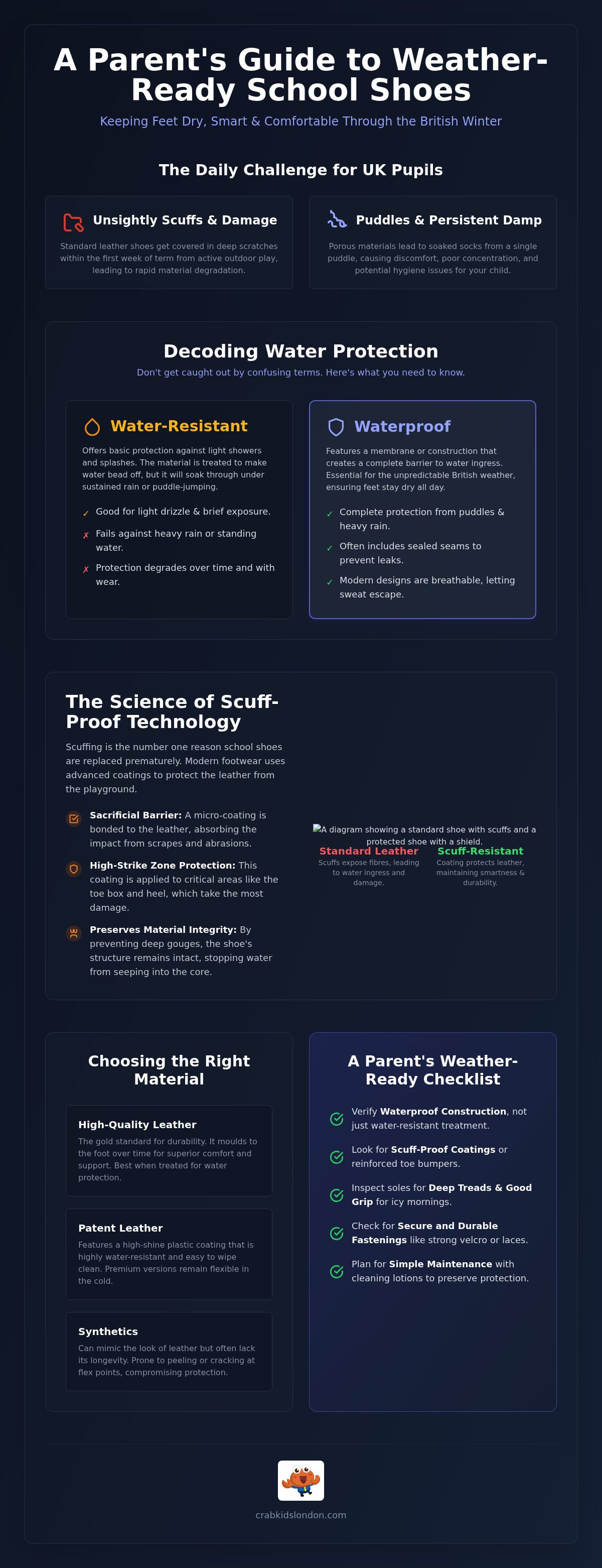
A Parent’s Checklist: Choosing and Maintaining Weather-Ready Footwear
Selecting the right winter school shoes UK weather cannot break requires a keen eye for detail beyond the initial look. The physical construction determines how well the shoe performs when the temperature drops and the rain sets in. Before you buy, run through this practical checklist to ensure the footwear is truly up to the task:
- The Sole: Look for deep treads and slip-resistant rubber. Smooth soles are a hazard on icy December mornings and wet playground leaves.
- The Fastening: Consider if laces or riptape suit your child's needs. Riptape is convenient, but laces often provide a tighter, more customisable seal against wind and rain around the ankle.
- The Weight: Durable footwear shouldn't feel like lead weights. Modern engineering allows for sturdy, weather-ready builds that remain lightweight enough for active play.
- The Flex Point: Ensure the shoe bends at the ball of the foot. If the fit is poor, the shoe will crease in the wrong place, eventually cracking the waterproof coatings.
Sizing for Longevity and Protection
Fit is a technical requirement for weather protection. When a shoe is too large, the foot slides, causing the material to bunch and crease excessively. These deep creases eventually become stress points where waterproof membranes are most likely to fail. Using a shoe size guide helps you achieve a secure heel lock, preventing internal wear and keeping the foot stable. While it is tempting to buy a size up for growing room, too much space compromises the shoe's structural support. For deeper insight, read How School Shoe Fit Affects Durability.
The Winter Morning Routine
A simple 30-second wipe each evening makes a massive difference to the lifespan of winter school shoes UK parents invest in. Winter roads are often treated with salt and grit, which are highly corrosive to leather. Removing this debris prevents the surface from drying out and cracking prematurely. If shoes get soaked, never place them directly on a radiator. High heat makes leather brittle and can damage the adhesives holding the sole in place. Instead, stuff them with newspaper and let them dry naturally at room temperature. If possible, rotating two pairs of shoes gives each pair time to fully breathe and dry out, which significantly extends their overall durability.
Invest in footwear that does the heavy lifting for you by browsing our collection of durable school shoes designed for the British climate.
How Crabkids London Combines Durability with Winter Weather Protection
Crabkids London understands that the winter school shoes UK parents choose must survive more than just a short walk to the car. We focus on Playground Proof engineering. This means every pair is built to handle the high-energy reality of school life. We use premium leather construction that remains flexible whilst resisting the moisture and grit of a typical British winter. Our commitment to professional reliability ensures your child stays comfortable from the first bell to the final whistle.
Our designs prioritise physical comfort alongside sturdiness. We include breathable linings to prevent internal dampness, paired with heavy-duty, slip-resistant soles. These soles provide the necessary grip on icy mornings and wet playground surfaces. We don't just sell shoes. We provide a reliable partner for your child's daily activity. Every pair is designed to be scuff-proof, meaning they stay looking smart for the classroom even after a morning of active play.
Built for Active Boys and Girls
Active play shouldn't be limited by footwear that can't keep up. Our range of durable boys school shoes features reinforced high-strike zones to combat the scuffing caused by football and climbing. Similarly, our girls school shoes combine smart, formal aesthetics with the same rugged durability. For a deeper look at our top recommendations for the current term, see our Durable Boys Leather School Shoes Buying Guide. We ensure that every child has access to footwear that supports their natural movement whilst providing a robust barrier against the elements.
A Complete Back-to-School Solution
We aim to alleviate parental stress by offering a streamlined shopping experience. Beyond footwear, we provide high-quality school bags designed to protect books and equipment from the rain. Our direct-to-consumer model ensures you receive professional retail standards without the typical high-street markup. This focus on value and longevity has made our designs a favourite amongst parents across the country. We do the heavy lifting by ensuring every product is ready for the rigours of the school day, backed by fast UK-wide delivery to your door.
Equip Your Child for a Successful Winter Term
Finding the right winter school shoes UK weather won't ruin is a vital step in preparing for the months ahead. By selecting footwear that balances breathable membranes with robust scuff-resistant coatings, you ensure your child stays dry and smart from September through to spring. We've explored how technical features like gusseted tongues and slip-resistant soles make a tangible difference during wet playground breaks. These details aren't just extras; they're essential for maintaining hygiene and concentration in the classroom.
Crabkids London is committed to providing durable leather construction that stands up to the rigours of the school day. Our footwear is specifically designed for active kids, ensuring longevity without sacrificing style. Take the stress out of your morning routine with reliable shoes and benefit from fast UK delivery on all orders. Shop the 2026 Collection of Scuff-Proof School Shoes today and give your child the protection they deserve. Here's to a term filled with dry feet and confident strides.
Frequently Asked Questions
Are leather school shoes naturally waterproof?
Leather is naturally water-resistant but it isn't completely waterproof. Because leather is a porous organic material, it can eventually absorb moisture if submerged or exposed to heavy rain for long periods. To achieve true waterproof status, winter school shoes UK pupils wear need additional features. This usually includes internal membranes or specialised coatings that block liquid whilst allowing air to circulate, ensuring feet stay dry during the walk to school.
How can I make my child’s school shoes more water-resistant?
You can enhance water resistance by maintaining the leather's natural oils. Regular application of a high-quality wax polish creates a sacrificial layer that helps water bead off the surface. For even better protection, use a specialised protector spray every few weeks. This adds an invisible barrier that repels both moisture and stains. Always ensure the shoes are clean and completely dry before applying any treatments to prevent sealing in dirt or dampness.
What is the best way to clean scuff-proof school shoes?
Cleaning scuff-proof footwear is straightforward because the protective coating prevents dirt from sinking into the hide. Start by wiping away surface mud with a damp, soft cloth. For a deeper clean, use a dedicated leather shoe cleaning lotion to remove stubborn grime without damaging the scuff-resistant finish. Avoid using harsh chemical detergents or abrasive brushes. These can strip away the protective micro-coatings that keep the shoes looking smart and resilient throughout the term.
Do waterproof school shoes make children’s feet sweaty?
High-quality waterproof shoes shouldn't cause excessive sweating if they feature breathable membranes. These technical linings act as a one-way valve, letting internal moisture vapour escape whilst blocking external liquid droplets from entering. To maximise comfort, pair these shoes with moisture-wicking cotton or wool-blend socks. This combination prevents the "greenhouse effect" inside the shoe, keeping feet at a comfortable temperature during long indoor lessons and active outdoor play in the winter months.
How often should I apply protector spray to winter footwear?
Apply a protector spray every two to four weeks during the peak of winter. If the weather is particularly wet or if your child frequently walks through long, damp grass, more frequent applications may be necessary. A simple way to check is to drop a little water on the shoe's surface; if it doesn't bead and roll off, it's time for a fresh coat. Always apply the spray in a well-ventilated area for safety.
Can scuffed school shoes be repaired to look new again?
Light surface scuffs can often be disguised using a pigmented cream polish that matches the shoe's colour. However, deep gouges that have breached the leather's surface are difficult to repair fully. This is why choosing shoes with built-in scuff-resistance is a more practical approach for active children. Prevention through durable coatings and reinforced toe-bumpers ensures the footwear remains professional without the need for constant, intensive repairs or early replacement during the school year.
What should I look for in a slip-resistant sole for winter?
Look for soles made from high-quality rubber rather than hard, shiny plastics. Rubber remains flexible in cold temperatures, providing better grip on icy surfaces. The tread pattern should be deep and multi-directional, which helps to channel water away from the contact point and prevents aquaplaning on wet floors. A sturdy, textured sole is essential for winter school shoes UK children use, as it provides confidence and safety during high-energy playground games.
Is patent leather better for rain than standard leather?
Patent leather offers excellent immediate water resistance because its high-shine finish is essentially a plastic coating. Rainwater beads off the surface easily, and mud can be wiped away in seconds. However, standard leather is often more durable for long-term winter use because it's less prone to cracking in freezing temperatures. If you choose patent, ensure it's a premium, flexible version that can withstand the constant bending of the foot without the surface finish splitting.