

Signs Your Child’s School Shoes Are Too Small: The 2026 Parent’s Guide
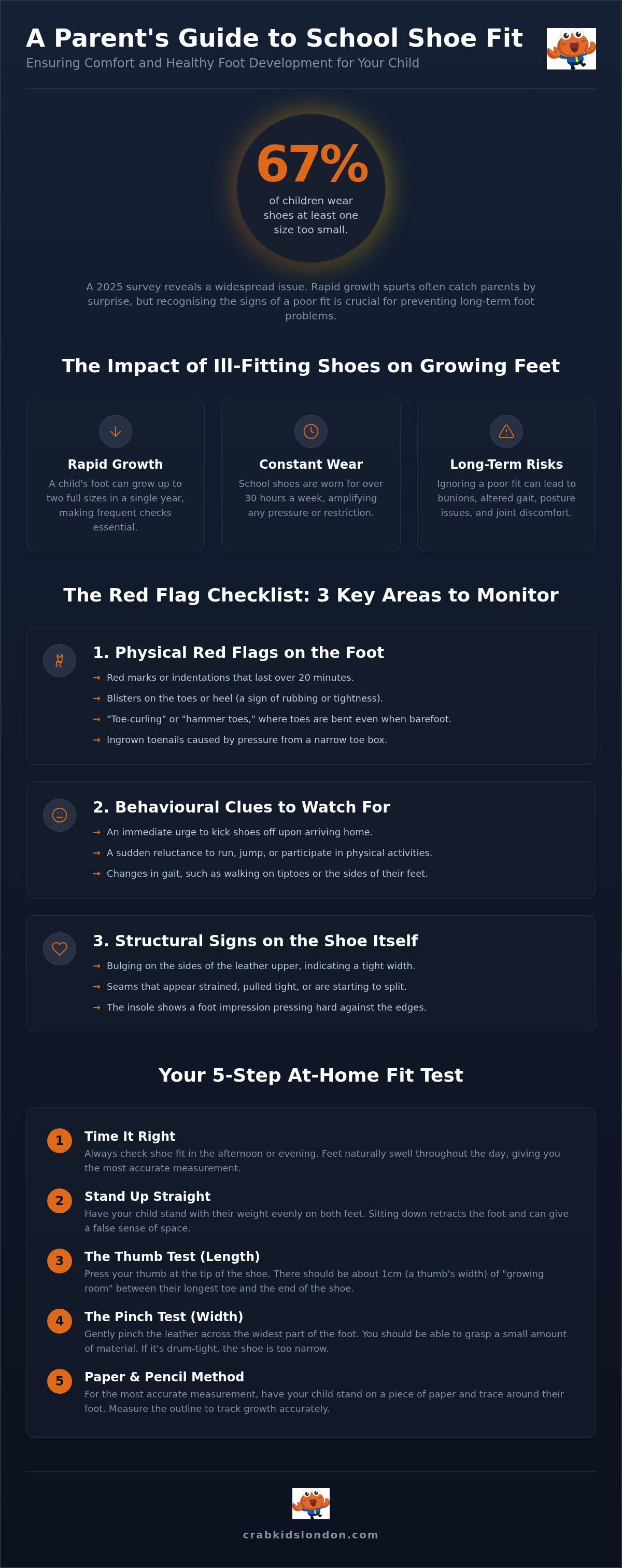
Did you know that a 2025 survey revealed a staggering 67% of children are currently wearing shoes that are at least one size too small? It's a frustrating reality for parents who invest in quality leather footwear, only to find their child has hit another growth spurt before the term is even half over. You've likely felt that familiar worry about permanent foot damage or wondered if those stiff soles just need "breaking in" rather than replacing. Recognising the signs your child's school shoes are too small shouldn't feel like guesswork, especially when younger children can't always articulate their own discomfort.
We understand that you need a reliable way to monitor fit without a professional shop on every high street. This guide provides a clear, expert-backed checklist of the physical, behavioural, and structural red flags you need to watch for. You'll gain the confidence to know exactly when to size up, ensuring your child stays active and pain-free. We'll also cover practical ways to maintain foot health whilst you wait for those essential new arrivals to land on your doorstep.
Key Takeaways
- Identify physical red flags like "shoe bite" and blisters to prevent long-term issues such as bunions or misshapen toes.
- Spot subtle behavioural changes, including a sudden reluctance to run or an immediate urge to kick shoes off upon returning home.
- Examine leather uppers for bulging or strained seams, which are reliable structural signs your child's school shoes are too small.
- Learn a simple 5-step "paper and pencil" method to measure foot length and width accurately from the comfort of your living room.
- Understand why mid-term growth spurts demand durable, high-quality leather replacements that can handle the intensity of the playground.
Understanding the Impact of Tight School Shoes on Growing Feet
Primary school children aren't just growing taller; their feet are evolving at a rapid pace. During these formative years, a child's foot can increase by up to two full sizes in a single twelve-month period. This constant expansion makes it easy for parents to miss the subtle signs your child's school shoes are too small. Unlike casual trainers worn on weekends, school shoes are high-frequency gear. They endure over 30 hours of wear every week, meaning any restriction on the foot is amplified through thousands of steps across playgrounds and corridors.
There is a common myth that leather shoes need a long period of "breaking in" before they feel comfortable. While quality leather does soften and mould to the foot over time, it should never feel painful or restrictive from day one. If a shoe feels tight across the toes or pinches at the heel, it isn't a lack of suppleness; it's a sizing mismatch. Ignoring the signs your child's school shoes are too small can lead to chronic issues like "shoe bite," bunions, or misshapen toes as the foot struggles to find space.
The Science of Rapid Foot Development
A child's foot is not a miniature version of an adult's. It is largely composed of soft cartilage that hasn't yet ossified into hard bone. This flexibility is a double-edged sword. It allows for natural growth but also makes the foot incredibly susceptible to being moulded by external pressure. Because the nerves in young feet are still developing, many children won't complain of pain even when their shoes are significantly undersized. Parents often find that growth spurts coincide with the start of the autumn term or just after the Christmas break, making regular checks essential. A foundational grasp of understanding shoe sizes helps in tracking these shifts accurately throughout the year.
Why "Making Do" Can Lead to Long-Term Mobility Issues
Attempting to "make do" until the end of term can have lasting consequences. When shoes are too tight, a child naturally alters their gait to avoid pressure points. This compensatory movement changes their posture, shifting the load onto their ankles, knees, and even their lower back. Investing in the right school shoes for growing feet ensures that their skeletal alignment remains neutral. Preventing these issues early avoids the "domino effect" of joint discomfort that can persist well into adulthood. Proper fit isn't just about current comfort; it's about protecting their future mobility.
Physical Red Flags: Identifying Discomfort on the Foot
The most reliable way to spot the signs your child's school shoes are too small is to perform a visual check immediately after they return home. By the afternoon, a child's feet have naturally swollen from a day of activity, making this the peak time for detecting pressure points. Remove their shoes and socks, then look closely for any skin indentations or discolouration. A common indicator is the "red mark test." While minor marks from a strap or seam are normal, any redness that takes longer than 20 minutes to fade suggests the shoe is exerting excessive force on the skin.
Children often develop a subconscious habit known as "toe-curling" when their footwear lacks sufficient length. They instinctively scrunch their toes to create a tiny pocket of space at the front of the shoe. If you notice your child's toes remain slightly bent or "hammered" even when they are barefoot, it's a clear signal that the toe box has become too cramped. This reflex can hide the true extremity of the foot during a quick check, so ensure their feet are fully relaxed and flat during any inspection.
The Classic Thumb Test and Beyond
To perform an accurate check for the 2026 school term, your child must be standing upright with their weight evenly distributed. When they sit, the foot retracts, giving a false sense of space. Press your thumb down at the tip of the shoe; you should feel approximately 1cm of "growing room" between the longest toe and the end of the leather. Don't forget the "pinch test" across the widest part of the foot. You should be able to pinch a small amount of leather between your fingers. If the material is pulled drum-tight across the ball of the foot, the width is insufficient.
Skin Irritation and Persistent Marks
Blisters are often misunderstood. A blister on the back of the heel usually indicates the shoe is slipping, but blisters on the pinky toe or the side of the big toe joint almost always signal a width issue. Persistent pressure in the toe box can also lead to ingrown toenails, as the nail is forced into the surrounding skin. It's important to remember that thick school socks can exacerbate these issues by taking up valuable internal volume. If you find yourself struggling to pull a sock-clad foot into the shoe, it's time to consider an upgrade. If these red flags are appearing daily, it may be time to explore durable replacement options designed for growing feet.
Behavioural Clues: When Your Child’s Actions Signal a Poor Fit
Children often lack the specific vocabulary to describe foot pressure, especially when it builds up gradually over a term. Instead of complaining, they adapt their movement. One of the most overlooked signs your child's school shoes are too small is a sudden onset of "clumsiness." Toes need space to splay to provide a stable base for the body. When they are squeezed together in a cramped toe box, balance is compromised, leading to frequent tripping or stumbling on flat surfaces. It isn't a lack of coordination; it's a lack of room.
Watch your child's walking style during the weekend or after school. You may notice them walking on the outsides of their feet or dragging their heels. This change in gait is a subconscious defensive mechanism designed to shift weight away from a pinched big toe joint or a rubbing seam. If their stride looks "stiff" or unnatural, the structural integrity of the shoe is likely no longer aligned with their foot's current shape.
The "Immediate Removal" Habit
Pay close attention to what happens the moment the school day ends. "Shoe-kicking" behaviour, where a child removes their footwear the second they sit in the car or step through the front door, is a classic red flag. While some children simply prefer being barefoot, an urgent, daily need to shed shoes suggests they've been tolerating significant restriction for hours. This discomfort can even manifest as morning school-run anxiety or stubbornness. Shoe refusal is often a primary indicator of sizing issues in younger children who cannot yet explain that their leather shoes have become restrictive.
Playground Withdrawal and Reduced Activity
A child’s activity level is a reliable barometer for fit. If your once-active child is suddenly reluctant to join in playground football or engage in high-energy tag games, their shoes may be the culprit. Tight footwear makes rapid changes in direction painful and restrictive. You might also notice a slight limp that only appears after they've been running for twenty minutes. This occurs because feet naturally swell during physical exertion, turning a "snug" fit into a painful one. For more detailed indicators, you can review our checklist on the 5 signs kids need new school shoes. Monitoring these subtle shifts in playground participation helps you catch growth spurts before they impact your child's physical development.
Assessing the Shoe: Structural Signs of a Tight Fit
Sometimes the most obvious signs your child's school shoes are too small aren't on the foot itself, but etched into the leather. High-quality leather is designed to be resilient, but it will eventually yield to the persistent pressure of a growing foot. Examine the uppers for any visible "bulging" or protrusions. If you can see the distinct shape of the small toe or the big toe joint pushing against the side of the shoe, the internal volume is exhausted. These physical distortions are reliable signs your child's school shoes are too small, often leading to fraying or split seams near the widest part of the foot where the stitching cannot hold against the tension.
Another telling sign is the condition of the heel counter. If the back of the shoe looks "crushed" or folded, it often indicates the child has been forcing their foot into a space that is too short. This "heel-crushing" destroys the shoe's support system and accelerates wear. Similarly, take a moment to inspect the soles. Excessive wear concentrated at the very tip of the toe suggests the foot is constantly pushing forward in search of space, rather than sitting centrally on the footbed.
Leather Deformation and Scuff Patterns
The location of scuffs can reveal a lot about the internal fit. While playground activity naturally leads to some wear, deep scuffs located on the very front edge of the toe box often suggest the toes are too close to the end of the shoe. Look for "rippling" or permanent waves in the leather across the top of the foot. These marks indicate the material is being stretched beyond its intended limit as the foot fights for space during movement. Using a leather shoe cleaning lotion can help you see these stress marks more clearly by removing surface dirt that might hide the early stages of structural failure.
Internal Lining and Insole Wear
Removing the shoe allows for a deeper inspection of the internal environment. Run your fingers along the inside of the toe box; you should not feel deep "toe indentations" or hollows in the lining. If the material is worn away at the toes or the heel, the shoe is likely too short, causing the foot to rub aggressively against the internal surfaces. This level of friction doesn't just cause discomfort; it significantly reduces the lifespan of the footwear. Understanding how school shoe fit affects durability is essential for parents who want to maximise their investment. If the structure is failing, it's time to browse our latest school shoe collections to ensure your child has the support they need.
Taking Action: How to Measure and Transition Sizes
Once you've identified the signs your child's school shoes are too small, immediate action is required to prevent lasting discomfort. Growth spurts don't wait for the school holidays, and neither should your replacement strategy. Measuring at home is a practical, reliable solution that avoids the stress of weekend high-street queues. To get the most accurate result, always follow the "afternoon measurement" rule. Feet naturally swell after a day of activity, so measuring later in the day ensures the new pair will remain comfortable until the final bell rings.
The 2026 Home Measurement Framework
Follow this methodical 5-step process to find the perfect fit from your living room:
- Step 1: Tape a piece of plain paper to a hard, flat floor against a wall. Avoid carpets as they can distort the measurement.
- Step 2: Have your child stand with their heel against the wall. Trace around both feet carefully; it's common for one foot to be slightly larger than the other.
- Step 3: Use a ruler to measure the distance from the heel to the tip of the longest toe in millimetres.
- Step 4: Compare your results to the Crabkids size guide to identify the correct starting size.
- Step 5: Allow for 10-12mm of "growing room" in front of the toes. Adding more than this can lead to tripping and instability.
Choosing the Right Replacement
Finding the right style is just as important as the size. If the previous pair showed signs of side-bulging or strained seams, you should specifically look for options designed for wide feet children. These styles provide extra volume across the ball of the foot without compromising on the secure fit at the heel. Whether you're browsing for boys or girls, prioritise durable leather that can withstand the rigours of the playground.
If you're planning a full kit refresh, it's also worth checking the capacity of their school bags to ensure they can accommodate PE kits and books comfortably. For urgent replacements, explore the Crabkids new arrivals. We offer fast UK-wide delivery, ensuring your child transitions into their new size before their old shoes cause any further irritation.
Protecting Your Child’s Comfort and Development
Your child's foot health is a long-term investment that requires a proactive "detective" approach. By combining physical foot checks with observations of their playground behaviour, you can spot the signs your child's school shoes are too small before discomfort impacts their concentration in the classroom. Remember that structural stress on leather uppers and sudden changes in walking style are just as telling as a red mark on the heel. Taking ten minutes to measure at home ensures their skeletal alignment remains neutral during these critical growth years.
When it's time to upgrade, choose footwear designed for the high-energy reality of childhood. We provide durable leather designs built to withstand the rigours of the playground, supported by a comprehensive online size guide for accurate home measuring. If you need a mid-term replacement, our fast UK-wide delivery ensures your child isn't left waiting in restrictive shoes.
Find the perfect fit for the new term at Crabkids London and give your child the confidence to move freely all day long.
Frequently Asked Questions
How much growing room should be in a child’s school shoe?
You should look for approximately 10mm to 12mm of space between the longest toe and the end of the shoe. This gap allows for natural foot expansion during movement and provides enough room for growth spurts without making the shoe unstable. If there is less than 5mm of space, the shoe is likely too small and will quickly begin to restrict the foot's natural development and comfort.
Can I just buy one size up to make school shoes last longer?
Buying a size too large is generally discouraged as it can lead to tripping and painful blisters. When shoes are too big, the foot slides forward, causing the toes to claw in an attempt to grip the sole. This creates an unnatural gait and can damage the internal structure of the shoe. It's better to buy the correct size and monitor for the signs your child's school shoes are too small every few months.
My child’s shoes fit in length but are tight on the sides, what should I do?
If the length is correct but the sides feel tight, you should switch to a specific wide-fit style rather than sizing up. Forcing a foot into a standard width when it requires more volume leads to bulging uppers and pinched joints. Wide-fit shoes provide the necessary room across the ball of the foot whilst maintaining a snug, supportive fit around the heel and ankle to prevent slipping.
How often should I check the fit of my child’s school shoes?
You should check the fit of your child's school shoes every eight to twelve weeks. Primary school children can go through rapid growth spurts that occur suddenly, often mid-term. Regular checks ensure you catch any restriction before it causes physical pain or skin irritation. Setting a recurring reminder in your calendar helps maintain this essential health routine throughout the academic year to ensure they always have adequate support.
Should I measure my child’s feet with school socks on?
Yes, you must always measure feet whilst wearing the socks your child intends to wear to school. School socks can be significantly thicker than casual cotton socks, taking up valuable internal volume. Measuring barefoot or with thin socks often results in a shoe that feels tight and restrictive once the full uniform is worn for a thirty-hour school week. This simple step ensures a more accurate and comfortable fit.
What happens if I ignore the signs that shoes are too small?
Ignoring the signs your child's school shoes are too small can lead to permanent skeletal changes and chronic pain. Persistent pressure on soft cartilage can cause bunions, ingrown toenails, and hammer toes. Additionally, it forces the body to compensate by altering posture, which often results in secondary discomfort in the knees and lower back. Protecting their feet now avoids a domino effect of mobility issues that can persist well into adulthood.
Is it normal for one foot to be bigger than the other?
It is perfectly normal for one foot to be larger or wider than the other. Most children have a slight discrepancy in foot size, so you should always fit the shoes to the larger foot. If the difference is significant, you can use a padded insole in the shoe of the smaller foot. This ensures both feet are adequately supported and secure without the smaller foot sliding around inside the shoe.
Can tight school shoes cause my child to trip more often?
Tight shoes are a frequent cause of increased tripping and clumsiness in the playground and corridors. Toes need to splay naturally to provide balance and a stable base for the body. When they are squeezed together in a cramped toe box, the child loses their natural stability. This makes them more prone to stumbling on flat surfaces or during high-energy games because they cannot grip the ground properly with their toes.