

School shoes that don't need polishing: how to care for them
School shoes that don’t need polishing are usually made from suede, nubuck or synthetic materials. Care for them without traditional polish: let muddy shoes dry completely, brush away loose dirt, then use a suitable waterproofing product on clean, dry shoes once a week.
They’re a practical choice for busy school mornings, but “no polish” doesn’t mean “no care”. Suede and nubuck need different treatment from smooth leather, and the wrong product or a hard scrub can damage their finish.
This guide explains how to remove everyday dirt, dry shoes carefully and protect them from wet weather. You’ll find specific care steps for suede and nubuck, as well as simple ways to keep wipe-clean styles tidy. A little regular attention makes it easier to have school shoes ready for the next day.
Key Takeaways
- Suede, nubuck and synthetic materials can avoid traditional polishing, but each needs care suited to its surface.
- Let muddy shoes dry fully before brushing away loose dirt, then use a damp cloth for remaining marks where suitable.
- Protect clean, dry shoes regularly against rain and spills, and air them in the evening to help minimise odour.
- School uniform rules can differ, so check whether your child’s school specifies a colour, finish or shoe style before choosing.
- Compare leather, synthetic and textile uppers by the cleaning routine they need, as well as how they suit everyday school wear.
3. What school shoes are made from materials that do not need polishing?
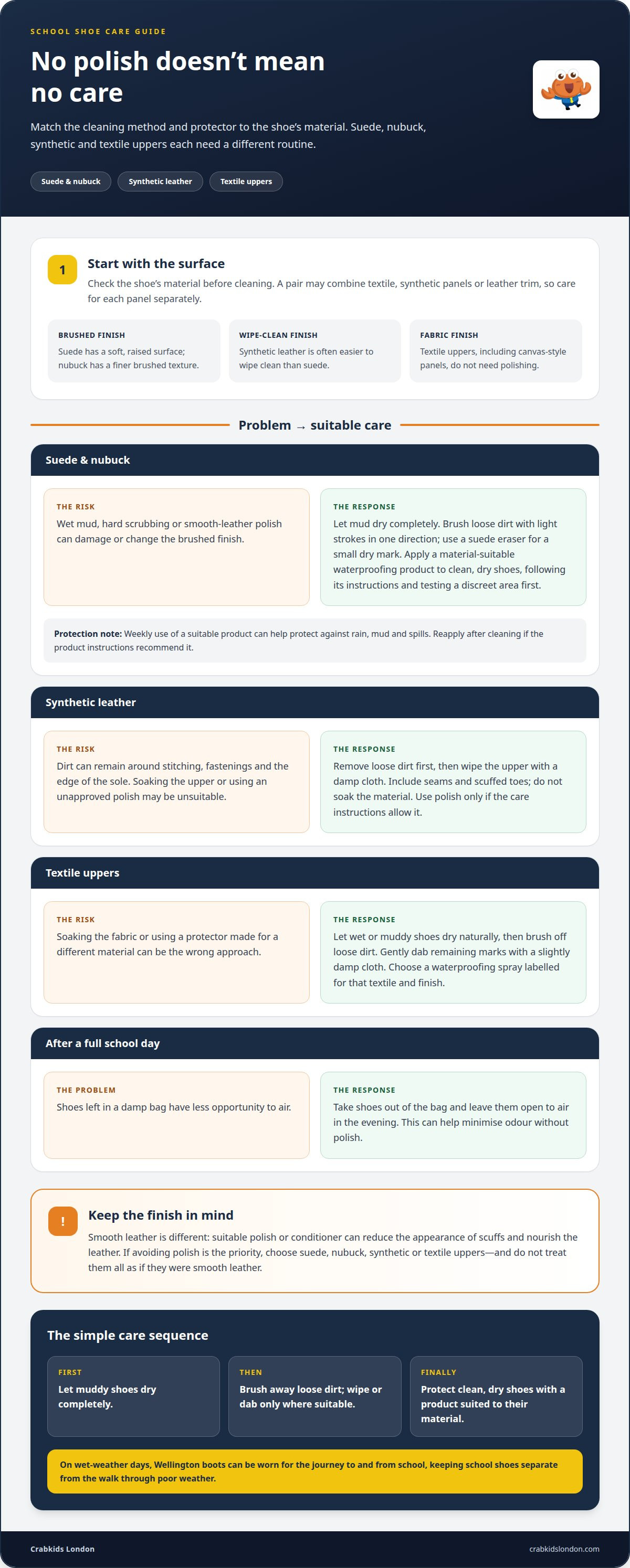
Suede, nubuck, synthetic leather and some textile uppers can all be cared for without traditional shoe polish. Because their finishes differ from smooth leather, brushing, wiping or spot-cleaning is usually more suitable. Start by checking the material, and remember that a shoe may combine a textile upper with synthetic panels or leather trim.
Suede has a soft, raised surface, while nubuck has a finer brushed texture. Neither needs polish to maintain its finish. Once mud is completely dry, use a suede brush to remove loose dirt with light strokes in one direction. A suede eraser can help lift a small dry mark. Avoid rubbing hard, as pressure can flatten the pile or spread dirt.
Suede and nubuck still need protection. Apply a waterproofing product designed for the material to clean, dry shoes, following its instructions and testing it on a discreet area first. Weekly use of a suitable product can help protect against rain, mud and spills. Reapply after cleaning if its directions recommend it. Smooth-leather polish is not a substitute, as it can change the texture or appearance of a brushed finish.
Synthetic leather is often easier to wipe clean than suede. First remove loose dirt, then wipe the upper with a damp cloth, including around seams and scuffed toes. Don’t soak the material or apply polish unless its care instructions allow it. A wipe-clean finish saves time after a muddy walk, but dirt can still gather around stitching, fastenings and the sole edge.
Textile uppers, including canvas-style panels, don’t need polishing either. Let wet or muddy shoes dry naturally, then brush off loose dirt. Gently dab remaining marks with a slightly damp cloth rather than soaking the fabric. Choose a waterproofing spray labelled for the specific textile and finish, since products aren’t interchangeable. For mixed-material shoes, care for each panel separately and keep spray off areas it isn’t designed for.
Whatever the material, airflow helps after a full school day. Take shoes out of a damp bag and leave them open to air in the evening. This can help minimise odour without polish. Smooth leather is different: suitable polish or conditioner can reduce the appearance of scuffs and nourish the leather. If you want to avoid polishing, look for suede, nubuck, synthetic or textile uppers, then match the cleaning method and protector to the material.
On wet-weather days, Wellington boots can spare school shoes during the journey to and from school. That way, children can wear their school shoes during the day instead of walking in them through poor weather. Boots don’t change how school shoes should be cared for: choose the right routine for their material and finish. Keeping footwear for the journey separate from the school pair can help limit wear.
4. Are non-polish school shoes allowed under UK school uniform policies?
There’s no single shoe rule for every UK school. Each school’s uniform policy determines which colours, materials and styles are acceptable. A shoe that needs no polish may meet one school’s requirements but not another’s, so check the latest uniform list before choosing a pair.
Pay attention to the exact wording. “Plain black shoes” describes colour and appearance but doesn’t specify the material. “Black leather shoes” is more precise and may rule out suede, nubuck or textile. “Polishable” suggests a smooth finish designed for polish. These examples show why details matter, but the school’s own policy is what counts.
Check more than colour. A policy may also specify the heel, fastening, shape or decoration. For example, a black synthetic shoe might meet the colour requirement but have a prominent logo that conflicts with a rule requiring a “plain” style. A black suede shoe, meanwhile, may not meet a stated leather requirement. Compare the shoe’s visible features with each part of the policy.
Use this simple check before buying:
- Find the latest uniform information in the school handbook, website or parent communications.
- Note every shoe requirement, including colour, material, finish, heel and permitted details.
- Compare those points with the product description and photographs, not just the colour name.
- Keep the policy details handy if you’re comparing several styles.
Product descriptions can help you identify materials. Terms such as “suede”, “nubuck”, “synthetic” and “textile” tell you more than “black school shoe”. If the policy specifies leather, don’t assume that every black material will qualify. If it specifies only a colour, don’t assume that a particular finish is required. Read the full wording, including any examples.
Take particular care when a child needs a different style for comfort or practical reasons. Start with the written rule and pinpoint the issue, such as a material requirement or fastening. Keep the question specific: “Would this plain black synthetic style meet the shoe rule?” is clearer than asking whether non-polish shoes are allowed in general. That gives the school a specific style to consider.
Uniform guidance can change between school years, so use the latest version rather than relying on an old list or another parent’s recollection. Comparing the policy with a shoe before buying helps avoid a style that looks suitable but misses a stated detail. Once the material and style meet the policy, follow a care routine suited to the shoe’s finish.
5. What are the best wipe-clean school shoes for boys and girls in the UK?
For a straightforward wipe-clean option, look for a school shoe with a smooth, non-porous upper, such as synthetic leather. These uppers can usually be cleaned with a damp cloth, without traditional polish. Check the product description for material and care instructions: “black school shoes” describes colour, not whether the finish wipes clean.
When comparing boys’ styles, look at the upper material, fastening and shape of lace-up and touch-fastening shoes. Apply the same checks to girls’ Mary Jane, T-bar and lace-up designs. These are common silhouettes, not care categories: the upper material determines how to clean the shoe. Check the toe, seams and fastening, where playground dirt often collects.
Use these checks when comparing a pair:
- Read the material description. Smooth synthetic uppers are generally simpler to wipe than suede or nubuck.
- Check the care instructions. Follow the maker’s cleaning guidance, especially for mixed-material panels.
- Inspect the construction. Look at stitching, the sole edge and areas around buckles or touch-fastening straps.
- Consider the school rules. Match the shoe’s colour, finish and style to the school’s uniform policy.
After a muddy day, let wet shoes dry completely before brushing off loose dirt. Wipe remaining marks with a damp cloth, including around seams and scuffed toes. Use a clean section of cloth as the dirt lifts to avoid spreading grime across the upper. Don’t soak the shoe, especially where textile panels or glued parts meet synthetic material.
Even a wipe-clean surface needs sensible care. Pale scuffs may show on a dark synthetic toe, while dirt can remain visible in stitching or around the sole. Wipe marks promptly, then leave the shoes to air in the evening. Don’t treat suede or nubuck like smooth synthetic material: gently brush off dried dirt and use products designed for that finish.
Fit matters as much as easy cleaning. Check that the heel sits securely, the fastening holds the foot comfortably and the toes have room to move. A neat-looking shoe that rubs or feels tight won’t suit a full school day. Check the fit while your child is standing, then check the fastening before choosing between similar pairs.
For a busy school routine, start with a plain, smooth upper, simple seams and a fastening your child can manage. Confirm the material, care instructions and compatibility with the school policy. That combination makes boys’ and girls’ school shoes easier to keep presentable without relying on polish.
4. How do leather, synthetic leather and textile school shoes compare for maintenance
The key difference is the upper’s surface, not the shoe’s purpose. Smooth leather can be polished or conditioned, synthetic leather is often wiped clean, and textile needs gentler spot-cleaning. Stitching, trim and mixed-material panels can affect the routine, so check the care instructions before cleaning.
Smooth leather needs regular care to stop scuffs building up. Suitable polish or conditioner can reduce the appearance of scuffs and nourish the leather. Apply a little at a time: regular light polishing is often more effective than occasional intensive cleaning. Use a soft cloth on marked areas, then buff the surface. Polish and conditioner serve different purposes, so follow the shoe’s care guidance when choosing between them.
Synthetic leather is a practical choice for a quicker clean. Remove loose dirt, then wipe the upper with a damp cloth. Pay particular attention to the toe, seams and areas around touch-fastening straps, where grime can gather. Avoid excess water and harsh scrubbing, which can affect the surface. A gentle wipe may lift a mark from a smooth synthetic toe, while dirt caught in the stitching needs more careful attention.
Textile uppers need a gentler touch. Brush away dry, loose dirt first, then use a damp cloth on small marks. Don’t soak the fabric or scrub hard, as moisture and friction can spread dirt or disturb the material. Shoes with textile panels and synthetic overlays need different care for each section. A cloth that works on the smooth panel may not suit the fabric.
For everyday maintenance, match the action to the material:
- Leather: Remove surface dirt, then polish or condition lightly when needed. Buff with a soft cloth rather than applying a thick layer.
- Synthetic leather: Wipe away marks with a damp cloth, then let the shoe air dry.
- Textile: Brush off dry dirt before spot-cleaning gently. Keep the fabric from becoming saturated.
- Mixed materials: Identify each panel first and use the appropriate method on each surface.
Drying matters with every material. After rain or cleaning, leave shoes in a ventilated place to dry naturally. Avoid direct heat, which can affect the finish or construction. Before putting them away, check the sole edge, seams and fastening for remaining dirt. This quick inspection helps you catch marks early and decide whether the shoes need a more focused clean.
If avoiding polish is your priority, smooth synthetic uppers generally offer the simplest wipe-down routine. Leather suits families prepared to care for it with polish or conditioner, while textile needs careful cleaning after muddy play. Compare the upper material with the care instructions, then choose a routine that fits your child’s school week.
5. Which UK retailers sell school shoes that need no polishing, and what are their prices
UK children’s footwear retailers and independent shoe shops may list school shoes in smooth synthetic, suede, nubuck or textile finishes. To find school shoes that don't need polishing, search product descriptions by material and read the care guidance, rather than relying on the words “school shoe”. A black finish alone doesn’t tell you how the upper should be maintained.
Retailer websites usually show the price on each product listing. Compare styles that meet your child’s uniform policy, then check that the displayed price applies to the style and size you’ve selected. Prices vary by shoe, so a single retailer-wide figure won’t tell you what every suitable pair costs.
Use this checklist to compare listings:
- Material: Look for a clear description, such as synthetic leather or textile, and check whether the shoe includes mixed-material panels.
- Care guidance: Confirm that the recommended cleaning method suits the routine you want to follow.
- Uniform fit: Compare the colour, finish, fastening and shape with the school’s written requirements.
- Like-for-like price: Compare styles with similar materials and features, and note the price shown for your chosen option.
For school shoes that don't need polishing, a smooth synthetic upper is often a straightforward option to assess. Check the care instructions, especially if the shoe has fabric panels or decorative details alongside its smooth surface. Suede and nubuck also avoid traditional polish, but need brushing and protection suited to the material rather than a quick wipe-down.
Don’t make your choice on a sale label alone. Read the product description, listed price and care guidance together. A discounted shoe may still be unsuitable if its finish conflicts with uniform rules or its cleaning routine doesn’t suit your household. Comparing prices is useful only when both shoes meet the same practical requirements.
Retailer listings can change, so use the current product page for the price and exact material details. Make sure the displayed price matches your selected style before buying. When comparing options, note the material, care method and listed price side by side. This gives you a clear basis for weighing cost against everyday maintenance, rather than treating price as the only measure of suitability.
A short inspection of children’s school shoes each Sunday can help you spot dirt or wear early. Check each pair and follow the care instructions for its material. This routine helps identify when a shoe needs attention without adding a polishing step to styles whose care guidance doesn’t call for it. When comparing similar listings, consider the material and maintenance as well as the price: the cheapest option may not be the easiest to look after.
Treat shoe cream as a separate cost only if your chosen shoes call for it. There’s no reason to buy cream for a finish that needs a different kind of care. A brief inspection and material-appropriate cleaning help keep maintenance suited to the pair you selected, rather than assuming every school shoe needs polishing.
Crabkids London: Boys' School Shoes
Crabkids London offers boys’ and girls’ school shoes designed for active school routines. After checking your school’s uniform policy, explore the range and compare styles to find a pair suited to your child’s everyday needs. Crabkids London also offers backpacks and socks to help organise school essentials.
Compare each shoe’s material and care instructions with the cleaning routine you prefer. Check the fit and fastening too, so the pair feels suitable for a full school day. Visit crabkidslondon.com to explore Crabkids London’s school shoes.
Choose a routine your child can manage
The right choice fits both the school’s requirements and your family’s everyday routine. Involve your child in the final check: can they manage the fastening, spot when their shoes need attention and leave them somewhere airy after school? Simple habits make shoe care easier to keep up, even during a busy week.
Before choosing, consider the finish and the maintenance you’re prepared to do. For school shoes that don’t need polishing, the material and care instructions matter as much as appearance. A clear cleaning plan helps you choose with confidence and makes the next school morning more straightforward.
Crabkids London can be a useful next step as you explore children’s school footwear. Contact Crabkids London today to discuss your next step. Choose a pair that works for your child and your routine, then start the school week with confidence.