

Playground Proof School Shoes: The Parent’s Guide to Durable Footwear
It's only the third week of term, yet the shoes you carefully selected already look like they've survived a mountain expedition. You're staring at a peeled toe cap and a fraying sole, wondering why you're already bracing for another trip to the shoe shop. Finding genuine playground proof school shoes feels like a constant battle against concrete, climbing frames, and lunchtime football matches.
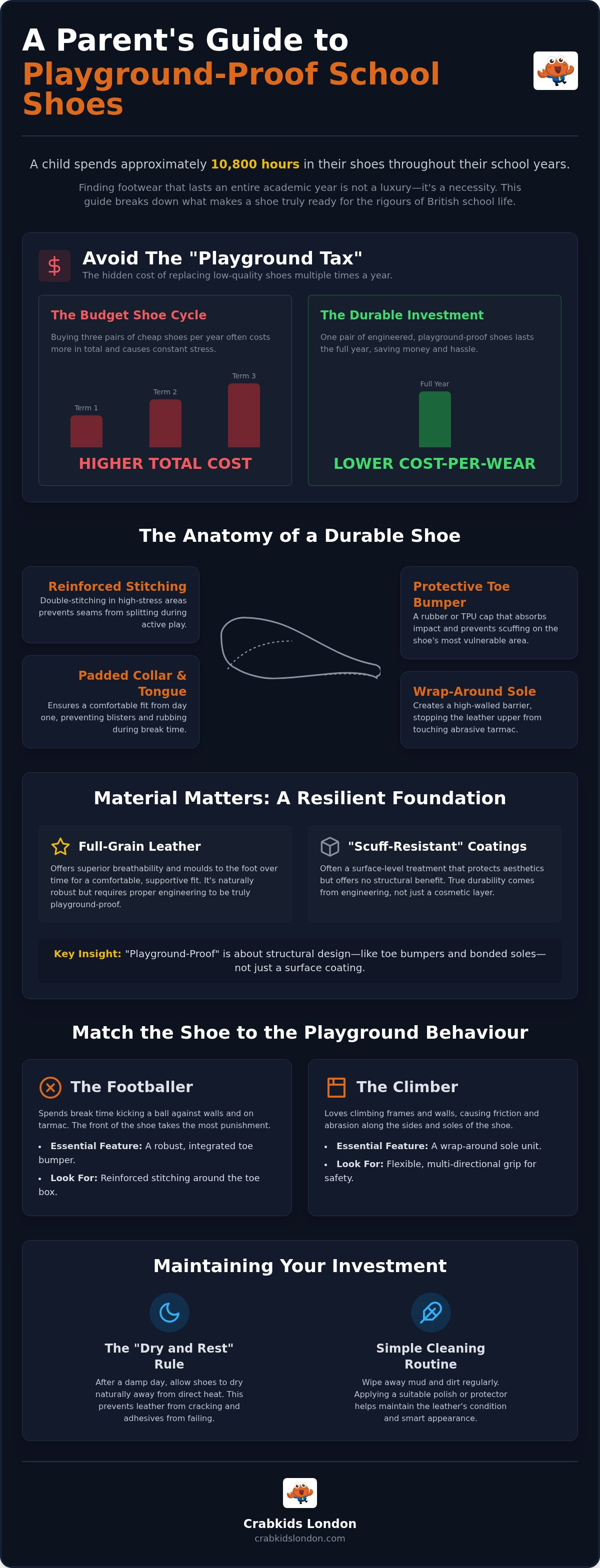
Every parent knows the frustration of footwear that falls apart before the first half-term break. With a child spending approximately 10,800 hours in their shoes throughout their school years, you need an investment that stays smart and supportive. This guide shows you how to identify footwear built for the rigours of British school life. You'll learn which materials truly resist scuffs and why specific construction features, like reinforced toe bumpers, are non-negotiable for active children. We'll break down the essential checklist for durability, ensuring you choose a pair that lasts the full academic year.
Key Takeaways
- Identify the specific engineering features, such as reinforced toe bumpers and wrap-around soles, that define truly playground proof school shoes.
- Compare the resilience of full-grain leather against specialised scuff-resistant coatings to choose the best material for high-energy play.
- Tailor your footwear choice to your child’s specific playground behaviour, ensuring "footballers" and "climbers" have the right protection in high-wear areas.
- Adopt a simple maintenance routine, including the "dry and rest" rule, to maintain structural integrity and keep footwear looking smart all term long.
What Defines Truly Playground Proof School Shoes?
Truly playground proof school shoes are more than just smart footwear with a thick sole. They are specifically engineered to resist abrasion, impact, and moisture whilst maintaining their structural integrity during high-energy play. While a standard shoe might look the part in a quiet classroom, it often lacks the resilience needed for the transition to the outdoors. A playground-proof design ensures the shoe doesn't just survive the term; it thrives through every sprint, jump, and kick.
Many parents fall victim to the "Playground Tax". This is the hidden cost of buying standard smart shoes that fail within weeks of the new term. These shoes usually feature thin leather and weak glues that cannot withstand the friction of tarmac or the impact of a football. There's a vital distinction between "scuff-resistant" and "playground-proof" footwear. Scuff-resistant typically refers to a surface coating that protects the aesthetic look of the leather. In contrast, being playground-proof involves structural engineering, such as reinforced stitching and bonded soles that won't peel away when put under pressure.
The British playground environment is particularly demanding. Between abrasive tarmac, concrete steps, and damp grass, footwear faces a constant cycle of friction and moisture. Engineering shoes for playground safety and durability requires materials that can handle these varied surfaces without cracking or losing their grip.
The Daily Rigours of the UK School Day
Common "shoe-killers" like lunchtime football on tarmac and friction from climbing frames can destroy a pair of low-quality shoes in days. In the UK, damp weather adds another layer of difficulty. If the construction is poor, moisture seeps into the seams, causing the leather to swell and the adhesives to fail. High-quality boys' school shoes and girls' school shoes must provide a seamless transition from a formal assembly to a high-intensity break time without compromising on comfort or protection.
The Cost-Per-Wear Calculation for Parents
Cost-per-wear is the total price of the footwear divided by the number of days it stays in active use. Choosing three pairs of cheap, budget shoes across one academic year often costs significantly more than investing in one pair of quality playground proof school shoes. Beyond the financial saving, durable footwear reduces parental stress. You won't spend every Sunday evening desperately polishing out scuffs or trying to glue a flapping sole back together before Monday morning.
The Anatomy of Durability: Features to Look For
Truly playground proof school shoes rely on specific design choices that protect the most vulnerable parts of the footwear. Toe bumpers act as the first line of defence. They prevent the leather from peeling or scuffing when children crawl, climb, or kick a ball during break time. Wrap-around soles extend this protection by creating a high-walled rubber barrier. This prevents the leather upper from ever touching the abrasive ground during sharp turns or active games.
Reinforced stitching is another critical factor for longevity. Double-stitching in high-stress areas, particularly around the flex point of the foot, prevents "blowouts" where the material might otherwise pull apart under pressure. To balance this tough exterior, look for padded collars and tongues. These features ensure the interior remains soft and comfortable, preventing the rubbing that often leads to blisters during the first few weeks of term.
Toe Protection and Bumpers
Rubber or TPU toe caps are essential for children who are naturally active. These caps absorb the direct impact of tarmac friction, which is the leading cause of premature shoe failure. By choosing an integrated bumper that is bonded directly to the sole unit, you ensure maximum structural strength. This feature preserves the smart appearance required for school assemblies because the leather stays shielded from direct contact with the floor. Following established playground safety guidelines by choosing closed-toe, reinforced footwear helps protect small feet from common impact injuries.
Outsole Integrity and Grip
Non-marking rubber is the gold standard for school footwear. It provides excellent traction on wet tarmac whilst remaining suitable for indoor school hall floors. Look for multi-directional tread patterns that offer grip from every angle. This is vital for preventing slips during high-speed games. The ideal sole balances flexibility with thickness; it should be sturdy enough to protect the foot but flexible enough to allow for natural movement. A sole that feels like a "brick" will only cause fatigue and discomfort by the end of the day.
Secure Fastenings for Active Movement
High-quality hook-and-loop straps often prove more durable than laces for younger children. They don't come undone mid-run and allow for a quick, adjustable fit that stays secure. Wide-opening apertures are a helpful addition, making it easier for children to slide their feet in whilst maintaining a secure lock once fastened. You can see these robust fastenings in action across the Crabkids London Boys Collection. Choosing well-constructed school shoes ensures your child is ready for any activity. When you invest in genuine playground proof school shoes, you're buying peace of mind that the footwear will survive the rigours of the year.
Material Matters: Leather vs. Scuff-Resistant Coatings
The durability of playground proof school shoes depends heavily on the base material and how it is treated for resilience. Full-grain leather remains a superior choice for long-term wear because it offers natural breathability and structural strength. Unlike synthetic alternatives, high-quality leather moulds to the foot whilst resisting the daily stresses of running and jumping. However, for children who are particularly active, standard leather can still suffer from surface damage on abrasive tarmac.
Specialised scuff-resistant leather provides an additional layer of protection. This material undergoes a treatment process that makes it significantly tougher than traditional leather. In contrast, many parents fall into the "patent leather trap". While patent finishes look smart for the first week, the shiny plastic coating often cracks or peels during vigorous play. Once this surface layer is compromised, it cannot be polished back to its original state, leaving the shoes looking worn prematurely. Choosing the right materials is a core part of following proper clothing and footwear advice to ensure children stay safe and comfortable during break times.
The Science of Scuff-Resistance
Coated leathers are treated with a thin, durable layer of polyurethane (PU) that acts as a physical shield against friction. This coating creates a matte finish that is much harder to scratch than the natural grain of the leather. It's a functional treatment rather than a cosmetic one. This "armour" ensures the shoe maintains its smart appearance even after repeated contact with concrete or climbing frames. It's the ideal material for high-wear areas like the sides and heels of the shoe.
Why Breathable Linings Are Essential
Active play inevitably leads to perspiration. If moisture isn't managed correctly, it can rot the leather from the inside out and weaken the structural glues. Quality playground proof school shoes feature moisture-wicking linings that draw sweat away from the skin. These linings work most effectively when paired with high-performance school socks that help regulate temperature. Many durable shoes also include antibacterial treatments within the lining. This helps keep the footwear fresh and prevents the buildup of odours throughout the term, ensuring the interior stays as resilient as the exterior.
Choosing Shoes Based on Playground Behaviour
Every child interacts with the playground differently. One might spend their break time chasing a ball on tarmac, whilst another prefers navigating the climbing frame or racing across the field. To find the best playground proof school shoes, you must match the footwear's specific strengths to your child's primary play style. Generic shoes often fail because they aren't built for the specific pressures of your child's favourite activities.
- The "Footballer": Needs reinforced toe boxes and high-grip rubber outsoles. These features handle the constant impact and friction of kicking a ball on hard surfaces without the sole peeling away.
- The "Climber": Requires flexible soles and high-walled side protection. This allows the foot to move naturally whilst protecting the leather from friction against metal bars and wooden steps.
- The "Runner": Prioritises lightweight construction and heel shock absorption. Reducing weight helps maintain speed, whilst cushioned heels protect growing joints from the impact of sprinting on concrete.
- The "Socialite": Balances durability with a slimmer, smarter silhouette. This child needs a shoe that looks pristine in the classroom but still possesses a resilient core for moderate activity.
Identifying Your Child’s Play Style
Checking your child's current footwear provides a clear map of their play style. Look for "hot spots" where the material has thinned or the sole has worn down. A child who drags their toes will show damage on the front cap, whilst a runner will often wear out the heel first. Understanding these patterns helps you choose a design that reinforces the areas most under threat. It's also vital to use the Crabkids London Shoe Size Guide to ensure a secure fit. A shoe that is too loose creates internal friction, leading to blisters and faster internal wear.
School Rules vs. Playground Reality
Many schools maintain strict "no trainer" policies, which often leaves parents choosing between style and survival. You don't have to sacrifice durability for a formal look. Hybrid playground proof school shoes offer the aesthetic of a classic leather shoe with the internal engineering of an athletic trainer. These designs use high-grade leather that remains polishable for Monday morning inspections whilst hiding robust features like internal cushioning and reinforced soles. This approach satisfies school uniform requirements without failing during the first football match of the term.
Shop our range of durable school shoes to find the perfect match for your child's play style.
Maintaining Your Investment: How to Keep Shoes Playground Ready
Purchasing playground proof school shoes is a smart investment in your child's comfort and your own peace of mind. However, even the most resilient footwear requires basic care to withstand a full year of activity. Maintenance isn't just about keeping shoes looking smart; it's about preserving the physical materials that protect your child's feet. Regular attention prevents minor wear from turning into structural failure.
Grit and mud are the primary enemies of leather longevity. When mud dries on the surface, it acts as an abrasive that grinds into the grain every time the shoe flexes. This process eventually weakens the leather, leading to cracks. Similarly, moisture management is vital. The "dry and rest" rule is a simple but effective strategy. Leather is a natural material that needs time to breathe and dry naturally after a day of perspiration or damp British weather. Never place wet shoes on a radiator. Intense heat causes leather to become brittle and can degrade the adhesives used in the sole unit.
A Simple 3-Step Maintenance Routine
A proactive routine takes only minutes but adds months to the life of the footwear. Follow these steps to keep shoes in peak condition:
- Step 1: Wipe down the uppers with a damp cloth after every muddy session to remove surface debris that can scratch the finish.
- Step 2: Apply a specialised leather shoe cleaning lotion to nourish the hide and keep it supple. This prevents the drying out that leads to peeling.
- Step 3: Use a protector spray to enhance the water-resistance of the scuff-proof coating. This adds a renewable "shield" against the elements.
The Importance of Sizing for Longevity
Correct sizing is a frequently overlooked factor in how long playground proof school shoes actually last. If a shoe is too big, the excess material at the front causes the toe to "drag" along the ground during normal walking. This unnecessary friction accelerates scuffing and puts strain on the toe bumper. You can learn more about this in our guide on how school shoe fit affects durability. Check your child’s fit every half-term. Growing feet can stretch the leather uppers or force the foot into a position that causes uneven wear on the sole. Identifying structural failure, such as a worn-down tread or a collapsing heel counter, is essential for maintaining foot health throughout the school year.
Step Into a Stress-Free School Term
Selecting the right footwear means looking beyond the initial shine to the engineering beneath. By prioritising integrated toe bumpers and specialised scuff-resistant leather, you ensure your child's shoes remain smart and structurally sound through every lunchtime match. You're no longer just buying a formal accessory; you're choosing a tool that supports active play whilst maintaining the high standards required for the classroom.
Investing in genuine playground proof school shoes removes the anxiety of mid-term replacements and Sunday evening repairs. Our range is expertly crafted from premium materials and designed specifically for the unique demands of British school playgrounds. With fast UK-wide delivery available for your last-minute term prep, you can secure the resilience your child needs with total confidence. Matching the right construction to your child's behaviour ensures they stay comfortable from the first bell to the final whistle.
Explore our Playground-Tested School Shoe Collection and prepare your child for a full year of discovery, movement, and play.
Frequently Asked Questions
Are playground proof school shoes the same as trainers?
No, these shoes are hybrid designs that bridge the gap between formal wear and athletic performance. They look like traditional leather school shoes to meet uniform policies but share the internal construction and high-grip outsoles of trainers. This allows children to run and jump comfortably whilst still appearing smart for assemblies. Most UK schools accept them because the uppers are made from plain black leather rather than mesh.
Can I polish scuff-resistant school shoes?
Yes, you can and should polish them to maintain the protective barrier on the leather. While scuff-resistant coatings are incredibly durable, regular polishing with a quality cream helps nourish the hide and covers minor surface abrasions. For matte finishes, use a matching black polish rather than a high-shine wax. This routine keeps the shoes looking smart and prevents the material from drying out or cracking over time.
Do playground-proof shoes take longer to "wear in"?
High-quality playground proof school shoes are designed to be comfortable from the very first day. While they use robust materials for longevity, features like padded collars and flexible rubber soles reduce the need for a lengthy breaking-in period. You should ensure the fit is correct using a size guide to prevent any initial rubbing. Properly fitted shoes will usually mould to the foot's shape within a few days.
What is the best material for a child who plays football at break time?
Coated, scuff-resistant leather paired with a rubber toe bumper is the best choice for young footballers. This combination provides a physical shield against the abrasive friction of tarmac and the constant impact of kicking a ball. Unlike standard smooth leather, these materials won't peel or crack when subjected to daily pressure. The rubber bumper ensures the front of the shoe stays intact even during the most intense lunchtime matches.
How long should a pair of quality playground-proof shoes last?
A well-made pair should last for at least one full academic year if they are maintained correctly. Durability depends on the intensity of play and the rate of your child's foot growth. By choosing playground proof school shoes with reinforced stitching and wrap-around soles, you significantly reduce the risk of structural failure. Regular cleaning and rotating the shoes also help extend their lifespan beyond what cheaper, non-specialised alternatives can offer.
Are rubber toe bumpers allowed in most UK schools?
Yes, most UK schools permit rubber toe bumpers as long as the rest of the shoe is plain black leather. These features are now a standard part of modern school footwear design. They are functional rather than decorative, helping children comply with uniform rules by keeping their shoes looking smart for longer. If you're unsure, check your school's specific uniform policy regarding "trainer-style" soles before making a purchase.
Can I wash playground-proof leather shoes in the washing machine?
You should never put leather school shoes in a washing machine. The heat and agitation will damage the natural fibres of the leather and cause the structural adhesives in the sole to fail. Instead, use a damp cloth to remove surface mud and apply a specialised cleaning lotion. This method preserves the integrity of the shoe whilst keeping the materials supple and water-resistant for daily use in the playground.
Why do my child’s shoes always scuff at the toes first?
Toes are the most common point of impact during activities like running, climbing, and kneeling. Children often drag their feet or use their toes to brake whilst playing, which puts immense pressure on the front of the shoe. Without a reinforced bumper, the thin layer of leather is quickly worn away by the abrasive tarmac surface. This is why choosing shoes with dedicated toe protection is essential for any active child.