

How to Safely Wash School Shoes in a Washing Machine
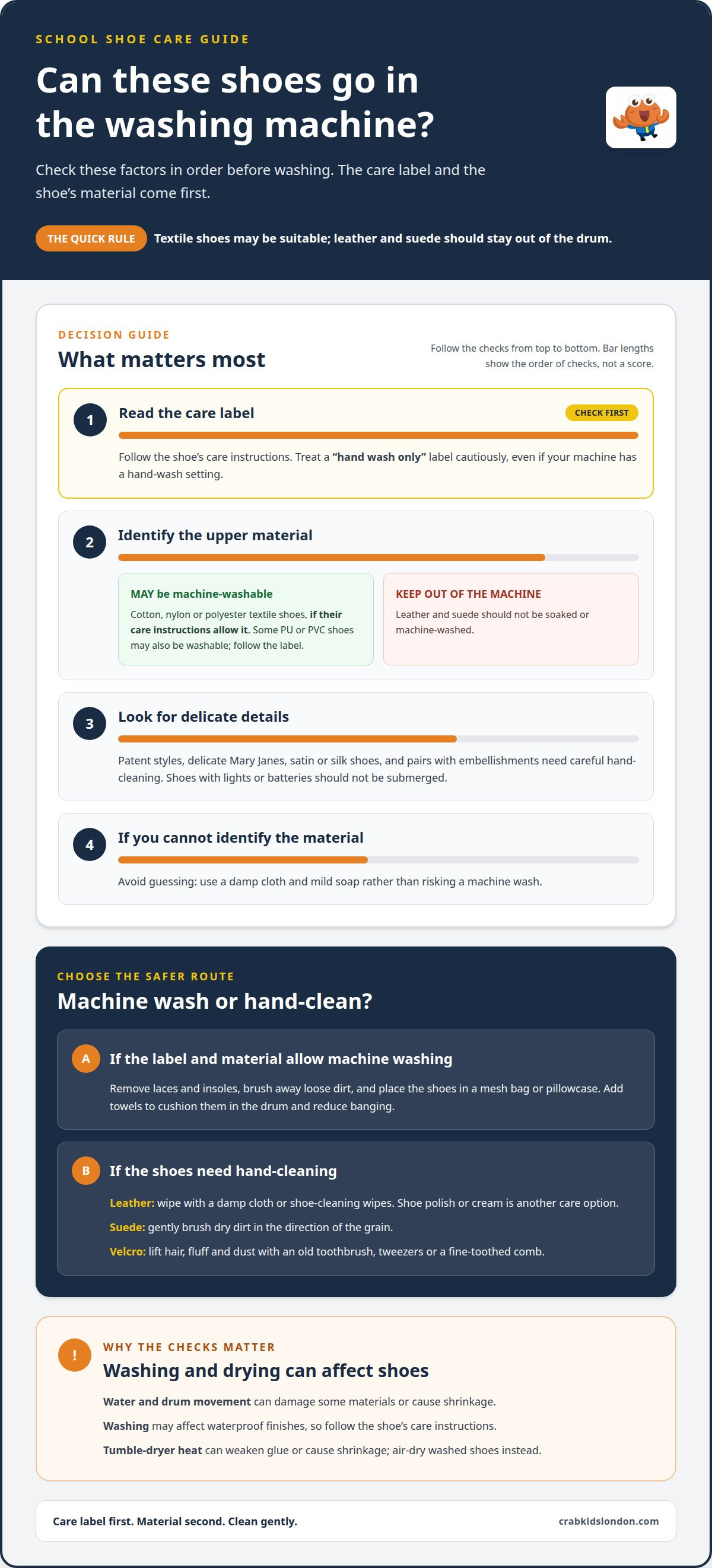
A washing machine can freshen some school shoes, but it can damage others. Whether you can wash school shoes in the washing machine depends on the material and care label: textile shoes may be suitable, while leather and suede should stay out of the drum. Check the care label first.
It’s tempting to reach for a quick wash after a muddy school day, but the wrong cycle can leave shoes misshapen or damaged. Before washing, check the care label and upper material. This guide explains how to prepare suitable shoes, clean common marks gently and avoid damaging the finish.
You’ll also learn how to cushion shoes in the drum and air-dry them safely. For pairs that shouldn’t go in the machine, hand-cleaning can lift dirt while protecting the material. The right routine helps keep school shoes clean without risking unnecessary wear.
Key Takeaways
- Use the shoe’s material and care label to decide whether it can go in the washing machine; keep leather and suede out.
- Before washing suitable shoes, remove laces and insoles, brush away loose dirt and protect the pair in a mesh bag or pillowcase.
- For common stains, choose a gentle cleaning method that suits the material rather than scrubbing every mark the same way.
- Add towels to help cushion shoes in the drum and reduce banging during the wash.
- Air-dry washed shoes in a well-ventilated spot, away from direct sunlight and heat.
Air-drying shoes and avoiding tumble drying
After washing, dry shoes slowly and let air circulate around them. This helps manage moisture without exposing the shoes to intense heat.
-
Set shoes out to air-dry
Place each shoe in a well-ventilated area, away from direct sunlight and heat sources such as radiators. Open the shoes so air can reach the inside, and remove the insoles to dry separately. A fan aimed towards the shoes can improve airflow. Avoid closed cupboards, where damp air has little room to escape.
-
Use newspaper while shoes dry
Loosely stuff each shoe with dry newspaper to draw out moisture. Keep the paper light rather than packing it tightly, so the shoe keeps its shape and air can circulate. Check the paper as the shoes dry and replace it if it feels damp. If the inside is still wet, fresh paper can continue absorbing moisture.
-
Keep shoes out of the tumble dryer
Air-dry washed shoes instead of putting them in a tumble dryer. Heat can weaken the glue holding parts of a shoe together, and drying conditions may cause shrinkage. Either can affect the fit or make the shoe less secure. The drum’s movement adds further impact, so don’t use a tumble dryer to speed up drying.
- Improve airflow before leaving shoes to dry. Remove the insoles and loosen the tongues so air can move through the openings. If the shoes have laces, hang them by the laces in a suitable spot, away from direct heat and sunlight. Make sure they’re stable and won’t fall onto a radiator or heater. A fan can direct air towards the openings without adding heat.
- Check inside before wearing the shoes again. Feel the lining and insole separately, since the outer material may feel dry while moisture remains inside. If either still feels damp, continue air-drying and replace wet newspaper with dry paper. Once fully dry, store the pair somewhere dry. This avoids putting damp shoes straight back into the school-day routine.
Should I wash shoes in the washing machine?
Use the care label and material to decide: textile shoes may be machine-washable, but leather and suede should not be soaked or machine-washed. Washing can damage some materials or cause shrinkage. It may also affect waterproof finishes, so follow the shoe’s care instructions.
Clean leather or suede by hand instead. Wipe leather with a damp cloth or shoe-cleaning wipes, and brush suede gently in the direction of its grain.
-
Identify machine-washable shoe materials
Check the label first, then identify the upper material. Cotton, nylon or polyester textile shoes may be machine-washable if their care instructions allow it. Some PU or PVC shoes may also be washable, but follow the label. If you can’t identify the material, use a damp cloth and mild soap rather than risk a machine wash.
-
Keep unsuitable materials out of the machine
Keep leather and suede shoes out of the washing machine, and don’t soak them. Patent styles, delicate Mary Janes, satin or silk shoes, and pairs with embellishments need careful hand-cleaning. Shoes with lights or batteries shouldn’t be submerged. For leather, NHS guidance recommends shoe polish or cream. For suede, use a gentle brush along the grain to lift surface dirt.
-
Consider the risks of machine washing
Machine-wash only shoes whose material and care label allow it. Water and drum movement can damage some materials, while heat during drying can weaken glue or cause shrinkage. Follow care instructions for shoes with a waterproof finish to avoid affecting it. Treat a “hand wash only” label cautiously, even if your machine has a hand-wash setting.
- Hand-clean leather and suede rather than putting either material in the drum. Wipe leather with a damp cloth or use shoe-cleaning wipes for marks. Apply shoe polish or cream according to its instructions. For suede, gently brush dry dirt in the direction of the grain. A pencil-case rubber can help lift stubborn surface marks.
- Clear dirt from Velcro before cleaning the rest of the shoe. Use an old toothbrush, tweezers or a fine-toothed comb to lift out hair, fluff and dust. Work carefully across the fastening so you don’t pull at its edges. Then use a damp cloth on areas that need surface cleaning. For leather care, a leather shoe cleaning lotion is another option.
Removing mud, food, drink and grass stains
Match the cleaning method to the mark and shoe material. A soft cloth, an old toothbrush and gentle pressure can tackle everyday dirt without aggressive scrubbing.
- Let muddy shoes dry, then gently lift off the dried mud with a plastic utensil. Brush away loosened dirt before wiping the surface with a damp cloth. This helps prevent wet mud spreading across the upper. For muddy soles, remove loose debris from the grooves first. Avoid sharp blades, which can mark the shoe material.
- Blot food or drink stains with a clean cloth, working gently rather than rubbing the mark deeper. For a tougher stain, try a mild solution of water and white vinegar, then wipe carefully. Keep the cloth under control around seams and joins. On leather, use a damp cloth and gentle pressure; an old toothbrush can help work at a stubborn surface mark.
- Treat grass marks with a paste of baking soda and water. Apply it to the stain, then scrub gently with a soft brush or cloth. Rinse away the paste and air-dry the shoes. Use light strokes, especially on coloured uppers. If the mark remains, repeat carefully instead of scrubbing harder.
- Brush suede carefully in the direction of its grain to lift surface dirt. For stubborn dirt, rub gently with a pencil-case rubber or the rubber attachment on a Multi Brush. Keep the movement light and focused on the mark. Avoid starting with a wet cloth or vinegar solution; brushing is a dry method suited to suede’s textured surface.
- Use mild soap and water to clean canvas, rubber or leather shoes, applying the solution with a cloth or toothbrush. Work on one small area at a time, then wipe away soap residue with a clean, damp cloth. For heavier debris, holding the shoe under a running tap can help remove excess dirt. Keep water away from materials that shouldn’t be soaked.
Blot food or drink gently with a cloth. For tougher stains, try water and white vinegar. Treat grass marks with a baking soda and water paste, scrub gently, rinse and air-dry.
Adding towels to cushion shoes in the drum
For machine-washable shoes, add towels to help prevent them banging against the washing machine drum. Arrange the towels around the shoes to cushion them while leaving room for the load to move.
- Choose clean towels that can be washed with the shoes. An old, clean towel or cotton cloth can also wrap trainers before washing. Check that the fabric has no loose threads or rough areas that could catch on shoe details. Keep the towel clean, since it will be in contact with the shoes throughout the wash.
- Position the shoes and towels together in the drum. Put a towel beside each shoe or wrap the pair in an old, clean towel, arranging them so they’re cushioned rather than loose. The aim is to reduce the shoes’ impact against the drum as it turns. Don’t cram the drum with towels.
- Use enough cushioning without overfilling the drum. The shoes need room to move during the wash, and towels should sit around them rather than forming a tight bundle. If the load looks crowded, remove some towels. Check that each shoe has cushioning around it.
- Check the drum before starting the cycle. Make sure no towel edge or shoelace hangs outside the opening, where it could get caught in the door seal. Check that towels support the shoes without pressing them hard against the drum wall. Close the door only when everything is properly inside.
- Listen as the wash begins. Towels help cushion the shoes and reduce banging, so notice whether the load sounds unusually uneven. If it does, pause the machine and rearrange the shoes and towels before continuing. This can prevent a shoe from repeatedly knocking against the drum.
- Remove the shoes and towels promptly when the cycle ends. Check the shoes for loose parts and the towels for dampness or displaced fabric. Take the towels out separately rather than leaving them wrapped around the shoes. Then air-dry the shoes carefully; towels in the drum don’t replace proper drying.
Preparing children's shoes for machine washing
Prepare shoes for the machine only if their material and care label allow it. Use a cold, gentle cycle with mild detergent for suitable pairs.
- Brush off loose dirt before putting the shoes near the drum. If mud is wet, let it dry, then gently brush away the debris. Use a larger stiff-bristled brush on the shoe surface and an old toothbrush around small areas such as eyelets. This removes grit that could spread during washing or remain trapped in seams.
- Remove the laces and insoles, and prepare each shoe separately. Wash laces apart from the shoes, and wipe the insoles by hand rather than leaving them inside. This exposes the shoe interior and lets you clean each part appropriately. Check beneath the insoles for loose dirt and remove it with a dry cloth before washing.
- Place the shoes in a mesh laundry bag or an empty pillowcase to help protect them from snagging against the washing machine drum. Put removed laces in a separate mesh bag if machine-washing them with the trainers. Fasten the bag or secure the pillowcase opening so the shoes stay covered throughout the cycle.
- Brush the soles lightly before loading the shoes. Loosen dirt from the tread, paying attention to grooves where mud can lodge. Knock debris off over a bin or outside rather than carrying it into the washing machine. For muddy trainers, let the mud dry before brushing; wet soil can smear across the uppers.
- Select a cold, gentle cycle and add mild detergent. Don’t assume a short or warmer programme is suitable; follow the shoe’s care label. A gentle cycle reduces the force of the wash, while mild detergent cleans without harsh methods. Don’t pour detergent directly inside the shoes.
- Inspect the pair before starting. Look for loose stitching, separated soles or worn insoles, since washing a damaged shoe can worsen existing wear. Check that both shoes are inside the bag or pillowcase and no lace is loose in the drum. If the shoes have structural damage, clean them by hand instead.
- For a fresh pair suited to everyday school use, browse school shoes as an alternative to repeatedly washing worn footwear.
Crabkids London: Boys' School Shoes
Crabkids London offers boys’ and girls’ school shoes for families looking for comfortable footwear suited to active school days. If a pair is worn, damaged or difficult to clean, consider whether replacing it is more practical than continued washing. Choose shoes to suit your child’s needs and school routine, and follow the material’s care guidance to help keep them in good condition.
Crabkids London also offers backpacks and socks, so you can browse school essentials alongside footwear. Explore the range when it’s time to choose a fresh pair or update everyday school items. Visit crabkidslondon.com to browse the products.
Choose the right next step for school shoes
If you’re wondering whether you can wash school shoes in the washing machine, let the material and care label guide your decision. For pairs that aren’t suitable, careful surface cleaning can manage everyday marks. If a pair is worn or impractical to maintain, consider replacing it for your child’s school routine.
Crabkids London offers boys’ and girls’ school shoes, alongside backpacks for school days. Consider what your child needs for daily wear, then browse the range at your own pace. A considered choice can make the school-day routine easier to manage.
Contact Crabkids London for shoe advice, and take the next step towards a practical choice for your child.
Frequently Asked Questions
How do you look after school shoes?
Remove school shoes after the day and let them air before storing them somewhere dry. Check regularly for loose stitching, separating soles or worn insoles, as these can affect how the shoes hold up. Rotate between pairs if you have them, so one pair gets time out of use. For leather, the NHS recommends cleaning with shoe polish or cream.
Can school shoes be washed in a washing machine?
Whether you can wash school shoes in the washing machine depends mainly on the material and care label. Textile pairs made from cotton, nylon or polyester may be suitable, but leather and suede should not be soaked or machine-washed. Details such as lights, batteries or embellishments are a reason to choose hand-cleaning. If the label says “hand wash only”, approach machine washing cautiously.
Which types of school shoes are machine washable: canvas, synthetic, leather or suede?
Cotton canvas may be machine-washable if its care label allows it. Some synthetic shoes, including certain PU or PVC pairs, may also be suitable, but the material alone doesn’t settle the decision. Keep leather and suede out of the machine. Check the specific care instructions for synthetic uppers, especially if they have a coating or decorative details.
How do you check the manufacturer’s care label for school shoes?
Look inside the shoe, beneath the tongue or for a label supplied with the pair. Read the care instructions before washing and note whether they allow machine cleaning, recommend hand washing or rule out water. If the label says “hand wash only”, a machine’s hand-wash setting still calls for caution. Follow the clearest instruction rather than relying on the shoe’s appearance.
How do you wash school shoes in a washing machine safely?
Start only with shoes whose care instructions allow machine washing. Remove loose dirt, then put the shoes in a mesh laundry bag or pillowcase to help prevent snagging. Add towels for cushioning, use mild detergent and select a cold, gentle cycle. If the machine offers spin choices, choose the lowest setting suitable for the shoes to reduce wear.
Should you remove laces and insoles before washing school shoes?
Yes. Remove the laces and insoles so the shoes can be cleaned more evenly and the removable parts handled separately. Wash suitable laces in a mesh bag with the trainers, and wipe the insoles by hand. Before putting the shoes back together, make sure the insoles are dry and sit flat, without folded edges that could feel uncomfortable underfoot.
Can school shoes go in the tumble dryer, or how should they be air-dried?
Keep washed shoes out of the tumble dryer, as heat can weaken glue or cause shrinkage. Open the shoes and remove the insoles to improve airflow. Leave them in a ventilated place away from direct sunlight and heat, or direct a fan towards them. Newspaper can draw out moisture; replace it when damp, then check the lining before wearing the shoes again.
How do you remove mud, stains and odours from school shoes?
Let wet mud dry, then brush it away before wiping the shoe. Blot food or drink marks rather than rubbing them across the material, and choose a method suited to the upper. For lingering odour, sprinkle bicarbonate of soda inside dry shoes, leave it to absorb odours, then shake it out thoroughly. Don’t use a wet treatment on materials that shouldn’t be soaked.