

How to Make School Shoes Last Longer: The Ultimate Parent’s Checklist
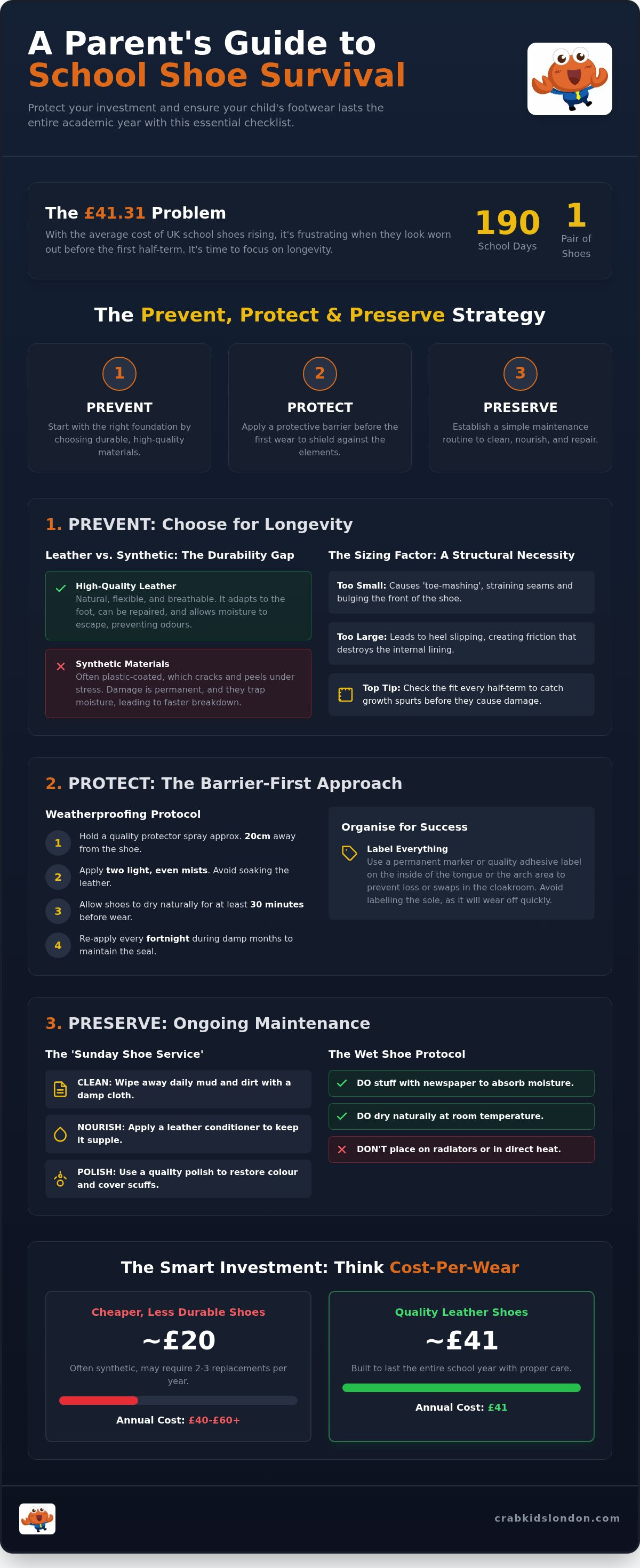
With the average cost of school shoes in the UK hitting £41.31 in 2026, why do so many pairs look ready for the bin before the first half-term break is even over? It's a common frustration for parents watching a significant investment succumb to scuffs, dampness, and aggressive playground wear. Knowing how to make school shoes last longer isn't just about saving money; it's about ensuring your child stays comfortable and smart throughout the academic year. You've likely felt that sinking feeling when a brand-new pair loses its shine within weeks, but it doesn't have to be this way.
We understand that a busy morning doesn't leave much room for complex maintenance. You need a reliable partner to help manage the daily rigours of school life without the constant stress of mid-term replacements. This guide introduces our essential 'Prevent, Protect, and Preserve' strategy to help you get maximum value from every purchase. We'll walk you through a simple routine the kids can help with, covering everything from initial waterproofing to daily drying techniques that keep leather supple and sturdy. By following this checklist, you can transform footwear from a recurring expense into a long-term asset that survives the playground and lasts until next summer.
Key Takeaways
- Prioritise high-quality leather over synthetic materials to ensure footwear can withstand the daily rigours of the British school environment.
- Apply a protective barrier before the first wear to shield new shoes from immediate scuffs and unpredictable UK weather.
- Discover how to make school shoes last longer by establishing a simple weekly 'Sunday Shoe Service' to clean, nourish, and polish the leather.
- Follow the 'Wet Shoe Protocol' to dry damp footwear naturally, preventing the cracking and odours that often lead to premature replacements.
- Focus on the long-term 'cost per wear' by investing in playground-tested designs that offer better value than cheaper, less durable alternatives.
The Foundation: Choosing the Right Materials for Longevity
High-quality leather is the non-negotiable standard for British school shoes. Unlike synthetic alternatives, leather is a natural, flexible material that adapts to the unique shape of a child's foot. This adaptability is crucial for active playground play, where rigid materials often fail. Synthetic 'look-alike' shoes typically use plastic coatings that crack under the stress of constant movement. Once a synthetic surface peels, the damage is permanent. Leather, however, possesses a cellular structure that can be nourished and restored, making it the superior choice for the 190-day school year.
Breathability plays a vital role in how to make school shoes last longer. Natural leather allows moisture to escape, preventing the damp internal environment that breaks down glues and structural linings. This air circulation also manages the bacteria that cause odours, ensuring the footwear remains fresh. When selecting shoes, look for reinforced areas like rubber toe bumpers and sturdy, thick soles. These features act as the first line of defence against the aggressive scuffing that occurs during football or tag, protecting the softer leather underneath from direct impact.
Leather vs Synthetic: Which Lasts Longer?
Natural leather offers a durability gap that synthetic materials cannot bridge. Leather's inherent flexibility allows it to bend thousands of times without fracturing. In contrast, synthetic uppers tend to delaminate, leading to unsightly peeling within weeks of purchase. A key factor in longevity is the ability to maintain the surface finish. You can use Shoe polish to fill in deep scuffs and restore the deep black finish of leather, a process that is impossible with plastic-based shoes. While non-leather footwear accounts for over 68% of the kids' market in 2026, leather remains more cost-effective because it rarely requires a mid-term replacement.
The Sizing Factor in Footwear Durability
Correct sizing is a structural necessity rather than just a comfort issue. When shoes are too small, 'toe-mashing' puts immense pressure on the front of the shoe, causing the leather to bulge and the stitching to strain. If the shoes are too large, heel slipping creates intense friction that destroys the internal lining and heel counters. This internal wear eventually weakens the entire shoe's integrity, leading to a collapsed shape. We recommend checking the fit every half-term to catch growth spurts before they cause structural damage. You can use our children's shoe size guide UK to ensure a precise fit from home. Proper alignment ensures weight is distributed evenly across the soles, preventing lopsided wear patterns that ruin the shoe's support.
The Pre-Term Checklist: Protecting Shoes Before the First Wear
The moment those new school shoes leave the box is the most critical time for their survival. Many parents wait for the first scuff before reaching for the polish, but the secret to how to make school shoes last longer is a proactive "barrier first" approach. This initial treatment seals the porous surface of the leather against the mud, grit, and puddles that define the UK school run. Think of it as an invisible shield that prevents stains from setting into the grain before your child even reaches the school gates.
Applying Weatherproof Protection
Weatherproofing is the first line of defence against salt and rain. To do this correctly, hold a quality protector spray approximately 20cm away from the shoe and apply a fine, even mist. Avoid soaking the leather; two light coats are far more effective than one heavy drenching. Allow the shoes to dry naturally for at least 30 minutes before the first wear. During the damp winter months, reapply this protection every fortnight to maintain the water-repellent seal. Learning how to care for shoes correctly from day one prevents the leather from becoming waterlogged, which is the primary cause of structural weakening and salt tide marks.
Organising for Success: Labelling and Storage
Lost property piles are often filled with identical black shoes, leading to accidental swaps or permanent losses. To prevent your investment from disappearing, label footwear clearly on the inside of the tongue or the arch area. Use a permanent silver marker or high-quality adhesive labels that won't irritate the foot or damage the leather grain. Avoid labelling the sole, as this wears off within days of playground activity. Clear identification ensures that if a shoe is kicked off during PE, it finds its way back to the correct locker.
Storage habits at home also dictate longevity. Establish a dedicated shoe station in a dry, ventilated area of the house, away from direct heat sources like radiators. Shoes should never be left in a damp school bag or a cramped locker overnight. Trapped moisture rots the stitching from the inside out and causes the leather to stiffen and crack. For younger children, using a shoe horn is a simple way to prevent heel-counter collapse, ensuring the back of the shoe remains sturdy and supportive. If you've just picked up a new pair of boys' school shoes, start these habits on the very first morning to set a professional standard for the rest of the year.
The Weekly Maintenance Routine: Clean, Polish, and Buff
Establishing a "Sunday Shoe Service" turns a chore into a shared responsibility. It's the most effective way to learn how to make school shoes last longer whilst teaching children to value their belongings. This routine follows a methodical three-step cycle: removing surface debris, nourishing the leather fibres, and creating a protective shine. By clearing away the week's playground grit, you prevent abrasive particles from scratching the grain during the polishing stage. Using a dedicated leather shoe cleaning lotion ensures you remove old wax buildup and salt stains without drying out the natural material.
Regular polishing is a functional necessity, not a cosmetic choice. Leather is essentially a skin; it requires consistent moisture to remain supple and resilient. Without this nourishment, the material becomes brittle and cracks at the natural flex points across the toes. Polishing fills in micro-scuffs and reintroduces essential oils, acting as a minor repair that reinforces the shoe's structural integrity before the new school week begins. A well-polished shoe also repels water more effectively, keeping feet dry during the damp British commute.
The Art of Polishing and Buffing
Choosing the right product is vital for a professional finish. Wax polishes provide high-gloss protection and superior waterproofing, whilst creams are better for restoring deep colour to scuffed toes. Liquid polishes offer convenience but can lead to a brittle, plastic-like buildup that eventually peels. For the best results, apply your chosen product sparingly and allow it to sink in for several minutes. Buffing with a soft brush or microfibre cloth is the final, crucial step. This friction creates a hard-wearing, scuff-resistant seal that makes it harder for dirt to cling to the surface. For a deeper look at specific tools, see our expert guide to kids' shoe care products.
Banishing Odours and Moisture
Internal maintenance is just as important as the exterior appearance. To neutralise persistent smells whilst the shoes rest, try the bicarbonate of soda trick: fill a pair of old socks with the powder and leave them inside the shoes overnight. This naturally absorbs both moisture and bacteria. If your budget allows, rotating between two pairs of shoes can double the lifespan of each by allowing the leather to dry out completely between wears. Pair this habit with high-quality school socks made from moisture-wicking materials. These socks pull sweat away from the foot, protecting the internal lining of the shoe from the acidic breakdown that often causes structural failure and unpleasant smells.
Playground Proofing: Handling Playground Accidents and Wear
The playground is the ultimate testing ground for footwear durability. Whether it's a lunchtime football match or a session on the scooters, the front of the shoe takes the brunt of the impact. Understanding how to make school shoes last longer means preparing for these high-activity moments before they cause permanent damage. For children who can't resist a kickabout, footwear with built-in toe protection is a wise choice. These rubberised bumpers act as a sacrificial layer, absorbing the friction that would otherwise tear through expensive leather fibres during a game.
Quick-fix hacks can manage minor daily wear without requiring a full Sunday service. If a scuff appears mid-week, a damp cloth can remove the grit before it settles into the scratch. For deeper marks, a quick application of a matching colour cream can disguise the damage until the weekend. However, home repairs have limits. If the sole begins to detach or the heel wears down significantly, seek professional help. A local cobbler can often replace rubber heels for around £5.00, extending the life of the shoe for a fraction of the cost of a new pair.
The 'Never Radiator' Rule for Wet Leather
Wet weather is a certainty in the UK, but the way you dry shoes determines if they'll survive the season. When your child returns with soaked footwear, never place them on a radiator or near a fire. Direct heat causes the natural oils in the leather to evaporate too quickly, leaving the material brittle, shrunk, and prone to deep cracking. Instead, remove the insoles and stuff the shoes with crumpled newspaper to draw moisture out from the inside. Replace the paper every few hours until the shoes are damp rather than dripping. Air-drying at room temperature is the only safe method for leather. This patient approach preserves the shoe's shape and prevents the stitching from becoming compromised by rapid temperature changes.
Dealing with Scuffs and Scratches
Deep scuffs don't always mean the shoes are finished. For active children, a matching colour cream is more effective than a standard wax polish because it contains higher pigment levels to 'fill' the scratch. If you find yourself repairing damage every few days, switching to scuff resistant school shoes can significantly reduce your maintenance workload. These designs use specialised coatings and thicker hides to withstand abrasive playground surfaces. Check the sole grip every month to ensure your child remains safe on wet tarmac. To find a pair that can handle the most active lunchtimes, explore our latest range of durable school shoes designed for London life.
The Smart Investment: Why Quality Footwear Saves Money
Investing in high-grade leather isn't just a matter of style; it's a calculated financial decision. When you evaluate how to make school shoes last longer, the most effective method is starting with a superior product. Consider the 'Cost Per Wear' logic. A pair of durable leather shoes might cost £45 but last the entire 190-day school year, resulting in a daily cost of roughly 24p. In contrast, a cheaper synthetic pair costing £20 that fails within two months ends up costing significantly more when you factor in the price, time, and stress of a mid-term replacement. Quality materials pay for themselves through sheer endurance.
There is also a direct link between foot health, comfort, and the longevity of the shoe. High-quality footwear supports the arch and allows for natural movement, which prevents the lopsided wear patterns common in cheaper, flimsy alternatives. When a shoe maintains its structural integrity, the sole wears down evenly, preserving the grip and extending the overall lifespan of the product. By choosing a well-constructed shoe, you ensure your child remains comfortable and stable, reducing the likelihood of the 'collapsed heel' syndrome that ruins so many pairs before their time.
The Crabkids London Difference
Our designs are specifically tailored for the active nature of UK school life, where the playground is as important as the classroom. Whether you are browsing our boys' collection or girls' collection, you'll find shoes built with resilience in mind. We focus on the details that matter, from reinforced stitching to high-grade hides that respond well to nourishment. You can read more about our manufacturing standards in our guide to leather school shoes. For parents facing a sudden mid-term disaster, we provide fast UK delivery to ensure your child has reliable footwear without the wait.
Ready for the New Term?
Success starts with the right foundation. By following our 'Prevent, Protect, and Preserve' strategy, you can break the cycle of frequent, expensive replacements. Remember the golden rules: buy quality leather, apply protection before the first wear, and maintain a weekly cleaning routine. This simple commitment ensures that your child’s shoes stay smart, dry, and sturdy until the final summer bell. Explore our latest new arrivals to find the perfect blend of formal style and playground-tested performance. Visit the Crabkids London store today to secure your reliable partner for the academic year ahead.
Step into a Durable School Year
Breaking the cycle of frequent shoe replacements starts with a shift in strategy. By choosing high-quality leather from the outset and committing to a "barrier first" protection plan, you have already won half the battle. This guide has shown you how to make school shoes last longer through simple, consistent habits like the Sunday Shoe Service and the newspaper drying trick. These small actions preserve the structural integrity of the footwear, ensuring your child stays comfortable from the first bell in September to the final day of July.
We design our footwear to handle the specific rigours of the UK school day. Our expertly crafted leather provides maximum durability, whilst our playground-tested designs ensure resilience during even the most active lunchtimes. If you need a reliable pair that stands up to the challenge, we offer next-day delivery options to get your household back on track quickly.
Shop Durable, Long-Lasting School Shoes at Crabkids London
With the right foundation and a bit of care, you can turn a seasonal expense into a lasting investment. Your child's shoes are ready for the playground; now you have the tools to make sure they stay that way.
Frequently Asked Questions
How long should a good pair of school shoes actually last?
A high-quality pair of leather school shoes should last for one full academic year, provided they are maintained correctly and the child hasn't experienced a major growth spurt. Whilst scuffs are inevitable in the playground, the structural integrity should remain intact for approximately 190 days of wear. Investing in durable materials is the best way to ensure you aren't looking for mid-term replacements.
Can I put leather school shoes in the washing machine if they are very dirty?
You should never put leather school shoes in the washing machine. The high temperatures and agitation destroy the natural oils in the leather, leading to immediate cracking and stiffness. The water also saturates the internal components, weakening the glues that hold the sole and upper together. Instead, use a damp cloth and a specialist cleaning lotion to remove surface mud without compromising the shoe's structural integrity.
What is the best way to dry school shoes quickly without a radiator?
The most effective method is to stuff the shoes with crumpled newspaper and leave them in a well-ventilated room at normal temperature. Newspaper acts as a sponge, drawing moisture out from the inside without the risk of heat damage. Avoid the temptation to use a hairdryer or radiator, as rapid drying causes the leather to shrink and become brittle. Change the paper every few hours for the fastest results.
How do I stop my child's school shoes from smelling after PE?
Neutralising bacteria is the key to stopping persistent odours. Use the bicarbonate of soda trick mentioned earlier by placing powder-filled socks inside the shoes overnight to absorb moisture. Ensuring your child wears fresh, moisture-wicking socks every day also prevents the sweat buildup that breeds bacteria. If possible, allow the shoes to rest for 24 hours between wears to ensure they are completely dry inside.
Is it worth buying scuff-resistant shoes for children who play football?
Yes, scuff-resistant shoes are a worthwhile investment for very active children who play high-impact games. These designs typically feature rubberised toe bumpers or specially treated leathers that withstand the abrasive friction of tarmac playgrounds. Choosing these styles is a proactive step in how to make school shoes last longer, as they protect the most vulnerable parts of the shoe from tearing or peeling during play.
What should I do if the sole of the school shoe starts to peel?
If the sole begins to detach, you should assess whether it is a minor surface peel or a structural failure. Small areas of rubber peeling can often be repaired by a professional cobbler for around £5.00, preventing further damage. However, if the entire sole is delaminating from the upper, it may indicate that the internal glues have been compromised by heat or moisture, requiring a full replacement.
How often should I polish my child's school shoes?
You should polish school shoes once a week as part of a regular maintenance routine. A weekly application of cream or wax reintroduces essential oils into the leather, keeping it supple and water-resistant. If your child is particularly active or the weather has been exceptionally wet, a mid-week touch-up on the toes can prevent scuffs from becoming permanent tears in the leather grain.
Does the type of school sock affect how long the shoes last?
The type of school sock has a significant impact on the lifespan of the shoe's internal lining. Cotton-rich or technical moisture-wicking socks pull sweat away from the foot, protecting the inner leather and stitching from acidic moisture. Cheap, synthetic socks often trap heat and dampness, which accelerates the breakdown of the shoe's interior and leads to the unpleasant odours that often signal the end of a shoe's life.