

How to Check if School Shoes Fit Correctly: The Parent’s 2026 Home Fit Guide
"I think they're okay," is the phrase every parent dreads hearing after five minutes of trying on new leather brogues. You want to avoid the repetitive cycle of online returns and the quiet worry that your child's feet are being cramped by a "near enough" fit. It's difficult when a six-year-old cannot accurately describe a pinch or a rub, leaving you to guess if those shoes will actually last the full term without causing damage.
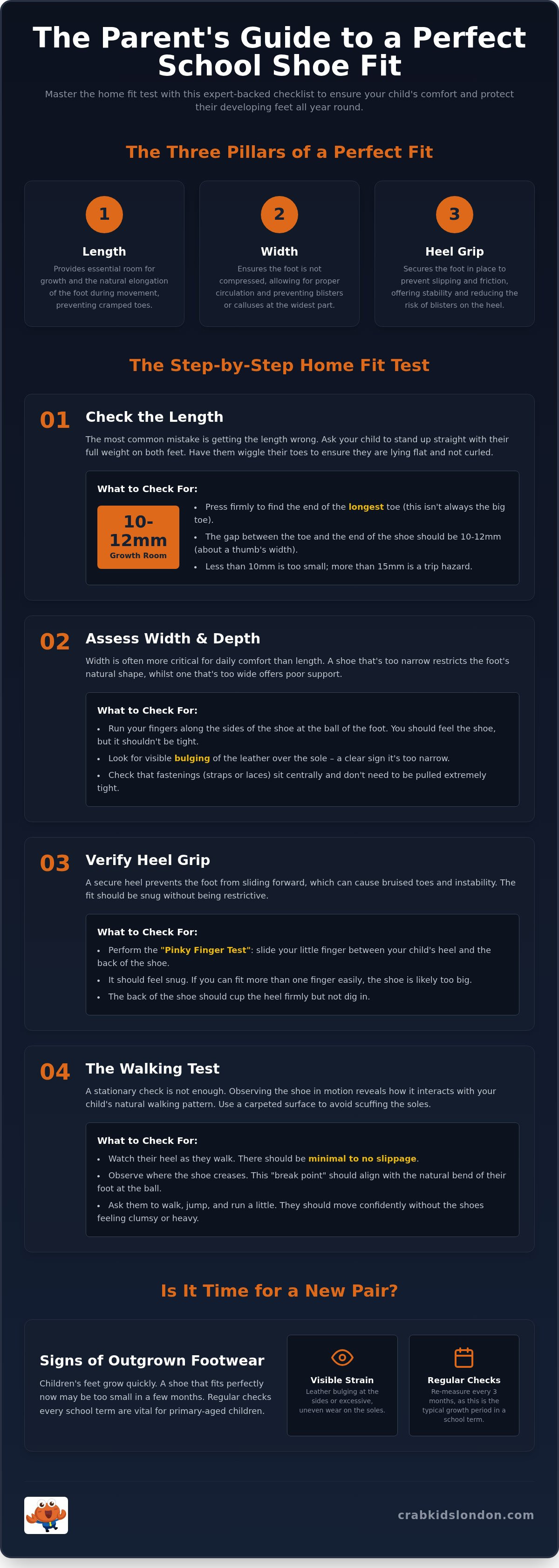
Learning how to check if school shoes fit correctly at home is the best way to secure peace of mind and protect their developing foot health. We've developed this 2026 guide to help you master the "Home Fit Test" using expert-backed steps that prioritise both comfort and longevity. You will discover why the 10-15mm growth rule is non-negotiable, why you should always shop in the afternoon, and how to verify width without a professional gauge. By following this methodical checklist, you will gain the confidence that their new shoes are sturdy, supportive, and ready for every playground sprint without the risk of blisters.
Key Takeaways
- Master a three-dimensional check that prioritises length, width, and heel security to ensure total foot health throughout the school year.
- Learn how to check if school shoes fit correctly by identifying the longest toe and maintaining a 10mm to 12mm "sweet spot" for growth.
- Use the "Feel Test" along the ball of the foot to verify width, which is often more critical for daily comfort than length alone.
- Conduct a walking test on carpeted surfaces to observe the shoe's natural break point and ensure there is no heel slippage.
- Monitor physical changes like bulging leather or uneven sole wear to decide amongst different replacement schedules for primary and secondary students.
The Three Pillars of a Perfect School Shoe Fit
A correct fit is never just a single number on a plastic gauge. It is a three-dimensional balance of length, width, and heel security. Whilst casual trainers or sandals offer some flexibility, school shoes require surgical precision. These shoes are worn for up to eight hours a day, five days a week, often during high-impact playground activities. Because children’s feet are composed of soft cartilage rather than fully formed bone, they can be squeezed into the wrong size without the child feeling any immediate discomfort. This lack of pain signals makes understanding how to check if school shoes fit correctly a vital skill for parents.
Finding the right amount of growth room is a delicate task. You need enough space for natural expansion but not so much that the shoe becomes a trip hazard. A shoe that is too large causes the foot to slide forward, leading to bruised toes and unstable movement. Conversely, a shoe that is too small restricts blood flow and inhibits natural growth. Striking this balance ensures the shoe supports the foot whilst allowing for the three months of growth typically expected in a school term.
Why Proper Fit Matters for Development
Developing feet are highly malleable. Ill-fitting footwear can permanently alter the alignment of metatarsals and weaken the arches. If a shoe is too tight, you might notice your child "clawing" their toes to find space, which eventually leads to painful blisters and posture issues. Beyond health, a poor fit significantly reduces the lifespan of the product. You can read more about how school shoe fit affects durability to understand why a secure fit prevents premature leather creasing and sole wear. Understanding various shoe size systems helps, but the physical interaction between the foot and the leather is the ultimate test.
The Initial Visual Inspection
Before your child even takes a step, perform a stationary check. Look for visible gaps around the ankle or the instep whilst they are standing still. If the leather is bulging at the sides, the shoe is too narrow for the foot's natural width. The shoe should maintain its structural shape without looking strained or distorted. A well-fitted shoe looks like a natural extension of the foot, sitting flush against the skin without digging into the heel or the bridge. Check that the fastenings, whether laces or straps, sit centrally and do not require over-tightening to stay secure.
Checking the Length: The "Rule of Thumb" and Beyond
Length is the foundation of how to check if school shoes fit correctly, but it is also where most fitting errors occur. Most parents rely on a quick press of the big toe. This is often inaccurate because children have a natural reflex to curl their toes when they feel pressure on the end of the shoe. To get an honest reading, ask your child to "wiggle" or "play the piano" with their toes inside the leather. This ensures the foot is relaxed and lying flat against the insole before you begin your assessment.
The ideal gap between the longest toe and the front of the shoe is between 10mm and 12mm. This "sweet spot" provides enough room for the foot to elongate during the walking cycle without allowing the foot to slide forward. If the gap is less than 10mm, the shoe will likely be outgrown within weeks. If it exceeds 15mm, the shoe becomes a trip hazard. Excess length is just as dangerous as a cramped fit because it shifts the shoe's natural flex point, making the footwear feel heavy and clumsy during playground games. Following podiatrist-approved footwear guidelines ensures your child stays mobile and safe throughout the term.
Finding the Longest Toe
Do not assume the big toe is the longest point of the foot. In many children, the second or even the third toe extends further. Have your child stand up straight with their weight evenly distributed between both feet. Use your thumb to press firmly but gently at the front of the shoe to locate the specific tip of the longest toe. If the leather is too sturdy to feel the toe easily, use one hand to hold the heel in place whilst the other feels for the toe position. Once you are sure of the fit, you can browse our range of boys and girls school shoes with the confidence that you know exactly what to look for.
The Heel Pinch Test
Checking the front is only half the job; you must also verify the fit at the back. Slide your pinky finger down the inside of the shoe behind the child's heel. It should feel snug. If you can easily fit your entire finger with room to spare, or if you can fit two fingers, the shoe is too large. This extra space causes "heel slippage," which leads to painful blisters as the foot constantly rubs against the back of the shoe. A secure heel is vital for maintaining the shoe's structure and ensuring the foot stays properly aligned with the arch support.
Assessing Width and Depth: Beyond the Measuring Tape
Width is frequently more important for long-term comfort than length. Whilst length prevents toe bruising, width ensures the foot isn't compressed sideways during the thousands of steps taken each school day. If you want to know how to check if school shoes fit correctly, you must examine the ball of the foot. This is the widest part where the toes join the rest of the foot. Run your hand along the outer sides of the shoe whilst the child is standing. You should feel a firm but supportive grip. If you can feel the child's bone pressing hard against the leather, the shoe is too narrow. Conversely, if you can pinch a large amount of empty leather at the sides, the shoe is too wide.
Depth is the third dimension of fit often overlooked by parents. It refers to the vertical space between the insole and the top of the shoe, known as the instep. A shoe with insufficient depth will press down on the bridge of the foot, causing pain and restricting circulation. This is especially common amongst children with high arches. A well-fitted shoe should follow the natural curve of the foot without leaving large gaps or creating red pressure marks on the skin. High-quality leather school shoes should offer a "supportive grip" rather than a "pinching" sensation, allowing the foot to sit naturally within the footbed.
The Thumb Slide Technique
This is a practical way to verify width at home. Place your thumb on the leather at the ball of the foot and try to slide it across the top towards the centre. You are looking for a very small "ripple" or slight movement in the material. This indicates there is enough room for the foot to expand naturally as it hits the ground. If the leather is so tight that your thumb cannot move it at all, the shoe is too narrow. If the leather bunches up into a significant fold, the shoe is too wide and will lack the necessary support for active playground use.
Checking for Instep Pressure
Examine the fastening area, whether your child uses laces or Velcro straps. There should be enough "adjustment" left in the strap to tighten or loosen the fit as needed. If the Velcro barely reaches the other side, or if the laces are strained to their limit, the shoe lacks the depth required for that specific foot shape. Ensure the tongue sits flat and doesn't bunch up under the fastenings. If you suspect a width or depth issue after these tests, consult our shoe size guide to compare measurements. Correcting a width issue early prevents the leather from bulging and ensures the shoe retains its shape throughout the school year.
The Walking Test: Observing Natural Movement and Heel Grip
Stationary fitting is a vital first step, but movement tells the real story of how to check if school shoes fit correctly. Always conduct the walking test on a carpeted surface. This prevents scuffing the soles, ensuring you can still return or swap the shoes if the fit isn't quite right after seeing them in motion. As your child walks, watch the "break point" where the shoe naturally creases. It should flex easily at the ball of the foot. If the shoe creases too far back or feels excessively stiff, it will cause foot fatigue and discomfort during long school days.
Watch the back of the shoe carefully as they move. If the heel lifts out of the cup with every step, the shoe is either too long or the fastenings aren't providing enough security. This "heel slippage" is the primary cause of blisters and can lead to a child "clawing" their toes to keep the shoe in place. Avoid asking generic questions like "Do they feel nice?" Most children will say yes just to finish the task. Instead, ask specific, targeted questions like "Is anything pinching the sides of your feet?" or "Does your heel feel like it's sliding?"
The Hallway Trot
A slow stroll doesn't always reveal fit issues that appear during active play. Ask your child to perform a "hallway trot" at varying speeds, including a quick walk, a short run, and a small hop. Watch for "toe dragging," which suggests the shoe is too heavy or excessively long for their current gait. A quick turn can also reveal if the foot is sliding laterally inside the leather. If the heel pops out during these more vigorous movements, the fit is compromised and requires adjustment. You can browse our durable boys leather school shoes and girls leather school shoes which are specifically engineered to support this natural range of motion.
Behavioural Cues to Watch For
Children often communicate through their gait rather than their words. Notice if your child starts "clumping" their feet or walking with a stiff-legged, unnatural motion. This behaviour often indicates that the shoe feels too bulky or that they are trying to compensate for a loose fit. If they immediately sit down to remove the shoes after just two minutes of wear, there is likely a hidden pressure point or an uncomfortable internal seam. A well-fitted shoe should be forgotten almost immediately, allowing the child to move with total confidence. Ready to find the perfect pair? Explore our high-quality school footwear collection today to ensure your child starts the term with the best possible support.
When to Replace: Identifying Signs of Outgrown Footwear
Understanding how to check if school shoes fit correctly is a recurring responsibility rather than a one-off task. Children's feet grow in unpredictable spurts, meaning a pair that fit perfectly in September might be restrictive by November. Whilst secondary school students typically need a check every six months, primary-aged children require much more frequent monitoring. Regular inspections prevent long-term developmental issues and ensure your investment in quality footwear lasts as long as possible.
Physical signs on the shoe itself often reveal a poor fit before the child complains. Look for "bulging" leather at the sides, which indicates the foot is now too wide for the shoe's frame. Inspect the soles for uneven wear patterns. If the tread is wearing down heavily on one side, the shoe is likely failing to support the child's natural gait. Similarly, excessive scuffing at the very tip of the toe suggests the shoe is becoming too short, causing the child to catch the front of the shoe on the ground whilst walking.
Examine your child's feet at the end of the school day for physical cues. Red pressure marks on the bridge of the foot or the tops of the toes are clear signs of a cramped fit. Persistent blisters or compressed toes indicate that the internal volume is no longer sufficient. Avoid the temptation to use hand-me-downs from older siblings. Every child wears a shoe differently, moulding the footbed to their unique walking style. Forcing a child into a pre-worn shoe can damage their posture and cause discomfort as their foot fights against a pre-set shape.
The 8-Week Check-Up
Younger children can grow half a size in just eight weeks. Set a recurring calendar reminder for a "thumb test" every two months to catch growth spurts early. Recognising these 5 signs your child needs new school shoes immediately ensures they never spend a day in pain. A quick mid-term check provides peace of mind that their development remains on track and their shoes are still providing the necessary protection.
Maintaining Fit Through Care
Supple leather is more forgiving and adapts better to the foot's movement. Using a high-quality leather shoe cleaning lotion prevents the material from drying out and hardening. When leather stays soft, it maintains its intended shape and internal space, rather than "shrinking" or stiffening around the foot. This simple maintenance routine extends the lifespan of the shoe and ensures the fit remains comfortable until the next growth spurt. A well-fitted shoe is the first step to a successful school year, providing the sturdy foundation every active child deserves.
Securing Their Comfort for the Term Ahead
Finding the right footwear is about more than just a measurement. It's about understanding the three-dimensional relationship between the leather and your child's developing foot. By mastering how to check if school shoes fit correctly, you ensure they have the 10-12mm growth room needed for comfort and the width required for stability. Regular checks every eight weeks for primary students will help you stay ahead of sudden growth spurts and prevent long-term damage.
We provide the sturdy foundation your child needs for a successful school year. Our durable leather construction is built to withstand the daily rigours of the playground, whilst our expert sizing support ensures you shop with total peace of mind. Benefit from fast UK delivery for quick size swaps and a reliable partner in your child's foot health. Find the Perfect Fit: Shop Our New Arrivals
Your child's comfort starts with a supportive fit. With these expert steps, you can feel confident that they're ready to step into the classroom with ease and total confidence.
Frequently Asked Questions
How much room should be at the end of school shoes?
You should aim for 10-15mm of space between the tip of the longest toe and the end of the shoe. This provides the necessary room for growth and natural foot elongation during the walking cycle. If the gap is less than 10mm, the shoes will be outgrown too quickly. Conversely, exceeding 15mm increases the risk of trips and falls whilst running on the playground.
Is it better for school shoes to be a bit big or a bit small?
Neither extreme is safe for developing feet. Shoes that are too small restrict growth and cause "clawing" of the toes, leading to long-term damage. Shoes that are too large cause instability and painful blisters from constant friction. If you must choose, a slightly larger shoe is more manageable with thicker socks, but the goal is always a precise fit with 10-15mm of growth room.
How do I know if my child’s school shoes are too narrow?
Look for the leather "bulging" at the sides near the ball of the foot. If the material looks strained or the child’s foot seems to be overflowing the sole unit, the width is insufficient. You should also check for red marks on the sides of the feet after a day at school. A correct width allows the leather to sit flush against the foot without creating pressure points.
Why does my child’s heel keep slipping out of their new shoes?
Heel slippage usually indicates the shoe is too long or the heel cup is too wide for your child’s foot shape. It can also happen if the fastenings, such as laces or Velcro, aren't tightened sufficiently. If you can fit more than one finger behind the heel whilst the foot is pushed forward, the shoe is likely a size too large. This leads to friction and discomfort during active play.
Can I check the fit if my child is wearing thick school socks?
You must always perform your fit check using the socks your child will wear to school. Thick cotton socks can change the required shoe size by half a grade. Checking the fit in thin socks or bare feet leads to a false reading, resulting in shoes that feel uncomfortably tight once the full uniform is worn. This is a critical step in how to check if school shoes fit correctly at home.
How often should I check if my child’s school shoes still fit?
For children under the age of four, check their fit every eight weeks as growth spurts are frequent. For children aged four and older, a check every three months is recommended. Setting a calendar reminder for the middle of each term ensures you identify outgrown footwear before it causes discomfort. Regular monitoring amongst all age groups is the best way to maintain foot health throughout the school year.
What should I do if one foot is bigger than the other?
It is common for children to have one foot slightly larger than the other. Always buy shoes that fit the larger foot correctly to avoid restricting growth or causing pain. You can manage the slight extra space in the shoe for the smaller foot by tightening the fastenings or using a high-quality insole. Never compromise the fit of the larger foot to accommodate the smaller one during your home check.
How can I tell if my child is curling their toes during a fit test?
Children often curl their toes as a reflex when you press the end of the shoe. To prevent this, ask them to "wiggle" their toes or "tap" them inside the leather. You can also place your hand flat over the top of the toes to feel for any raised knuckles. If the toes are curled, the knuckles will feel like small bumps under the leather, indicating an inaccurate length measurement.