

How Often to Measure Kids’ Feet for Shoes: The 2026 Parent’s Guide
A child’s foot can grow up to two full sizes in just six months, often without them uttering a single word about the discomfort. You likely feel the constant pressure of keeping up with sudden growth spurts whilst trying to ensure your child’s feet aren't being cramped or permanently damaged. It’s a stressful cycle of frequent shopping trips and nagging worries about whether those new leather shoes still actually fit. Understanding how often to measure kids feet for shoes is the most effective way to balance healthy physical development with sensible shoe longevity.
We know you want to protect your child's soft cartilage as it slowly hardens into bone, but you also need to stop wasting money on footwear that is outgrown too quickly. This 2026 guide provides a clear, expert-recommended schedule for every age group, from toddlers to teenagers. You’ll discover simple home-check techniques that offer peace of mind and learn how to identify the subtle signs of a poor fit before it causes a problem. We are here to act as your reliable partner, helping you navigate the rigours of the school year with confidence and ease.
Key Takeaways
- Understand how soft cartilage develops into bone and why ill-fitting footwear can permanently impact your child's natural gait and posture.
- Follow our age-specific schedule to determine how often to measure kids feet for shoes, ranging from every eight weeks for toddlers to twice yearly for older children.
- Learn to spot the physical and behavioural red flags of growth, including the essential "thumb test" for checking the 1-1.5cm growing room at the toe.
- Master a simple four-step technique for measuring feet at home using basic household tools to ensure a consistent and accurate fit every time.
- Protect your investment in durable leather school shoes by ensuring a correct fit that prevents premature creasing and unnecessary stress on the seams.
The Science of Growing Feet: Why Regular Measurement is Essential
Children’s feet are not simply smaller versions of adult feet. They are composed largely of soft, pliable cartilage that doesn't fully harden into bone until the late teens. This means a child’s foot can easily be squeezed into a shoe that is far too small without them feeling immediate pain. Ossification is the biological process where this soft cartilage is gradually replaced by hard bone tissue. Because this structure is so malleable, understanding The Science of Growing Feet and knowing how often to measure kids feet for shoes is critical for preventing permanent deformity.
Relying on your child to tell you when their shoes are tight is a common mistake. Most children have a remarkably high pain threshold and will naturally adapt their walking style to accommodate a cramped fit. This silent adaptation often leads to long-term issues with gait and bone development. By the time they complain, the damage to their foot health or the shoe's structure may already be done.
The Biological Timeline of Foot Development
During infancy and up to age 3, feet grow with incredible speed, often changing half a size every few months. The "fat pad" on the sole provides natural cushioning during this phase but can make it difficult for parents to spot where the toes actually end. Knowing how often to measure kids feet for shoes during these early spurts prevents bone misalignment before it starts.
From ages 4 to 10, growth remains steady but can be deceptive. This is the period where arches begin to form, requiring shoes that offer structural support without restricting movement. Once children reach their teenage years, their feet finally begin to settle into their adult bone structure. Until this point, regular checks remain a vital part of their health routine.
How Ill-Fitting Shoes Impact Long-Term Health
Shoes that are too narrow or short cause immediate issues like ingrown toenails and painful blisters. However, the long-term risks are more concerning. When shoes are too large, children often "grip" with their toes to keep the footwear in place, leading to chronic muscle strain. These early mechanical problems can eventually manifest as back, hip, or knee issues in adulthood. Using a reliable shoe size guide ensures you are providing the foundation for a lifetime of healthy movement and physical confidence.
Recognising the Red Flags: Signs Your Child Needs New Shoes
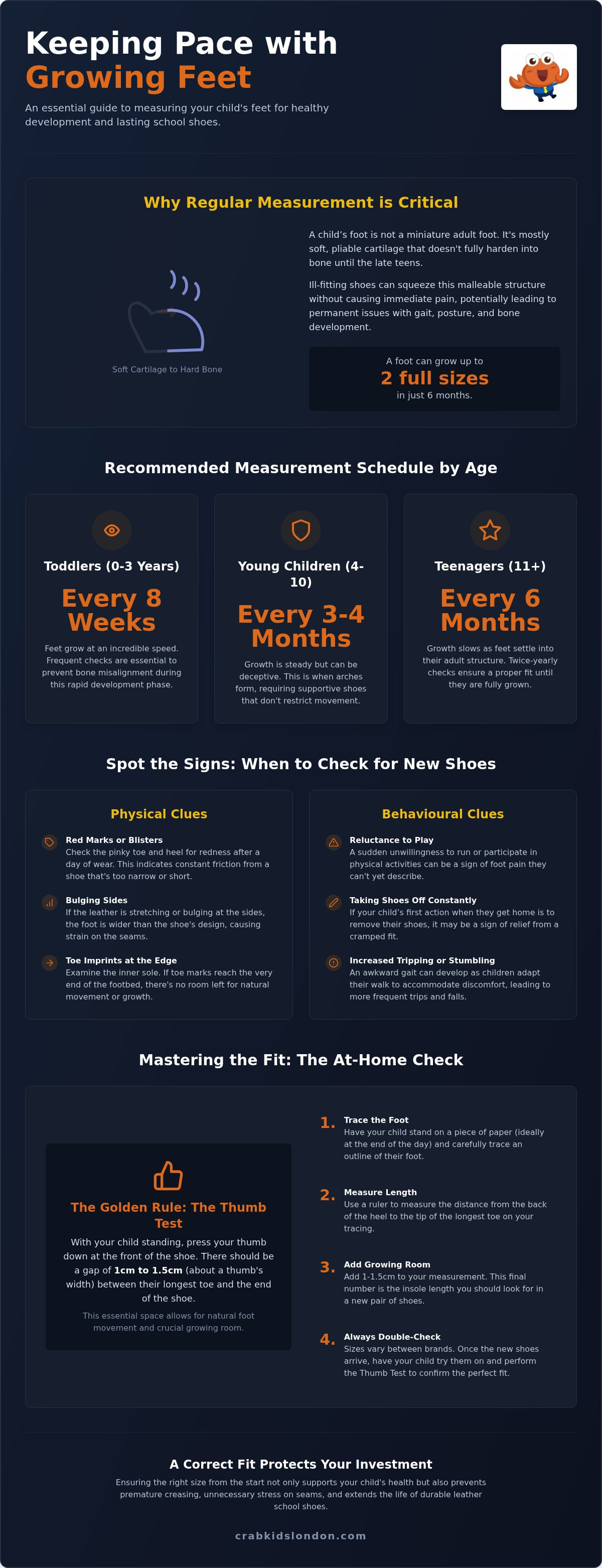
Kids are remarkably stoic when it comes to footwear discomfort. They rarely voice concerns about tight toes, making it your responsibility to spot the physical indicators of a growth spurt. The "Thumb Test" remains the most reliable method for a quick home check. Ensure your child is standing with their weight evenly distributed. Press down at the tip of the shoe; there should be a gap of approximately 1 to 1.5cm between their longest toe and the end of the shoe. If their toe is pressing against the material, they have already outgrown the pair.
Physical marks on the skin provide definitive proof of a poor fit. Check your child’s feet at the end of the school day for any signs of redness, particularly on the pinky toe or the back of the heel. These marks indicate that the shoe is either too narrow or too short, causing constant friction. Experts at the Royal College of Podiatry emphasise the importance of Recognising the Red Flags early to avoid long-term structural issues. Whilst you might be wondering how often to measure kids feet for shoes, these physical signs serve as an immediate call to action.
Visual Cues on the Foot and Shoe
Leather school shoes are designed to be sturdy, but they will show signs of strain if the foot is too large. Look for "bulging" at the sides of the leather vamp, which suggests the foot is wider than the shoe’s last. You can also examine the inner sole for toe imprints. If the dark marks left by the toes reach the very edge of the footbed, there is no longer any room for natural movement. Conversely, heel slippage indicates the shoe is too large or wide, which can be just as damaging as a tight fit. Ensuring a precise fit from a reliable size guide prevents these issues before they start.
Changes in Movement and Behaviour
A child’s behaviour often changes before they find the words to describe foot pain. Watch for a sudden reluctance to run or play whilst wearing their school shoes. You might notice them taking their shoes off the second they walk through the front door, or perhaps they have started tripping more frequently. A change in gait, such as shuffling or walking on their toes, is a clear sign that they are trying to alleviate pressure. If you notice these shifts, read our guide on 5 Signs Your Child Needs New School Shoes Immediately. Monitoring how often to measure kids feet for shoes helps you stay ahead of these behavioural changes, ensuring your child remains active and supported in a pair of durable school shoes.
Finally, inspect the soles for uneven wear patterns. If the tread is wearing down significantly faster on one side, it suggests the foot is not being properly supported or is compensating for a cramped interior. These mechanical stresses don't just ruin the shoe; they impact your child's developing posture.
The Recommended Schedule: How Often to Measure by Age
Growth rates are rarely linear. Your child might stay in the same size for months before jumping two sizes in a single holiday period. Understanding how often to measure kids feet for shoes depends on their specific developmental stage. Whilst younger children require constant monitoring, older students need a more structured approach that aligns with their increasing activity levels and the school calendar.
- Toddlers (1-3 years): Measure every 6 to 8 weeks. At this stage, feet grow at their most rapid pace. Frequent checks prevent the soft cartilage from being restricted during critical growth spurts.
- Pre-schoolers (3-5 years): Check every 3 months. Growth begins to stabilise slightly, but seasonal shifts often reveal a need for more room.
- Primary Schoolers (6-10 years): Measure every 4 months. This age group is highly active on the playground, meaning their shoes face significant daily wear whilst their feet continue to develop.
- Secondary Students (11+): Measure every 6 months. Once the foot reaches its adult structure, you can reduce the frequency of checks unless they report specific discomfort or you notice uneven wear on the soles.
Aligning Measurements with the UK School Year
The UK school calendar provides a logical framework for your measurement routine. An August check is the most critical, ensuring your child starts the long Autumn term with a perfect fit. A January review is the best way to capture any growth that occurred during the Christmas break, preventing tight shoes during the coldest months. Finally, an Easter update ensures their footwear remains comfortable as the weather warms up and outdoor activity increases. Following this termly rhythm makes the process predictable and manageable for busy parents.
Why Seasonal Checks Matter
Environmental changes directly impact how a shoe feels on the foot. During the summer, heat and higher activity levels can cause feet to swell, increasing their overall volume. In contrast, the transition to winter often involves wearing thicker school socks, which can make a previously comfortable shoe feel restrictive. Monitoring how often to measure kids feet for shoes in relation to these seasonal shifts ensures that their footwear provides consistent support year-round. By planning ahead, you avoid the rush of emergency shopping trips and ensure your child’s feet are always protected, regardless of the temperature or the intensity of their school day.
Mastering the Measurement: How to Check Fit at Home
Measuring your child’s feet at home is a straightforward task that doesn't require specialised equipment. Whilst many retailers suggest purchasing a plastic gauge, you can achieve professional results with a few household items. This DIY approach allows you to monitor how often to measure kids feet for shoes without waiting for a shop appointment or visiting a busy high street. By taking control of the process, you ensure their footwear is always supportive and correctly sized.
Follow these four steps for a precise measurement:
- Step 1: Gather a piece of A4 paper, a sharp pencil, a ruler, and find a flat wall on a hard floor surface.
- Step 2: Have your child stand with their heel firmly against the wall. Ensure they are standing upright with their weight distributed evenly across both feet to get an accurate reading of the foot's spread.
- Step 3: Trace the outline of the foot carefully. It's vital to keep the pencil perfectly vertical whilst tracing; tilting it inwards or outwards will result in an incorrect measurement.
- Step 4: Use your ruler to measure the distance from the heel line to the tip of the longest toe. Measure the width at the widest part of the foot as well, recording everything in millimetres for maximum precision.
Ensuring Accuracy Without a Professional Gauge
Precision is vital because children's feet are rarely identical. Always measure both feet and use the dimensions of the larger one to determine the shoe size. Timing is equally important. Feet naturally expand throughout the day due to heat and activity, so perform your measurements in the afternoon to account for this slight swelling. This ensures the shoes remain comfortable during a full day of playground activity. For a detailed breakdown of how these measurements translate to specific sizes, refer to our guide on How to Measure Your Child’s Foot at Home.
The Paper and Ruler Method vs. Mobile Apps
Digital scanning apps have become popular for their convenience, but they often struggle with shadows or slight foot movement, which can lead to errors. The traditional paper method remains the gold standard for DIY checks because it provides a physical record you can double-check. When checking the width, ensure the leather school shoes won't pinch the sides of the foot. Leather is a natural material that offers some flexibility, but it shouldn't be under constant tension from a foot that is too wide. If you're ready to upgrade their footwear after your latest check, explore our range of durable school shoes designed for active UK kids.
Investing in Longevity: Why a Correct Fit Protects Your Shoes
A proper fit is the most effective form of preventative maintenance for quality footwear. Whilst parents often focus on the health benefits, the physical integrity of the shoe depends heavily on how well it matches the foot inside. When you consider how often to measure kids feet for shoes, you are also deciding how long that investment will last. A shoe forced to bend in the wrong places or endure excessive tension will fail long before its time. Precision in sizing ensures the materials perform as intended throughout the school year.
Oversized shoes are a common culprit for premature wear. If there is too much space at the front, the leather vamp will fold excessively as the child walks, creating deep, permanent creases. Over time, these creases can crack, compromising the water resistance and appearance of the leather. Conversely, a tight fit puts immense pressure on the seams and stitching. This tension often leads to "bursts" where the upper separates from the sole or the stitching snaps under the strain. Even the most robust scuff-resistant toes are only effective if the foot sits correctly within the shoe's structure. To keep the material supple and resilient, using shoe care products is essential for maintaining the leather's ability to flex without breaking.
The Relationship Between Fit and Material Performance
Natural leather is a remarkable material because it moulds to the unique shape of a correctly fitted foot over time. This creates a personalised level of comfort that synthetic alternatives cannot match. However, this moulding process is why "hand-me-down" shoes can be detrimental to a new wearer’s foot shape. A used shoe has already been shaped by the previous wearer’s gait and pressure points, which can force a new child's foot into an unnatural position. By staying consistent with how often to measure kids feet for shoes, you ensure each pair provides a fresh, supportive foundation. For more tips on maintenance, see our Expert Guide to Kids’ Shoe Care Products.
Choosing Durable Shoes for Active School Life
Durability requires a balance of strength and flexibility. Look for footwear with reinforced heels that prevent the back of the shoe from collapsing and flexible soles that move in tandem with the child’s natural stride. At Crabkids London, we focus on high-quality leather specifically for its breathability and natural stretch, allowing the shoe to adapt to daily activity whilst maintaining its smart appearance. A well-fitted, well-maintained shoe doesn't just look better; it performs better under the rigours of the playground. Explore our latest durable school shoe arrivals to find the perfect match for your child’s next growth spurt.
Durable Designs for Healthy Development
Proactive foot health is a simple but vital part of parenting. By understanding how often to measure kids feet for shoes, you protect their developing bones from permanent damage and ensure their footwear lasts as long as possible. Remember that toddlers need checks every eight weeks, whilst older primary students should be measured at the start of every new term. These regular home checks prevent the silent discomfort that children often fail to mention.
Our sturdy leather designs are specifically tested for the high-energy environment of active UK playgrounds. We provide a comprehensive online size guide to make home measuring effortless, and our fast UK-wide delivery ensures you are never caught out by a sudden growth spurt. We prioritise resilience so you can shop with confidence.
Find the perfect fit in our New Arrivals collection and give your child the foundation they need for a successful 2026 school year. You have the tools to keep them comfortable and supported every step of the way.
Frequently Asked Questions
How often should I measure my 4-year-old’s feet?
Measure your 4-year-old’s feet every three months to track steady growth and seasonal shifts. At this age, children are highly active. Their feet are still composed of soft cartilage, which can be compressed by tight footwear without causing immediate pain. Regular checks ensure their shoes provide the necessary support for developing arches. This schedule allows enough room for natural movement during daily playground play. It keeps them comfortable and supported.
Can I just buy one size up to make school shoes last longer?
Don't buy shoes that are too large. It causes significant foot health and durability issues. If a shoe is oversized, your child may "grip" with their toes to keep it on. This leads to muscle strain and a distorted gait. Additionally, the excess material at the vamp will crease and crack prematurely. Stick to the standard 1 to 1.5cm of growing room. This balance ensures maximum longevity and healthy physical development.
Do kids’ feet grow faster in the summer?
Feet often appear to grow faster in the summer. Increased heat and higher activity levels cause the feet to swell and increase in volume. Whilst the actual bone growth might remain steady, the physical space required inside the shoe changes. Perform a seasonal check before the Autumn term begins. This ensures their leather school shoes still offer a comfortable, healthy fit. It avoids the stress of emergency term-time shopping.
What should I do if my child has two different-sized feet?
Always buy shoes that fit the larger foot. This prevents restriction and ensures daily comfort. It is very common for children to have a slight difference in size between their left and right feet. If the difference is significant, use a padded insole in the shoe of the smaller foot. This provides a more secure fit. Never force the larger foot into a smaller shoe. It risks permanent bone damage and discomfort.
How much room should be at the end of a child’s shoe?
Aim for approximately 10mm to 15mm of space at the end of the shoe. This "growing room" allows the foot to elongate naturally during each step. It also provides a buffer for sudden growth spurts. When considering how often to measure kids feet for shoes, use the thumb test to verify this gap remains sufficient. Proper spacing ensures feet develop without being cramped or restricted during movement.
Is it okay to use a hand-me-down shoe if it looks new?
Avoid hand-me-down shoes even if they look new. Footwear quickly moulds to the unique shape and walking pattern of the first wearer. Forcing a second child’s foot into a pre-shaped shoe can lead to discomfort. It may also negatively affect their developing gait. Investing in a fresh pair of durable leather shoes ensures a neutral, supportive foundation. It hasn't been compromised by someone else's stride. New shoes protect their long-term health.
How do I know if my child needs a wide-fit shoe?
Look for physical signs like redness on the pinky toe or bulging at the sides of the leather. If the foot feels cramped across the ball, a wider last is necessary. Measuring the width in millimetres at home helps you determine how often to measure kids feet for shoes to catch volume changes early. Don't ignore these signs. Proper width is just as vital as length for long-term foot health and comfort.
Does the type of school sock affect the shoe size I should buy?
Sock thickness directly impacts shoe fit. Always measure your child’s feet whilst they are wearing the specific socks they intend to use for school. Thicker winter socks take up considerable volume. This can make a correctly sized shoe feel too tight. Accounting for this extra layer prevents unnecessary pressure on the seams. It keeps your child comfortable throughout the entire school day. Don't forget to check the fit whenever you change sock styles.