

Fixing Broken School Shoes: Parent's Emergency Guide (2026)
It is 8:00 AM on a wet Tuesday when your child reveals a flapping sole or a snapped strap just as you are heading out the door. This mid-term crisis is a recurring headache for many families, leaving you frantically searching for what to do when school shoes fall apart before the first half-term is even over. You likely feel the frustration of watching hard-earned money go to waste on footwear that simply cannot keep up with the playground.
We understand that the stress of unexpected shopping trips is the last thing a busy parent needs, particularly whilst footwear prices continue to climb. This guide offers a reliable partner in your time of need. You will learn how to assess structural damage, apply effective temporary repairs to survive the week, and recognise the vital signs that a shoe is no longer safe for a child's development.
By following our methodical approach, you can decide whether to mend or replace with confidence. We also provide clear criteria for selecting high-quality leather replacements designed to endure the high-energy reality of the school day, ensuring your next investment is built to last.
Key Takeaways
- Distinguish between minor aesthetic scuffs and structural blowouts to save time and money on unnecessary replacements.
- Master the immediate steps for what to do when school shoes fall apart, including the correct way to apply flexible, waterproof adhesives for temporary fixes.
- Recognise the 'Rule of Threes' to know exactly when a shoe is no longer safe for your child's gait and posture.
- Implement a simple weekly cleaning routine with specialist leather lotion to prevent material degradation from grit and salt.
- Prioritise reinforced toe caps and genuine leather uppers in future purchases to guarantee long-term durability on the playground.
Assessing the Damage: Is Your Child’s School Shoe Repairable?
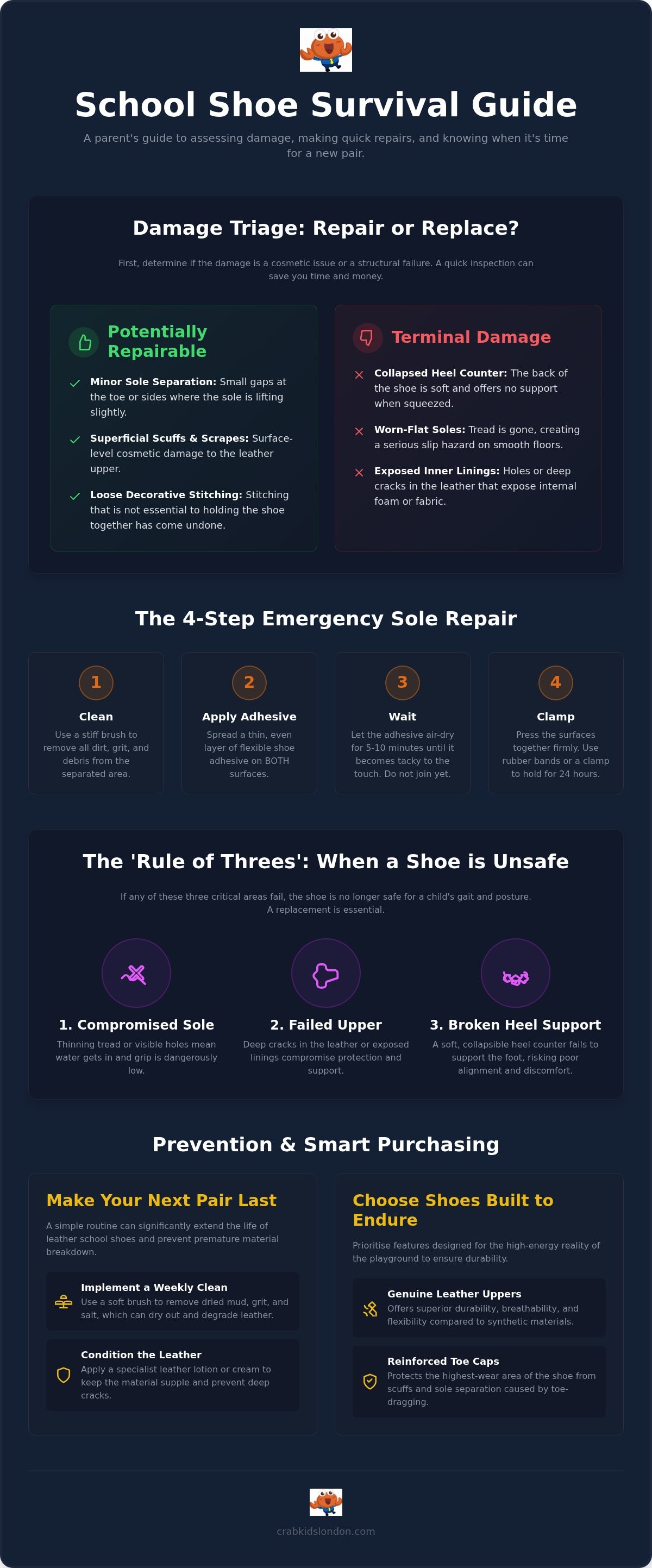
When faced with a sudden failure, your first task is a quick triage. You need to determine if the damage is a surface-level annoyance or a structural failure that risks your child's safety. Knowing exactly what to do when school shoes fall apart starts with a physical inspection of the sole and the upper. Check the outsole first. If the tread is thinning to the point of transparency or has visible holes, the water resistance is entirely gone. Moisture will seep in, ruining socks and causing the internal materials to degrade rapidly from the inside out.
Next, examine the upper leather for deep cracks amongst the grain. Surface scuffs are part of playground life, but deep fissures suggest the leather has dried out and lost its structural integrity. Finally, squeeze the heel counter at the back of the shoe. It must remain firm to support growing feet. If it collapses easily under thumb pressure, the shoe can no longer provide the stability needed for a full day of activity. You can check our shoe size guide to ensure the current fit isn't contributing to this premature wear.
Common Signs of Fixable Footwear
Minor sole separation at the toe box is often the result of "toe dragging" during intense play. If the gap is small and the rest of the sole remains secure, you can usually re-bond it at home. You might research what is Shoe Goo or similar flexible adhesives to close these gaps effectively. Superficial scuffs and loose decorative stitching are also fixable. As long as the shoe holds its shape and the stitching isn't structural, a bit of leather care can extend its life by several months. These minor issues don't compromise the safety of the footwear.
Terminal Damage: When to Bin the Shoes
Some damage is beyond the reach of a DIY fix. If you see exposed inner linings or structural foam, the shoe's protective barrier is compromised. Soles worn completely flat are a significant slip hazard on polished school corridors, especially during the winter months. Perhaps most importantly, if the internal heel supports are broken, the foot will begin to roll inwards or outwards. This poor alignment can lead to long-term discomfort and affect a child's gait. In these cases, understanding what to do when school shoes fall apart means accepting that a replacement is the only safe option to protect your child's developing posture.
DIY Fixes: How to Repair Separation and Scuffs at Home
Once you have confirmed the damage is repairable, acting quickly prevents a minor split from becoming a total blowout. Knowing what to do when school shoes fall apart involves more than just a quick dab of glue. You must first ensure the bond is permanent by cleaning and drying the damaged area thoroughly. Grit, old polish, and moisture are the primary reasons home repairs fail. Use a stiff brush or a damp cloth to remove playground debris, then allow the shoe to dry completely at room temperature before applying any adhesive.
Effective repairs require the right materials. Avoid brittle household glues that crack under pressure. Instead, choose a flexible, waterproof adhesive designed for footwear. These products move with the child's foot, maintaining a seal even during a game of football. For detailed instructions on handling different materials, you can consult a professional shoe care and cleaning guide to ensure you don't damage the leather further during the process.
The 4-Step Sole Re-attachment Process
Re-bonding a sole requires patience and precision. Follow this methodical sequence for a result that lasts:
- Clean: Use a dry brush to clear all dust from the gap between the sole and the upper leather.
- Apply: Spread a thin, even layer of contact adhesive to both surfaces. Do not press them together yet.
- Wait: Let the adhesive sit for 5 to 10 minutes until it feels 'tacky' to the touch. This is the most critical step for a strong bond.
- Clamp: Press the surfaces together firmly. Use a G-clamp or wrap the shoe tightly with heavy rubber bands, then leave it to cure for at least 24 hours.
Masking Scuffs and Scrapes
Aesthetic damage often makes a shoe look older than it is. To restore the finish, use a matching colour cream to fill deep gouges in the leather grain. Unlike liquid polishes, creams contain high pigment levels that actually fill the physical gaps. Buff the area with a soft cloth using circular motions to blend the repair into the surrounding material. Finally, apply a protective wax layer. This seals the repair and creates a barrier against moisture ingress. If you find yourself repairing scuffs every weekend, it may be time to consider durable leather school shoes specifically engineered with scuff-resistant uppers to withstand the daily rigours of school life.
Understanding what to do when school shoes fall apart saves you from the stress of a mid-week shopping trip. By mastering these simple DIY techniques, you can keep a pair in service whilst you plan a more permanent footwear upgrade.
Identifying the Point of No Return: When to Stop Repairing
Deciding when a shoe has reached its end is a matter of safety and economics. If you find yourself asking what to do when school shoes fall apart for the third time in a single term, you've likely reached the limit of DIY intervention. We suggest following the 'Rule of Threes'. If the same seam splits or the sole separates three times after a repair, the material's structural memory is gone. It will no longer hold adhesive or stitching effectively, making further attempts a waste of time and resources.
Growth spurts are another common culprit for footwear failure. Sometimes shoes appear to be failing because the foot is physically outgrowing the internal space, putting immense pressure on the uppers and seams. Check your child's toes immediately. If they are pressing hard against the front of the shoe, the fit is no longer appropriate. Understanding why correct fit is vital for shoe longevity helps you identify whether the failure is due to standard wear or a sudden change in foot size.
Safety Risks of Over-Repaired Shoes
Over-repaired shoes often lose their original safety features, posing a risk to your child's daily activity. When the outsole is worn smooth, the grip on wet school corridors or mossy playgrounds vanishes, creating a genuine slip hazard. Additionally, the internal foam and cushioning eventually compress to a point where they no longer absorb impact. This can lead to persistent heel pain or fatigue. If the heel counter has softened or collapsed, ankle instability becomes a risk during high-energy play. A shoe that no longer supports the foot's natural alignment can negatively affect gait and posture over time.
The Cost-Benefit of Repair vs Replacement
There is a significant difference between a quick fix and a false economy. Repeatedly buying adhesive, leather filler, and repair kits adds up quickly. When you factor in the time spent on weekly maintenance, the value of a repair drops significantly compared to a fresh start. Investing in a pair of high-quality leather shoes is often the more affordable path over the full school year. Durable materials, such as those found in our boys' school shoes or girls' school shoes, are built to withstand the rigours of the playground. This reduces the frequency of repairs and eliminates the stress of mid-term shopping. Knowing what to do when school shoes fall apart means recognising when a new, robust investment is the most practical choice for your budget and your child's comfort.
Proactive Care: Ensuring Your Next Pair Lasts the Year
Prevention is always more cost-effective than a last-minute emergency. Establishing a weekly care routine keeps the leather supple and prevents the structural failures discussed earlier. Grit and salt from winter roads act like sandpaper on leather fibres, leading to the cracks that cause parents to wonder what to do when school shoes fall apart. By removing these abrasive particles regularly, you preserve the material's strength and keep the uppers looking fresh.
We recommend using a dedicated leather cleaning lotion every Sunday evening. This professional-grade solution lifts deep-seated dirt without stripping the leather of its natural oils. If your budget allows, rotate between two pairs of shoes. This practice allows moisture from perspiration to evaporate fully, which prevents the internal linings from rotting and keeps the glue bonds secure. For more detailed maintenance strategies, see our expert guide to making school shoes last.
The Importance of Drying Shoes Correctly
Wet weather is inevitable, but how you handle the aftermath determines the shoe's lifespan. Never place wet leather shoes directly on a radiator or near a heater. Intense heat causes leather to shrink, become brittle, and eventually crack. Instead, stuff the shoes with crumpled newspaper to absorb moisture from the inside out. Change the paper every few hours if the shoes are saturated. Always allow them to air dry at room temperature in a well-ventilated area. This slower process maintains the leather's flexibility and prevents the sole adhesive from becoming brittle and failing prematurely.
Selecting the Right Care Products
The quality of your maintenance products matters as much as the routine itself. Choose wax-based polishes for superior water resistance. These create a physical barrier that sheds water during playground play. Avoid 'instant shine' liquid applicators. Whilst convenient, these often contain high levels of alcohol that can dry out the leather over time, leading to the very cracks you are trying to avoid. Finally, apply a protector spray designed specifically for school environments. This adds an extra layer of defence against stains and moisture. To ensure your child's footwear is up to the challenge, explore our range of tough school shoes and care products today. Mastering proactive care reduces the likelihood of ever needing to search for what to do when school shoes fall apart mid-term.
Upgrading to Endurance: Choosing Shoes Built for High-Energy Days
Transitioning from temporary repairs to a permanent solution requires a focus on structural integrity. When you are tired of wondering what to do when school shoes fall apart every few months, it is time to look closer at construction details. Look for reinforced toe caps. This feature protects the most common failure point from scuffing and separation during playground games. A high-quality shoe should also feature a sole that is both stitched and glued. This double-layered security ensures that even if the adhesive is stressed, the mechanical stitching keeps the shoe intact.
Correct fit is equally important for preventing premature wear. Use a professional shoe size guide to ensure there is enough room for growth without causing the foot to slide. Excessive movement inside the shoe creates friction that wears down internal linings and weakens the heel counter. By selecting the right size and robust construction, you eliminate the stress-related failures caused by ill-fitting footwear.
Material Matters: Why Leather Wins
Genuine leather remains the superior choice for the active school day. Unlike synthetic alternatives, leather possesses a natural ability to mould to the unique shape of your child's foot. This creates a custom fit that improves comfort over time. Leather is also highly repairable. You can polish it back to a 'like-new' state, hiding the scuffs that would permanently ruin a plastic-based 'vegan' shoe. In high-wear areas, leather outlasts synthetics because it remains flexible whilst maintaining its tensile strength. It breathes naturally, keeping feet dry and reducing the moisture-related degradation of internal glues.
The Crabkids London Durability Standard
We design our footwear specifically for the rigours of the British school day. Our focus is on high-quality components that resist scuffing and withstand high-energy play. We act as a reliable partner for parents who value consistency and quality over fleeting fashion trends. If you are currently facing a footwear crisis, we offer fast delivery across the UK to get your child back into sturdy, reliable shoes without delay. You can browse our durable boys' school shoes or explore our girls' collection to find a pair built to survive the playground. Choosing endurance today means you won't have to search for what to do when school shoes fall apart again this year.
Secure Your Child’s Footwear for the Term Ahead
Unexpected shoe failures don't have to derail your morning routine or your monthly budget. By mastering the triage process, you now know exactly what to do when school shoes fall apart, whether that involves a quick adhesive repair or recognising when a structural failure requires a safe replacement. Consistent maintenance and correct drying techniques will significantly extend the life of any leather pair, keeping them resilient against the aggressive wear of the playground.
If you have reached the point where repairs are no longer viable, we are here to provide a robust solution. Shop Durable School Shoes at Crabkids London to find footwear specifically engineered for the high-energy reality of childhood. We offer fast UK delivery for mid-term emergencies, specialist leather care products to keep uppers supple, and expert sizing guides to ensure a stable, comfortable fit for growing feet. Transitioning to high-quality leather ensures your child stays supported whilst you enjoy a more predictable, stress-free school year.
Frequently Asked Questions
Can I use superglue to fix a flapping shoe sole?
You should avoid using superglue because it becomes too brittle once it dries. School shoes need to flex as your child runs and jumps, and superglue will likely crack and fail within hours of wear. Instead, choose a flexible footwear adhesive or contact cement. These materials bond to rubber and leather whilst remaining pliable, ensuring the repair survives the playground without snapping under pressure.
How do I stop my child's school shoes from scuffing at the toes?
Preventing scuffs requires a combination of robust shoe design and regular maintenance. You should look for shoes with reinforced rubber toe caps, as these provide a physical barrier against impact. For existing leather shoes, applying a thick layer of beeswax-based polish can create a sacrificial layer that absorbs minor scrapes. Teaching children to avoid dragging their toes whilst sitting or playing also helps preserve the leather's finish.
Is it worth taking school shoes to a professional cobbler?
Taking shoes to a professional cobbler is worthwhile if the uppers are made of high-quality leather and the repair cost is reasonable compared to a replacement. Cobblers can perform structural tasks like full heel replacements or professional re-soling that DIY kits cannot match. However, for cheap synthetic shoes, the repair cost often exceeds the shoe's value, making a new, durable investment from Crabkids London a more practical choice.
Why do my child's shoes keep falling apart every term?
If you are constantly wondering what to do when school shoes fall apart, the cause is often a combination of low-grade synthetic materials and incorrect sizing. Budget shoes often use glued soles without stitching, which fail quickly under stress. Additionally, shoes that are too small or too large put uneven pressure on seams and adhesives. Upgrading to stitched leather footwear designed for high-energy play will typically break this cycle of termly failures.
How can I tell if school shoes are too small without a measuring device?
You can check the fit by pressing your thumb at the front of the shoe whilst your child is standing. There should be about a thumb's width of space between the longest toe and the end. Also, check for redness on the toes or heels after they take the shoes off. If your child is tripping more often or walking with a modified gait, it is a clear sign the shoes have become too restrictive.
What are the best materials for long-lasting school shoes?
Genuine full-grain leather is the gold standard for durability because it is naturally tough yet flexible. It breathes well and can be polished back to a high standard after a busy week. Pair this with a high-grip rubber sole that is both stitched and glued to the upper. These materials provide the best resistance against the wet UK weather and the physical demands of the school playground.
Can I wash leather school shoes in the washing machine?
You must never wash leather school shoes in a washing machine. The combination of heat, excessive water, and detergent will strip the natural oils from the leather, causing it to shrink and crack. The tumbling action can also weaken the adhesive bonds holding the sole in place. To clean leather shoes properly, use a damp cloth and a specialised leather cleaning lotion, then allow them to air dry away from direct heat.
How often should I polish my child's school shoes to prevent cracking?
You should polish school shoes at least once a week to maintain the leather's suppleness and prevent cracking. Regular polishing creates a waterproof barrier and replenishes oils that are lost through exposure to rain and mud. If the weather is particularly wet, a mid-week touch-up can provide extra protection. This simple habit is the best way to avoid having to decide what to do when school shoes fall apart prematurely.