

7 Signs Your Child Needs Wide School Shoes: The Parent's Guide to a Perfect Fit
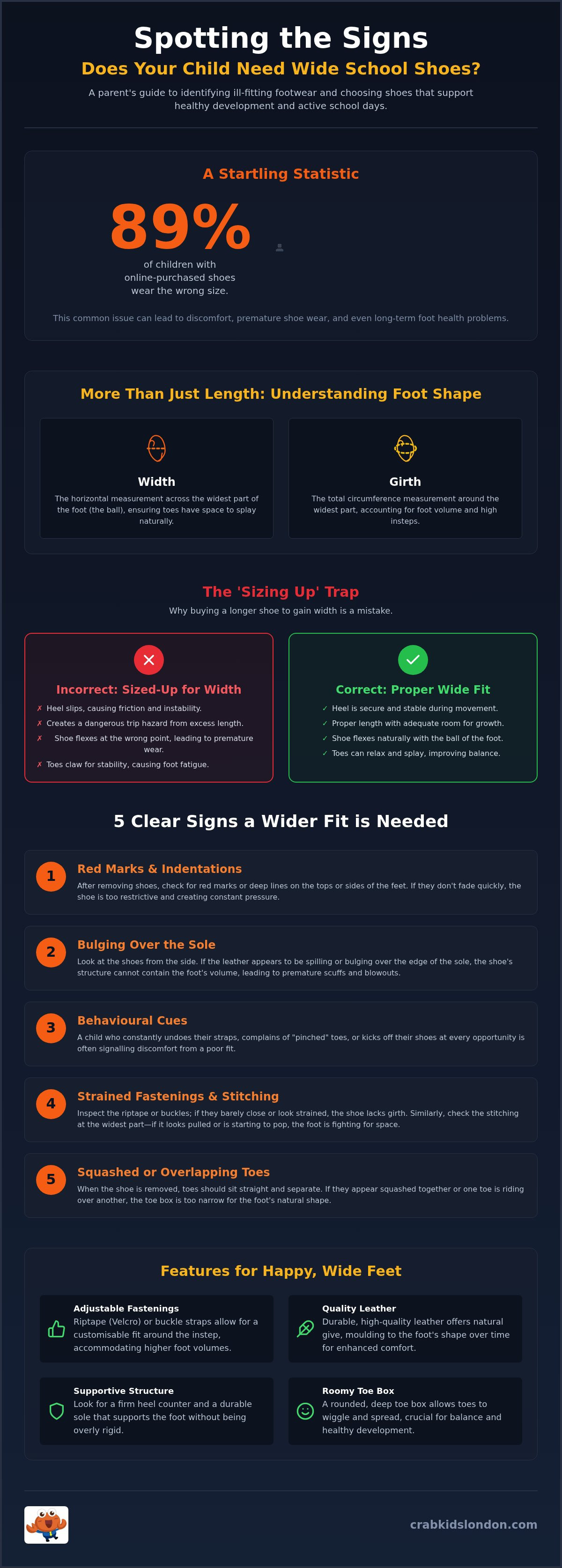
Did you know that a startling 89% of children who have their shoes purchased online are wearing an ill-fitting size? It is a frustrating reality for parents trying to balance the convenience of home shopping with the physical demands of the playground. You've likely experienced the disappointment of seeing quality leather scuffing prematurely at the edges or dealt with a child complaining of "pinched" toes. Learning the signs your child needs wide school shoes is the key to preventing unnecessary discomfort and ensuring your investment lasts the full term.
We'll show you how to spot the physical and behavioural red flags that indicate a wider fit is necessary. You will gain the confidence to measure width at home and find durable shoes that accommodate broader feet without breaking your budget. This guide provides a practical checklist to help you choose footwear that supports healthy development and stands up to the rigours of daily school life. By identifying these needs early, you can ensure your child remains comfortable and active throughout the day.
Key Takeaways
- Understand the difference between flat width and 'girth' to ensure the entire volume of your child's foot is properly supported.
- Learn how to spot the physical and behavioural signs your child needs wide school shoes, including red marks and bulging leather.
- Discover why 'sizing up' in length to accommodate width creates dangerous trip hazards and causes shoes to wear out prematurely.
- Master a simple home measurement technique to determine the exact millimetre width needed before you buy online.
- Identify the best features for wide feet, such as adjustable riptape fastenings and high-quality leather that offers a natural give.
Understanding Foot Width: Why Standard Fitting Isn't Always Enough
Foot width is the horizontal measurement across the widest part of the foot, specifically at the ball. Whilst many parents focus on length, the width determines how comfortably the foot sits within the shoe's internal architecture. Girth, which is the total circumference around that same point, is equally vital. A shoe might have the correct width on paper but lack the volume to accommodate a high instep. If you notice the leather straining or the fastenings struggling to close, these are primary signs your child needs wide school shoes.
Children's feet are not uniform; they vary significantly based on age and activity level. A 2026 study on pediatric foot anthropometry identified the mean foot width for children as 6.87 cm, yet this figure represents a broad average. Standard fit shoes are built to these generic specifications, which often fail children with broader bone structures or higher BMI. For these active students, a standard fit becomes a physical barrier to movement rather than a supportive tool.
The Difference Between Width and Length
Parents often mistakenly "size up" in length to gain extra width. Buying a size larger than required creates a mismatch between the foot and the shoe's engineered flex points. When a shoe is too long, the heel slips and the toes claw for stability, leading to fatigue. The Crabkids London comprehensive online shoe size guide helps you distinguish between these measurements to ensure the toe box provides sufficient wiggle room whilst the rest of the shoe remains secure.
Why Width Matters for Growing Feet
During childhood, the bones in the feet are mostly cartilage and highly susceptible to deformation. Narrow shoes can compress these soft structures, potentially leading to long-term alignment issues. Providing adequate width allows the foot to develop its natural shape without being forced into a restrictive mould. According to this Pediatric Podiatry Overview, proper footwear is essential for preventing common issues like bunions or ingrown nails. Correct width also improves balance and coordination, giving children a stable platform for every sprint and jump in the playground.
5 Clear Signs Your Child Needs Wide Fit School Shoes
Identifying the signs your child needs wide school shoes early saves money and prevents physical pain. Start by looking for red marks or deep indentations on the tops or sides of their feet after a full day of wear. These marks indicate the leather is too restrictive, which prevents the natural expansion of the foot during activity. If these marks don't fade quickly, the shoe is creating a constant pressure point that could lead to blisters.
Examine the shoes themselves for "bulging" at the sides. If the leather appears to be spilling over the edge of the sole, the shoe's structure is failing to contain the foot's volume. This deformation often leads to premature scuffing and "blowouts" where the stitching meets the sole. Since 89% of children who have their shoes purchased online are wearing an ill-fitting size according to 2026 data, checking for this physical strain on the material is a reliable way to spot a poor fit before the shoe fails completely.
Pay attention to behavioural cues. Children who constantly undo their riptape straps or kick their shoes off at every opportunity are often seeking relief from a "pinched" fit. You can perform the "Squeeze Test" by attempting to slide your finger between the foot and the shoe tongue. If it is a struggle to fit your finger in, the girth is insufficient. When the shoe is removed, check the toe alignment. Toes should sit straight and separate; if they appear squashed together or overlap, the toe box is too narrow. Consulting a Children's Shoe Fitting Guide can help you understand how these physical signs relate to long-term foot health.
Visual Indicators on the Foot
Look for calluses or persistent rub marks on the pinky toe or the big toe joint. Some children have a naturally "fleshy" or rounder foot shape amongst the midfoot, which standard shoes cannot accommodate without causing friction. High insteps also require the extra depth often found in wider fittings to prevent the tongue from pressing painfully against the top of the foot. If your child has a high arch, they may need a wider shoe simply to provide enough vertical space for the foot to sit comfortably.
Reading the Wear Patterns on Old Shoes
Inspect the stitching at the widest part of the shoe. If it looks strained or is starting to pop, the foot is fighting for space within the leather. Look at the soles for uneven wear on the inner or outer edges, which often suggests the foot is rolling over the side of the shoe because the base is too narrow. Over-pronation describes this inward rolling of the foot, which is a common sign that your child requires better width support to maintain a stable gait. If you notice these patterns, it is time to explore durable wide fit options designed for the playground.
The 'Sizing Up' Trap: Why Longer Shoes Aren't the Solution
Many parents instinctively reach for a larger size when a shoe feels tight. Buying a size 4 to solve a width problem when your child measures a size 3 is a common but dangerous mistake. If you notice the signs your child needs wide school shoes, increasing the length only introduces new risks. Shoes are engineered as a complete system; when the length is wrong, the entire support structure fails. This mismatch often leads to a cycle of discomfort and premature wear that frustrates both parent and child.
The most immediate danger is the trip hazard. Excess length at the toe leads to frequent stumbles whilst running in the playground. Children need to feel exactly where their feet end to navigate obstacles safely. A shoe that is too long also causes heel slippage. Without a snug fit at the heel, the foot slides forward with every step. This movement causes the back of the shoe to rub against the skin, creating painful blisters that can take days to heal.
Perhaps the most overlooked issue is the flex point. Every quality shoe is designed to bend at the ball of the foot to allow for a natural stride. If the shoe is too long, it won't bend where the child's foot naturally flexes. This forces the foot to work against the shoe's structural resistance. Over time, this leads to muscle fatigue and significant discomfort during the school day.
How Incorrect Length Ruins Durable Leather
Choosing the wrong length doesn't just hurt the foot; it destroys the footwear. You will often see excessive creasing across the toe box because the foot doesn't fill the internal space. This constant folding in the wrong place weakens the leather fibres, leading to unsightly cracks. Additionally, children tend to "drag" the extra length, resulting in premature scuffing at the very tip of the shoe. Understanding how school shoe fit affects durability is essential for making your investment last a full term.
The Impact on Walking Patterns
An ill-fitting shoe forces a child to alter their gait. This often manifests as "clumping"—a heavy-footed walking style where the child lifts their legs higher to clear the extra length at the toe. Over a full school day, this repetitive motion leads to tired legs and poor posture. Active boys and girls require the security of a shoe that grips the heel perfectly to support their high-energy movement. Prioritise the correct width over a larger size to ensure your child moves with confidence and ease.
How to Measure for Width and Girth at Home
Accurate home measurement is the most effective way to confirm the signs your child needs wide school shoes before making a purchase. Whilst professional fitting is helpful, a few simple tools like a ruler and a piece of string can provide the data required for a perfect fit. Follow these five methodical steps to capture the dimensions of your child's feet whilst they are in a weight-bearing position.
- Step 1: Place the foot flat on a plain sheet of paper and trace the entire outline whilst the child is standing straight.
- Step 2: Use a ruler to measure the distance across the widest part of the drawing (the ball of the foot) in millimetres.
- Step 3: Wrap a flexible tape measure or length of string around that same widest point to find the total girth.
- Step 4: Compare these specific millimetre results against a verified sizing chart to find the correct letter fitting.
- Step 5: Perform these checks whilst your child is wearing the socks they usually wear for school to account for extra volume.
Having these figures ready allows you to browse our collection of durable school shoes with total confidence in your selection.
Using the Crabkids London Size Guide
To ensure your measurements translate correctly into UK standards, we recommend using the Crabkids London shoe size guide. This digital tool is designed to convert raw millimetre data into precise width fittings, ranging from standard to extra-wide. If you are dealing with a fidgety child, try placing their heel against a solid skirting board before tracing. This simple anchor point keeps the foot stable and prevents the pen from slipping, which is vital for getting an accurate read on the foot's true width.
The Paper and Pen Method
It is crucial to measure both feet because one is almost always slightly larger or wider amongst growing children. You must always prioritise the dimensions of the larger foot to prevent the "pinched" feeling that leads to discomfort by the final bell. Timing is also a factor; always measure in the afternoon or evening. Feet naturally expand throughout the day due to heat and activity, and a shoe that fits in the morning may become restrictive by lunchtime. A variance of just 3mm can be the deciding factor between a standard and a wide fit, so precision at this stage is the best way to ensure long-term comfort.
Choosing Durable Wide Fit Footwear for Active School Days
Once you have identified the physical signs your child needs wide school shoes, selecting a style with the right structural features is paramount. You should prioritise footwear with a naturally rounded or square toe box rather than tapered designs that force toes into a cramped, narrow space. A generous toe box allows for natural splay during movement, which prevents the leather from being pushed beyond its limits and scuffing prematurely. Additionally, look for a robust sole that remains wide through the midfoot. Soles that "taper in" too much at the arch can leave the foot unsupported, leading to the "rolling" wear patterns mentioned earlier. Choosing a shoe with a wide, stable base ensures better balance during active play whilst reducing the strain on the leather upper.
Adjustable Fastenings for the Perfect Girth
Adjustable fastenings are essential for fine-tuning the internal volume of the shoe. Riptape is particularly effective for younger children with wide feet or high insteps, as it allows for quick adjustments and ensures a secure fit across the midfoot without restriction. This "playground-tested" fastening style provides the flexibility needed when feet swell slightly during the afternoon. For older students, laces provide the most customisable fit, allowing them to tighten or loosen specific sections of the shoe to accommodate their unique foot shape. Whether you are looking for Boys' School Shoes or Girls' School Shoes, prioritising these adjustable features ensures the shoe provides a secure, bespoke fit every day.
Maintenance for Wide Fit Leather
Durable wide-fit shoes rely on high-quality, soft leather that offers a subtle "give" whilst maintaining its structural integrity. However, even the best leather can become stiff and restrictive if it is not properly maintained. Dirt and moisture can cause the material to harden, which removes the flexibility needed for a comfortable wide fit and can eventually lead to stitching "blowouts" at the widest part of the foot. Regularly using a leather shoe cleaning lotion keeps the fibres supple and resilient. This simple maintenance routine ensures the shoes continue to accommodate the foot's width comfortably throughout the entire school year.
Selecting the right fit is the best way to ensure your investment stands up to the rigours of the playground. Browse our new arrivals to find durable, wide-friendly styles designed for active children who need that extra bit of room.
Step into School with Confidence
Identifying the signs your child needs wide school shoes is the first step toward ensuring they stay active and comfortable throughout the academic year. By looking for physical indicators like redness or bulging leather and avoiding the "sizing up" trap, you protect both their foot health and your investment. Proper width prevents the premature scuffing and structural failure that often plagues ill-fitting footwear. Measuring girth at home provides the precision needed to choose a fit that supports natural movement without causing friction or muscle fatigue during long school days.
Our collection features durable leather construction designed specifically to withstand the rigours of the playground. We combine this resilient craftsmanship with expert size guide support and fast UK delivery to make your shopping experience as seamless as possible. You don't have to settle for shoes that pinch or wear out too soon when a better fit is just a few clicks away. We are here to help you find that perfect balance of quality and comfort for the term ahead.
Shop our durable Wide-Friendly School Shoe collection today and give your child the comfort they deserve for every playground adventure.
Frequently Asked Questions
Are wide fit school shoes the same as 'extra room' shoes?
No, wide fit shoes are specifically engineered with a broader sole and upper to accommodate the width and girth at the ball of the foot. "Extra room" often implies a general increase in volume or length, which can lead to a loose, unstable fit. Wide fit shoes ensure the foot sits securely on the base without adding unnecessary length that could cause the child to stumble whilst running in the playground.
Can my child wear standard shoes if I just loosen the laces?
Loosening the laces only provides relief for the top of the foot and doesn't address a narrow sole unit. If the base of the shoe is too narrow, the foot will still overhang the edges, causing the leather to deform and scuff. Using laces to mask the signs your child needs wide school shoes results in a sloppy fit that lacks the lateral support required for high-energy playground activities.
Is width size 'G' wider than 'F' in UK children's shoes?
Yes, in the standard UK lettering system, a 'G' fitting is wider than an 'F' fitting. Most UK manufacturers use 'F' to represent a standard fit, whilst 'G' denotes a wide fit and 'H' represents extra-wide. These letters correspond to specific millimetre increments in both the width across the ball and the total girth. It is essential to consult a brand's specific size guide, as these measurements can vary between different footwear makers.
Will my child's feet always be wide, or is it a phase?
Foot shape often changes as children grow, but a wide foot can be a permanent structural trait. Toddlers usually have wider feet due to a natural fat pad that provides stability as they learn to walk. As the arch develops, the foot may narrow; however, if a child over the age of six still requires a wider fitting, it is likely their natural shape. Regular measurements every few months will help you track these changes.
How much space should be at the end of a wide fit shoe?
You should maintain a gap of approximately 8mm to 12mm between the longest toe and the end of the shoe. This thumb's width of growing room is standard for all fittings, including wide shoes. The key is ensuring the foot is held securely at the heel and midfoot so it doesn't slide forward into this space. Proper width allows the toes to splay naturally within this gap without being compressed by the leather.
Do wide feet cause school shoes to wear out faster?
Wide feet only accelerate wear if the child is wearing shoes that are too narrow for their foot shape. When a wide foot is forced into a standard fitting, the constant outward pressure causes the stitching to pop and the leather to crack at the flex points. By choosing a dedicated wide fit, the pressure is distributed correctly across the sole and upper, which preserves the shoe's durability and ensures it lasts longer.
Can I use an insole to make a wide shoe fit a standard foot?
Whilst an insole can reduce the total internal volume, it cannot change the physical width of the shoe's sole. If a child with standard-width feet wears a wide shoe, their foot may still slide from side to side. This lateral movement often leads to friction blisters and a lack of stability during physical activity. It is always best to choose the correct width fitting rather than trying to adjust a shoe that is too broad.