

Why Do School Shoes Get Holes? Causes and Prevention
What if a hole in your child’s school shoe is a clue, not just a sign that they’re hard on their things? If you’ve wondered why do school shoes get holes in them, start by checking where the damage appears. A split at the toe, a worn patch inside or a hole in the sole can each point to different kinds of pressure or contact. Fit, daily activity, materials and care may all play a part, so a hole doesn’t automatically mean your child has done anything wrong.
It’s frustrating when shoes wear through sooner than expected, especially when it’s not clear whether they can be repaired or need replacing. This guide will help you read the wear pattern, look for possible causes and take practical steps to limit further damage. You’ll also learn when shoe care or repair may help, and when replacement is the sensible choice. A closer look can help you make a more informed decision and choose durable children’s school shoes when it’s time for a new pair.
Key Takeaways
- The position of a hole can help you narrow down what’s causing the wear and what to inspect next.
- Repeated pressure, rubbing and bending can all contribute to holes, alongside fit and daily activity.
- Compare wear on both shoes and check the damaged area before settling on a cause.
- Follow the shoe’s care instructions and keep footwear clean and dry to help limit avoidable wear.
- Check whether damage affects comfort, fit or protection when deciding between care, repair and replacement.
Why Do School Shoes Get Holes? Locating the Damage
A hole is a sign of wear, not proof that your child has done anything wrong. School shoes bend, rub and meet hard surfaces throughout the day. Repeated pressure, friction or contact can gradually weaken the material until a scuff becomes a split or a hole.
If you’re asking why do school shoes get holes in them, begin with the damaged area. Its position offers useful clues, but it can’t confirm one cause on its own. Different parts of a shoe have different jobs, so first identify whether the damage is on the upper, inside the shoe or underneath. For a general overview, see these components and materials of shoes.
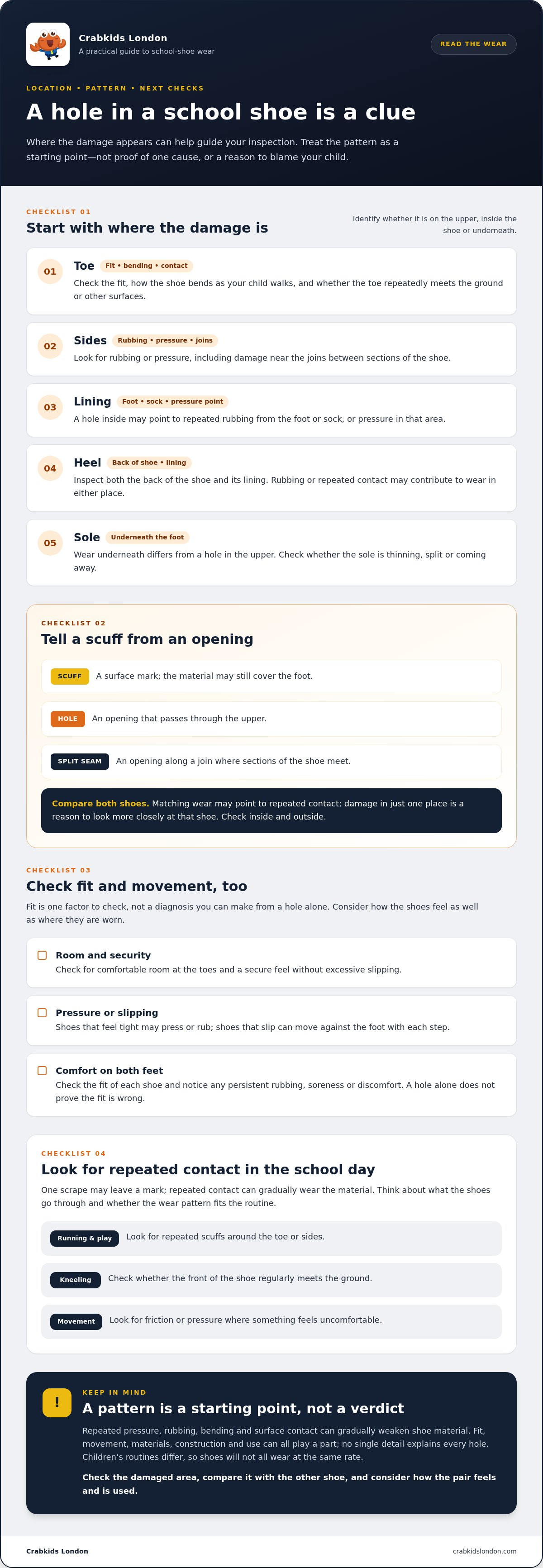
- Toe: Check the fit, how the shoe bends as your child walks, and whether the toe repeatedly meets the ground or other surfaces.
- Sides: Look for rubbing or pressure, including damage near joins between sections of the shoe.
- Lining: A hole inside may point to repeated rubbing from the foot or sock, or pressure in that area.
- Heel: Inspect both the back of the shoe and the lining. Rubbing or repeated contact may contribute to wear in either place.
- Sole: Wear underneath is different from a hole in the upper. Check whether the sole is thinning, split or coming away.
School shoes can develop holes through the repeated pressure, rubbing, bending and surface contact of everyday wear. Treat the pattern as a starting point for inspection, not a reason to blame your child.
What does the hole’s position tell you?
Toe-area damage is a reason to check fit, movement and repeated contact. Damage on the side or lining may suggest rubbing, a seam under strain or a pressure point. A hole in the upper affects the shoe’s covering, while wear in the sole comes from contact beneath the foot. Compare the damaged shoe with its pair, then check whether the wear matches.
Hole, split or scuff: what is the difference?
A scuff marks the surface, but the material may still cover the foot. A hole passes through the upper. A split seam is an opening along a join where sections meet. Check inside and outside, and inspect both shoes for similar wear. Matching patterns may point to repeated contact; damage in just one place is a reason to look more closely at that shoe.
How fit, movement and school-day activity wear shoes through
School shoes flex with every step. Walking bends the front of the shoe, while running and play add more movement and contact. If the same area repeatedly rubs against a sock, the other shoe or the ground, its surface can gradually weaken. This everyday wear is part of active school life, though children’s routines differ and shoes won’t all wear at the same rate.
Fit is one factor to check, not a diagnosis you can make from a hole alone. Your child’s foot shape, the way they move and the shoe’s condition all matter. Check how the shoes sit on your child’s feet as well as where they’re damaged. For a closer look at sizing and fit, see our school shoe size guide.
Could the shoes be too small, too large or the wrong shape?
Check that there’s comfortable room at the toes and that the foot feels secure without sliding excessively. Shoes that feel tight may press or rub; shoes that slip can move against the foot with each step. Either can cause discomfort and repeated friction. But a hole doesn’t prove the fit is wrong. Consider how the shoes feel, where they’re worn and whether your child mentions persistent rubbing or soreness.
If discomfort continues, reassess the fit rather than treating the hole as proof. Children grow, and a pair that once felt comfortable may no longer suit their feet. Check both shoes and compare the fit on each foot. A school shoe fit and durability guide can help you make a more informed assessment.
How do playgrounds and daily routines affect wear?
Think about what the shoes go through during a typical school day. Running across the playground, kneeling on the ground or scuffing a toe against a surface can repeatedly affect the same area. One scrape may leave a mark; repeated contact can gradually wear the material. The pattern can be a useful clue, especially if you notice it early, but it won’t tell the whole story on its own.
- Running and play: Look for repeated scuffs around the toe or sides.
- Kneeling: Check whether the front of the shoe regularly meets the ground.
- Everyday movement: Look for friction or pressure in places that feel uncomfortable.
There’s no single wear rate for every child. A school day full of running and outdoor play puts shoes through a different routine from one with less active breaks. Regularly check how the shoes feel and where marks are forming. This can help you spot a fit concern or repeated contact before surface wear becomes a hole. For children’s footwear suited to active school days, explore Crabkids London school shoes.
Do shoe materials and construction affect where holes form?
Materials and construction can influence how a shoe responds to bending, rubbing and contact, but no single detail explains every hole. Different parts have different jobs: the upper covers the foot, seams join sections, and the sole meets the ground. You’ll get a clearer picture by looking at the damaged area alongside how the shoe fits and is used, rather than judging by appearance alone.
Durability depends on materials, construction, fit and use working together. If you’re wondering why do school shoes get holes in them, use the location to guide your inspection instead of assuming a particular material is always to blame.
Why do toes, seams and soles wear differently?
The toe meets surfaces during walking and active play, and the shoe bends there as the foot moves. Seams and joins flex with the shoe, while rubbing or pressure may repeatedly affect the same spot. The sole has a separate role: wear underneath is not the same as a hole through the upper. A worn sole, lifted edge and split upper each call for a different check.
| Area | Observed damage | Possible contributing factor | What to inspect next |
|---|---|---|---|
| Toe | Scuffing, thinning or a hole | Repeated contact or bending | Check both toes, the fit and how the shoe bends |
| Seam or join | Loose stitching or a split | Movement, rubbing or pressure at the join | Look along the seam for further separation |
| Side or upper | Worn patch or opening | Repeated friction or contact | Compare the position on both shoes |
| Sole | Thinning, split or lifted edge | Repeated ground contact or flexing | Inspect the underside and where it meets the upper |
What can you assess without specialist tools?
Use good light and inspect both shoes inside and out. Look for thinning, loose stitching, openings and edges that have started to lift. Compare the left and right shoes for differences in wear or shape; one may show a pattern the other doesn’t. You don’t need to identify the exact material to record what’s happening. Note whether the damage is on a join, a flexible area, the upper or the sole.
Keep the check practical. A surface mark is different from material worn through, and sole damage is different from a hole in the upper. If you’re unsure what you’re seeing, note the location and whether it’s changing. Then consider whether the shoe still feels comfortable and secure or needs closer attention.
How can you prevent school shoes from getting holes?
You can’t prevent every mark or hole, but a quick routine can help you spot wear early and respond before a thin patch becomes a hole. Check fit and comfort as well as the shoe’s surface. If the same area keeps wearing down across different pairs, note where it happens and consider whether fit or a repeated activity could be contributing.
A quick routine for spotting wear early
Inspect both shoes in good light. Check the toes, sides, heels, lining and soles, comparing left with right. Look for thinning material, loose stitching, a seam beginning to separate or an edge lifting away. Ask your child whether the shoes feel uncomfortable or rub. A change in comfort can be worth noticing even before damage is obvious.
- Check the fit: Look for signs of tightness, slipping or persistent rubbing.
- Locate the wear: Note whether it’s on the upper, at a join, inside the lining or under the sole.
- Compare both shoes: Matching wear may point to repeated contact; a difference can help you focus your inspection.
- Review the routine: Consider whether the same activity or surface could repeatedly affect that spot.
Keep a simple note or photo if the same place wears down on successive pairs. It won’t prove the cause, but it can help you see a pattern and decide what to inspect next.
What shoe care can, and cannot, do
Suitable care can help maintain footwear, but it can’t prevent all wear or restore material that has worn through. Follow the shoe’s care guidance and the instructions on any product you use. Cleaning methods that suit one shoe may not suit another, so use products only when they’re appropriate for that shoe.
For leather shoes, use a care product intended for leather and follow its directions. You can explore leather shoe cleaning lotion as part of that routine. Cleaning or polish may support shoe care, but it won’t repair a hole, a split seam or structural damage. Check for early thinning and loose joins so you can spot changes before the material wears through.
For practical care to support your child’s school footwear, explore children’s shoe-care products.
When should you repair or replace school shoes with holes?
A small surface scuff is different from a hole through the upper, a seam that has come apart or a damaged sole. The key question is whether the shoe still fits comfortably and securely, and whether it can cover your child’s foot as intended. If the damage causes rubbing, exposes the foot or affects how the shoe sits, deal with it promptly rather than relying on shoe care to cover it.
Is a hole in a school shoe repairable?
It depends on the hole’s position and size, and on the condition of the material around it. A small damaged area with sound material around it is different from a split seam or a worn, separating sole. There’s no universal answer. If the damage affects comfort, protection or secure wear, treat that as a priority and don’t assume a repair will restore the shoe’s original durability.
Look at the shoe as a whole. Is the damage limited to one spot, or are nearby seams, the lining or the sole also deteriorating? Does the shoe still feel stable on your child’s foot? These checks can help you decide whether to explore a repair or choose a replacement.
What should parents check before choosing a replacement?
Start with fit, not just the hole. Children’s feet grow, so reassess whether the current pair still has comfortable toe room and feels secure. Then consider where the previous pair wore through and what your child does during a typical school day. Those details can guide your choice without assuming that one material or shoe style will prevent all wear.
Use the children’s shoe size guide to support a practical fit check. When comparing options, consider durable, comfortable school shoes suited to everyday activity, as well as the fit your child needs now. If a similar hole appears in the same place on successive pairs, keep that pattern in mind when reviewing fit and daily use.
If the shoes remain comfortable and secure, you may have time to assess the damage further. If fit, comfort or protection is affected, replacement may be the sensible choice. Explore children’s school shoes for a practical next step.
Make a confident choice for your child’s next school day
Wondering why do school shoes get holes in them? Repeated bending, rubbing and contact can wear shoes down, but the hole’s position is a clue, not a complete diagnosis. Check both shoes, consider fit and daily activity, and look for early thinning or changes in comfort.
Care suited to the shoe can help maintain it, but it can’t repair material that’s worn through. If damage affects fit, comfort or protection, consider whether repair is suitable or replacement is the sensible next step. A new pair should fit your child now and suit the demands of their school day.
Crabkids London offers boys’ and girls’ school shoes, with a focus on durable, comfortable footwear for active school life. Explore children’s school shoes and choose a pair for your child’s next school day.
Frequently Asked Questions
Why do children’s school shoes wear through at the toes?
Toe areas bend with each step and may repeatedly meet the ground or other surfaces during walking and play. Fit and movement are also worth checking, especially if your child reports rubbing or discomfort. Inspect both shoes for thinning, scuffs or a hole, and note whether the damage is on the surface or passes through the upper. The position is a clue, not proof of one cause.
Can shoes that do not fit properly get holes in them?
Yes, a poor fit can contribute to wear if the shoe rubs or moves excessively against the foot. A shoe that feels tight may create pressure, while one that slips can cause repeated friction. Check toe room and whether the foot feels secure. However, a hole alone doesn’t confirm a fit problem. Assess the shoes and your child’s comfort together, and pay attention to persistent rubbing or a change in how the shoes feel.
How can I stop my child’s school shoes getting holes?
You can’t prevent every hole, but regular checks may help you spot wear early. Inspect both shoes, including toes, sides, heels, lining and soles, and look for thinning, loose stitching or lifted edges. Check the fit and ask whether anything feels uncomfortable. Keep the shoes clean and dry in line with their care instructions, and use only products suitable for the shoe. Cleaning and polish won’t repair material that has worn through.
What causes holes in the sides of school shoes?
Repeated rubbing, pressure or movement may contribute to holes on the sides of school shoes. Check whether the damage follows a seam or join, or appears where the shoe may rub against the foot or another surface. Compare both shoes and look for changes in comfort as well as visible wear. The location can guide your inspection, but it can’t identify the cause on its own.
Should I replace school shoes as soon as they get a hole?
Not every mark means the shoes need replacing straight away. A surface scuff may not affect how they fit or protect the foot, but a through-hole, failed seam or damaged sole needs closer attention. Consider whether the shoes remain comfortable, secure and able to cover the foot. Whether a repair is suitable depends on the damage and the shoe, so don’t assume every hole can be repaired or that a repair will restore durability.
Can cleaning and polishing prevent holes in school shoes?
Cleaning and polishing can support suitable shoe care, but they can’t stop all wear or prevent a hole from forming. Follow the shoe’s care instructions and each product’s directions, as the right approach depends on the shoe. Keep an eye on areas that are thinning or seams that are beginning to loosen. Polish or cleaner isn’t a repair for a hole, split seam or damaged sole.
Do active children wear through school shoes faster?
Active routines can mean more bending, rubbing and contact with the ground, which may contribute to wear over time. Running, playground games and kneeling can repeatedly affect the same parts of a shoe. But children’s school days differ, so activity alone doesn’t determine how quickly a pair wears through. Check where the damage appears, how the shoes fit and whether your child notices discomfort before deciding what to do next.