

When Is the Best Time to Buy School Shoes? A Parent’s Guide
Could buying school shoes too early leave your child with a pair that no longer fits by the first day? If you’re wondering when is the best time to buy school shoes, aim for a practical window: close enough to term for a fresh fit check, with enough time to sort out any sizing or delivery issues.
Planning ahead can make back-to-school shopping easier, but children’s feet keep growing. Buying months in advance may mean the shoes need reassessing before term begins. Around two to three weeks before school starts is a common guide, not a deadline that suits every child.
Use your school’s term dates, your child’s recent growth and the time needed to check the fit to choose when to shop. If you’re ordering online, check the current delivery estimate and returns or exchange terms before placing an order. Leaving time to try the shoes and act if they don’t fit can help you avoid a last-minute dash.
Key Takeaways
- For when is the best time to buy school shoes, start with your school’s term dates and allow time to check the fit.
- Balance the extra planning time of shopping early against the chance your child’s feet may change before term begins.
- Compare buying early with waiting, including how each affects choice, fit confidence and time to arrange an exchange.
- Use a simple timeline: confirm the term date, check footwear rules, assess the fit, then order with time to review delivery details.
- Choose a shopping window around your child’s needs rather than assuming every family should buy during the summer.
When is the best time to buy school shoes before term starts?
Start with your child’s return-to-school date, then work backwards to leave time to check the fit and resolve any ordering issues. A practical starting point is to begin planning several weeks before term. Retailers and footwear experts commonly suggest buying around two to three weeks before school starts, but treat this as a guide rather than a fixed deadline.
In short: plan several weeks ahead, then buy close enough to term to check the fit with confidence. The right timing depends on how quickly your child’s feet are growing, whether you’ll have an in-person fitting or check the fit at home, and how you’re ordering. For an online order, check the current delivery estimate and exchange terms, and leave a buffer in case the shoes aren’t right.
School shoes need to suit the school day as well as the uniform rules. Wikipedia’s overview of proper footwear describes shoes as covering and protecting the foot, and lists school shoes as a category. Check your school’s own guidance to narrow down suitable styles.
Why the summer holidays are a common time to plan
The holidays can give you time to compare suitable options, check sizes and organise an order without squeezing everything into the final few days. There’s no need to buy as soon as the break starts. First, check the school’s uniform requirements, including any rules on colour, style or sole type. Then choose a purchase date that balances preparation with your child’s recent growth.
How school term dates affect your shopping timeline
Use your child’s actual first day back, not a general back-to-school date. Term dates vary between schools and across the UK, so check the school calendar directly. Count backwards from that date, allowing time to assess the fit and receive the order. If the shoes arrive early, try them on and reassess closer to term, especially if your child’s feet have grown quickly.
Mark three points on your calendar:
- Confirm: Check the return date and footwear requirements.
- Allow: Set aside time to measure or check the fit before ordering.
- Review: Build in a delivery buffer and time to arrange an exchange if needed.
This ties the purchase to your family’s timetable rather than a one-size-fits-all summer deadline. For help checking measurements before ordering, use this school shoe size guide.
How to balance early shopping with children’s growing feet
Shopping early gives you time to compare options, check school requirements and deal with a fit that needs adjusting. The trade-off is that your child’s feet may change before term begins. Growth varies from child to child, so an old shoe size or a measurement taken well in advance can’t confirm what will fit comfortably on the first day back.
Check both feet when choosing shoes, as they may not be exactly the same size. Assess the fit while your child is standing, and consider length and width rather than relying on the number on a label. For practical measuring help, use this children’s shoe size guide.
Signs the shoes may no longer fit comfortably
Check that there’s room around the toes and that the shoe doesn’t press tightly across the widest part of the foot. Ask your child how the shoes feel. Rubbing, pressure or discomfort are reasons to reassess the fit, not signs that they simply need to get used to a shoe that feels too tight. Appearance alone can’t confirm comfort, so check both feet while your child stands and walks.
If you bought well ahead, repeat the fit check shortly before term. A shoe that seemed suitable at purchase may no longer feel right after a period of growth. For practical advice on choosing and checking school shoes, consult the Royal College of Podiatry’s guide.
Buying ahead without guessing your child’s future size
It can be tempting to buy a much larger size to allow for growth, but a shoe that’s too big may not feel secure or comfortable. Choose a pair that fits your child’s feet at the time, then check the fit again before term starts. That gives you a clearer basis for deciding whether the shoes are still suitable than trying to predict a future size.
So, when is the best time to buy school shoes if your child is growing quickly? Plan ahead, but leave the final fit check close enough to term to reflect how the shoes feel now. If you’re comparing options online, check the current delivery estimate and exchange terms, too. The children’s shoe size guide is a useful place to start measuring before you order.
Should you buy school shoes early or wait until just before term?
Neither option suits every child. Buying early gives you more time to compare suitable styles and organise an order, but you may need to check the fit again before school starts. Waiting until closer to term can make sense if your child’s feet have changed recently or their current size is uncertain. The trade-off is less time to resolve a sizing or delivery problem.
Use this comparison to weigh up what matters most for your family. “Early” and “close to term” depend on your school dates and circumstances, not one fixed shopping deadline.
| Consideration | Buying earlier | Waiting until closer to term |
|---|---|---|
| Fit confidence | Useful if the current fit is known, but recheck if time passes. | A recent measurement may better reflect your child’s feet now. |
| Choice | Allows more time to compare styles that meet school rules. | Leaves less time to compare and decide. |
| Planning time | Creates room to organise the purchase around family plans. | Can suit a later fitting, but compresses the to-do list. |
| Order flexibility | Gives more time to review delivery and exchange arrangements. | There may be less time to resolve an issue before term starts. |
When buying earlier makes sense
Shopping earlier can work well when you’ve confirmed the return date, checked the school’s footwear requirements and have a reliable idea of your child’s current fit. It can also give you time to compare suitable styles or organise an online order. If some time passes between purchase and term, check the fit again before your child wears the shoes to school.
When it may be better to wait a little
Consider waiting if your child’s feet have changed recently or you’re unsure of their current size. A recent fit check can give you a better basis for choosing. Still, leave time to address a problem. Check current delivery estimates and exchange terms before buying. The Royal College of Podiatry’s guide offers practical advice on choosing and checking school shoes.
So, when is the best time to buy school shoes? Choose a window that balances up-to-date fit information with enough time to sort out an issue. If you’re ready to compare children’s school shoes, you can browse school shoe options online and check the current ordering details before deciding.
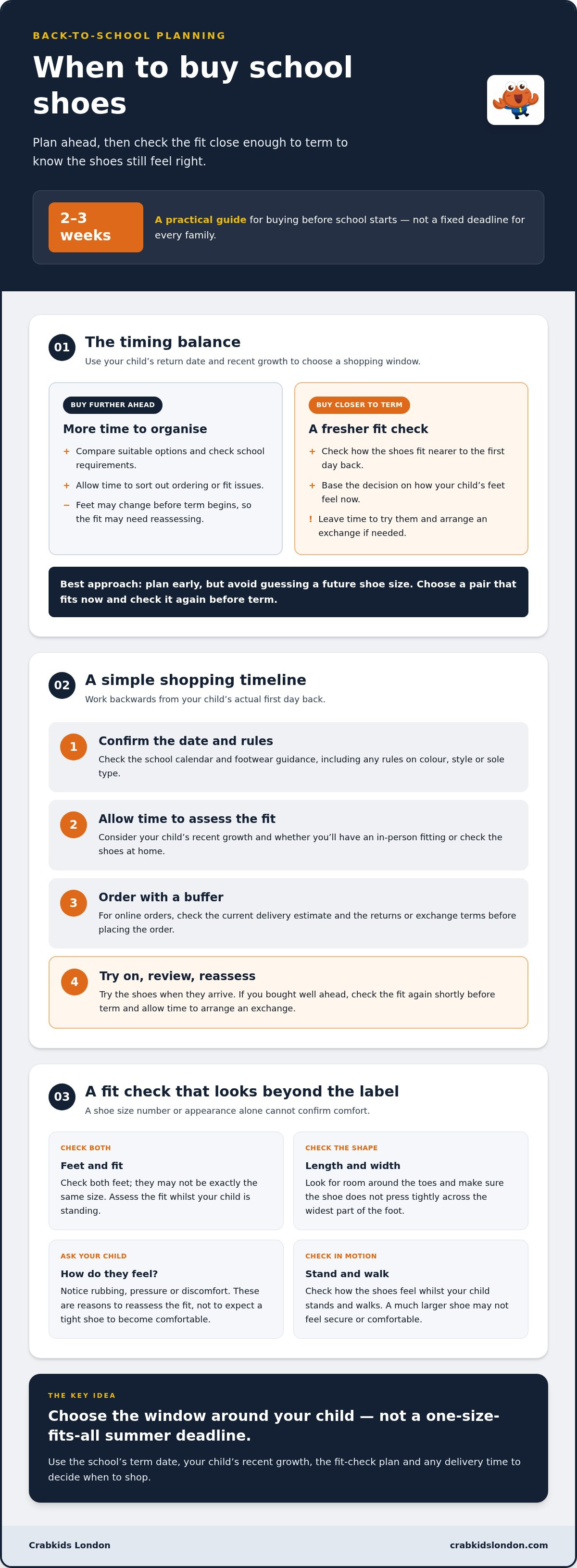
A back-to-school shoe shopping timeline parents can follow
A short sequence helps you plan around your child’s needs without treating one shopping date as right for every family. Start with the school calendar, check the rules, assess the fit and allow room for delivery or an exchange. The aim is to leave enough time to act if something doesn’t go to plan.
Several weeks before term: check dates, rules and fit
Confirm your child’s first day back and check the school’s uniform guidance for permitted shoe colours and styles. Measure both feet using a current size guide rather than relying on last season’s shoe label. Once you know what’s allowed and what size to consider, shortlist suitable pairs before ordering.
- Confirm: Note the return date and any footwear requirements.
- Check: Measure both feet and compare the results with a current size guide.
- Choose: Shortlist shoes that meet the school rules and your child’s fit needs.
- Order: Check delivery estimates and returns or exchange information before placing an online order.
Build a buffer into your plan. Delivery estimates and exchange arrangements vary by retailer, so check the current details rather than assuming how long an order will take. For more help organising an online purchase, read this UK school-shoes delivery guide.
Before the first day: try the shoes and act on problems
Once the shoes arrive, have your child try on both with their usual school socks. Check comfort while they’re standing and walking, not just sitting down. Look for pressure, rubbing or a fit that feels loose or restrictive. If the shoes don’t feel right or delivery has been delayed, check the retailer’s current exchange instructions promptly so you know what options and time you have.
Keep the sequence flexible. If your child’s feet have changed since measuring, reassess the fit before term rather than assuming the original size still works. If you’re asking when is the best time to buy school shoes, choose the point in your timeline that leaves room for these checks and any next steps. Explore children’s school shoes online as one option, and review the latest ordering details before you buy.
Choose school shoes with enough time to get the fit right
Start with your child’s actual return date, then adjust for their current fit, growth and how you’re ordering. Not every family needs to shop during the summer holidays. Choose a window that gives you time to check the shoes properly and deal with a delivery or sizing issue before term begins.
If you’re asking when is the best time to buy school shoes, use the term date as your anchor, not a rigid deadline. Buy when you have a reliable idea of your child’s size and enough time to try the shoes and take action if they don’t fit comfortably.
A quick checklist before placing an order
Run through these checks before you buy. They help turn your shopping window into a practical plan, whether you’re ordering online or buying another way.
- Check the rules: Confirm the school’s requirements for shoe colour and style.
- Check the fit: Assess your child’s current size rather than relying only on an old label. The children’s shoe size guide can help you measure.
- Check the order details: Before ordering online, review the retailer’s current delivery estimates, returns information and exchange terms.
- Leave room to respond: Allow time for your child to try both shoes and for you to address any fit concerns before the first day.
Find a practical option for the school term
Crabkids London offers children’s school shoes, including boys’ and girls’ options, described as durable and comfortable for school life. Browse suitable styles online and check the current product and ordering details before deciding.
A calm purchase comes down to timing and a final fit check, not buying as early as possible. Confirm the school requirements, choose based on your child’s feet now and leave enough time to sort out an issue if one arises. Explore children’s school shoes at Crabkids London as you plan for the new term.
Plan ahead for a confident first-day fit
The best shoe-buying date isn’t the same for every family. Use your child’s school return date as a starting point, then allow time to check the fit, consider growth and sort out delivery or an exchange if needed. That’s the practical answer to when is the best time to buy school shoes: early enough to handle a problem, but close enough to term to make a fresh fit check worthwhile.
Before ordering, confirm the school’s footwear rules, check both feet and review the retailer’s current delivery and returns information. You don’t need to shop in summer simply because it’s the holidays. Choose a window that works for your child and your plans.
Crabkids London sells children’s school shoes to customers across the UK. If you’re considering an online order, check the current delivery details before purchasing. Explore children’s school shoes at Crabkids London and choose a time to order that leaves room for a fit check.
Frequently Asked Questions
When should I buy my child’s school shoes for September?
For a September start, plan around your child’s actual return date and aim to buy close enough to term for a reliable fit. Around two to three weeks before school starts is a common guide, but it isn’t a fixed rule. Check the school’s footwear requirements, your child’s current fit and, if ordering online, the retailer’s delivery estimate and exchange terms before deciding.
How many weeks before term should I buy school shoes?
Around two to three weeks before term is a practical starting point for many families, leaving time to check the fit and address an issue. The answer to when is the best time to buy school shoes depends on your child’s growth, how recently their feet were measured and how you’re buying. Start planning several weeks ahead if you need more time to compare options or arrange an online order.
Is it better to buy school shoes early or wait until just before term?
Buying early gives you more time to compare suitable styles and organise an order, but you may need to check the fit again before term. Waiting can make sense if your child’s feet have changed recently or their size is uncertain. It leaves less time to sort out a delivery or sizing problem, so check current delivery and exchange details and avoid leaving the purchase until the last moment.
Can I buy school shoes in advance if my child’s feet are still growing?
Yes, but choose a pair based on your child’s feet at the time rather than buying substantially larger shoes to predict future growth. Children’s feet grow at different rates, so an old size may not reflect the current fit. Check both feet when buying, then reassess the shoes before term if some time has passed. If they feel tight or uncomfortable, don’t assume your child will simply grow into them.
How often should I check whether my child’s school shoes still fit?
Check the fit when buying and again before term if the shoes were purchased well in advance. During the school year, reassess if your child mentions rubbing or pressure, or if the shoes seem tight. There isn’t one checking interval that suits every child, as growth varies. Check toe room and width, and ask how the shoes feel while your child is standing and walking.
What should I do if school shoes ordered online do not fit?
Check the retailer’s current returns and exchange instructions promptly, as the available options and process can vary. Don’t have your child wear uncomfortable shoes to school while you decide what to do. Recheck both feet and the fit, then compare the measurements with the retailer’s size guide before choosing another size. If you order a replacement, review the delivery estimate so you can plan around the school start date.
Should children try school shoes on with school socks?
Yes. Have your child try on both shoes with the socks they’ll usually wear to school, as this gives you a more realistic sense of the fit. Check while they’re standing and walking, not only when seated. Look for comfortable room around the toes and width without pressure or rubbing. If one shoe feels different from the other, assess both feet rather than relying on a single measurement.