

Waterproof School Backpack UK: The 2026 Parent’s Guide to Durable Protection
Picture the Monday morning school run during a sudden October downpour. By the time your child reaches the classroom, their homework is a soggy pulp and their favourite library book is ruined. It's a frustrating, recurring expense that most British parents know too well. You need gear that stands up to the unpredictable weather whilst surviving the daily rigours of the playground. Finding a high-quality waterproof school backpack UK students can actually use daily means looking beyond just the colour or the number of pockets.
We understand that a bag is only as effective as its weakest seam. You likely feel the same pressure to find a solution that stops the cycle of broken zips and soaked folders. This guide provides the practical knowledge you need to choose a bag that offers genuine protection and lasting durability. We'll explain the difference between water-resistant coatings and true waterproof construction. You'll also discover how to balance ergonomic support for growing spines with styles that fit strict school uniform codes. From understanding IP ratings to checking for reinforced stitching, we've organised everything you need to ensure this academic year remains dry and stress-free.
Key Takeaways
- Learn the critical difference between water-resistant coatings and true waterproof construction to keep school essentials bone-dry in a British downpour.
- Identify the technical features, such as taped seams and storm flaps, that define a high-quality waterproof school backpack UK students can use daily.
- Compare the performance of nylon and polyester fabrics to choose a material that balances lightweight comfort with long-term resilience.
- Apply the 10-15% body weight rule and look for S-shaped straps to prevent shoulder strain and support your child's spinal health.
- Discover how prioritising durable materials reduces the long-term cost-per-wear and prevents the need for mid-term bag replacements.
Waterproof vs Water-Resistant: Which School Bag is Right for the UK?
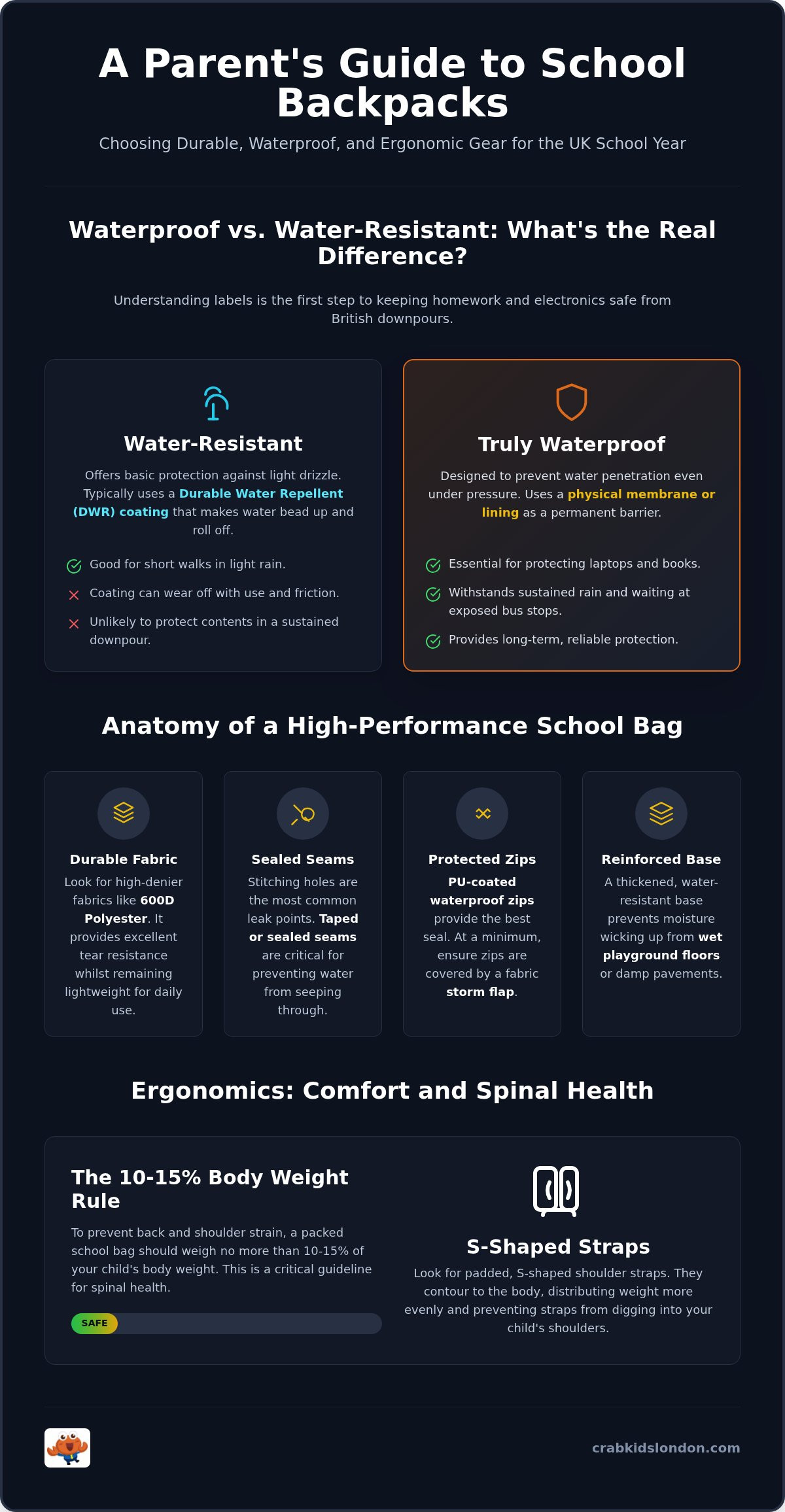
Choosing a waterproof school backpack UK parents can trust starts with understanding industry labels. Many brands use "waterproof" and "water-resistant" interchangeably; however, they offer very different levels of protection. Water-resistant bags typically feature a surface coating that sheds light drizzle. In contrast, a waterproof bag uses materials or specific construction methods that prevent water penetration even under pressure. This distinction is vital for protecting textbooks and expensive electronics from the unpredictable British climate.
The weather in the UK rarely settles for a light mist. For children walking to school or waiting at exposed bus stops, a standard water-resistant bag often fails during a typical autumn downpour. Statistics show that roughly 24% of consumers prioritise water-resistant materials, yet many find their children's homework soaked because the bag couldn't handle sustained rain. Hydrostatic Head is the measure of how much water pressure a fabric can withstand before leaking.
Understanding how waterproof fabrics are made helps you spot a bag that actually works. Most quality options incorporate either a chemical finish or a physical barrier to block moisture. By identifying these features early, you can avoid the mid-term stress of replacing a leaking rucksack.
The Role of DWR Coatings in School Gear
Durable Water Repellent (DWR) is a chemical finish applied to the outer fabric. It works by making water bead and roll off the surface rather than soaking into the fibres. This technology is common in smart school rucksacks because it keeps the bag lightweight and flexible whilst offering basic protection. DWR works well for short distances in light rain. Its main limitation is that the coating can wear down over time through friction and heavy use. In a persistent British downpour, water eventually finds its way through the gaps in the weave if the coating is the only line of defence.
When to Choose a Fully Waterproof Membrane
If your child carries a laptop or tablet, an internal waterproof membrane is a safer investment for a waterproof school backpack UK students use for tech. These bags use a laminate layer or a permanent internal lining that acts as a physical barrier. Unlike temporary sprays, a membrane provides a permanent shield against moisture. You can identify these by looking for bags with a smooth, plastic-like internal lining or those specifically marketed with high IP ratings. For maximum security, browse our collection of school bags designed to handle the rigours of the UK climate. These designs ensure that even if the outer fabric gets damp, the internal contents remain bone-dry.
Key Features of a High-Quality Waterproof School Backpack
A waterproof school backpack UK parents select for their children must be more than just a coated fabric. True durability starts with material density. High-denier fabrics, specifically 600D polyester, are the standard for 2026. This material provides the necessary tear resistance whilst maintaining a lightweight profile. However, the fabric is only part of the story. Even the best material fails if the construction allows water to bypass the outer shell.
Needle holes from stitching are the most common leak points in any rucksack. Prioritising taped or sealed seams ensures that moisture cannot seep through these tiny gaps during a heavy downpour. Additionally, check for reinforced bases. Children frequently drop their bags on wet playground floors or damp bus stop pavements. A thickened, water-resistant base prevents moisture from wicking upwards and soaking the bottom of textbooks.
Our range of school bags incorporates these protective features to withstand the rigours of the British academic year. You don't have to sacrifice style for functionality when the bag is designed with the playground in mind.
Zip Technology and Storm Guards
Standard nylon zips act like sieves in heavy rain. Look for PU-coated waterproof zips which feature a rubberised seal to block water entry. If a bag uses standard zips, it should at least have a fabric storm flap. This simple flap is a cost-effective way to redirect rain away from the zip teeth. It's also vital to test the zip's smoothness. Children need to operate these zips quickly between lessons without the fabric snagging or the slider sticking.
Internal Organisation and Laptop Protection
Modern school life involves digital learning tools. A raised laptop sleeve is essential; it keeps expensive tablets or laptops suspended away from the bag's base. This protects tech from both ground moisture and accidental drops. You can also follow expert advice on backpack safety by organising heavier items, like large textbooks, in the compartment closest to the back panel. Creating "dry zones" within the bag helps keep essentials organised. Use internal mesh pockets to keep a damp gym kit or a leaking water bottle separate from dry homework and stationery. For a reliable partner in school preparation, explore the full collection at Crabkids London.
Comparing Materials: Nylon, Polyester, and PU Coatings
Selecting the right material for a waterproof school backpack UK parents can rely on involves a trade-off between weight and resilience. Nylon remains a top choice for high-performance gear. It offers an exceptional strength-to-weight ratio, meaning the bag stays light whilst resisting tears during playground scuffles. Polyester is the most common alternative, holding a significant portion of the market share. It's generally more affordable and retains vibrant colours longer than nylon, but it's naturally more porous. To achieve true protection, polyester requires a robust internal coating to stop moisture in its tracks.
Polyurethane (PU) backing is the invisible hero of a dry rucksack. This thin, rubberised layer is applied to the interior of the fabric. It acts as a secondary shield if the outer water-repellent finish begins to fail. Carryology explains waterproof vs water-resistant by detailing how these internal coatings create a physical barrier that surface sprays simply cannot match. Without this PU layer, water will eventually seep through the weave of even the densest polyester during a typical British winter.
Durability vs Weight: Finding the Balance
A heavier fabric doesn't always mean a better bag. You must consider your child's developing spine. Health experts recommend that a loaded rucksack shouldn't exceed 10% to 15% of a child's body weight. Choosing a lightweight nylon weave helps keep the total load manageable without sacrificing durability. Different weaves, such as ripstop, provide excellent scuff resistance for active playground use without adding unnecessary bulk. To keep all your child's gear in top condition, refer to our Expert Guide to Kids Shoe Care Products for professional maintenance tips that apply to technical fabrics too.
Colour Fastness and Uniform Compliance
School uniform codes often demand a smart, consistent appearance. Polyester excels here because it resists UV fading and maintains its "new" look despite the UK's constant cycle of sun and rain. A high-quality rucksack should complement the formal aesthetic of leather school shoes for boys. Materials with wipe-clean surfaces are particularly useful for busy parents. They allow you to remove playground mud or bus floor grime with a simple damp cloth; this ensures the bag looks professional for the entire academic year whilst protecting the homework inside.
Practical Guidance: Size, Weight, and Ergonomics
Finding a waterproof school backpack UK children can wear comfortably involves more than just checking for dry contents. You must prioritise spinal health. A widely accepted guideline from health bodies suggests a loaded rucksack shouldn't exceed 10% to 15% of a child's body weight. To manage this load effectively, look for padded, S-shaped shoulder straps. These follow the natural contour of the body to distribute weight evenly across the shoulders rather than letting the straps dig into the neck or collarbone.
Proper adjustment is equally vital for long-term comfort. The bag should sit in the centre of the back, with the base resting just above the waistline. If the bag hangs too low on the hips, it pulls the shoulders back and causes unnecessary strain. A chest strap is a must-have for active children who walk or cycle to school; it keeps the shoulder straps secure and prevents the bag from shifting or swaying during movement.
Choosing the Right Capacity for Primary and Secondary
Capacity needs vary significantly by age group. For primary school pupils, a 12-18 litre bag is usually sufficient for a lunchbox, water bottle, and a reading book. Secondary students often require 20-25 litres to accommodate multiple textbooks, stationery, and gym gear. Ensure the bag is wide enough to hold an A4 folder flat. If a folder is forced or bent, it can damage the internal waterproof lining over time. Just as you check the Crabkids Shoe Size Guide to ensure a proper fit for footwear, you should measure your child's torso to ensure the backpack frame isn't too long for their back.
Cleaning and Re-proofing Your Waterproof Bag
Maintaining the protective qualities of your bag requires a methodical approach. You should never put a waterproof backpack in the washing machine. The heat and agitation can delaminate the internal waterproof membrane and strip away surface coatings. Instead, spot clean the exterior with a damp cloth and a mild detergent to remove playground grime. If mud builds up, use a soft brush to gently lift the dirt without damaging the fabric fibres.
You'll know it's time to re-proof the bag when water stops beading on the surface and starts soaking into the material. Applying a fresh waterproof spray once or twice a year maintains that essential shedding effect. For gear that stands up to the British elements throughout the academic year, browse our durable collection at Crabkids London.
The Crabkids London Approach to Durable School Gear
Our design philosophy centres on a principle we call "Practical Specialism." This means we don't chase fleeting fashion trends or gimmicky features that fail after a month of use. Instead, we focus on the high-energy reality of childhood and the specific demands of the British climate. Every waterproof school backpack UK parents find in our collection is built with a quiet confidence in its longevity. We understand that a bag isn't just an accessory; it's a vital piece of equipment that must protect your child's hard work and expensive tech every single day.
Longevity is the most effective way to reduce the "cost-per-wear" for busy families. Whilst a cheaper, poorly constructed bag might seem like a saving in September, the cost of replacing it by the February half-term quickly adds up. We take a methodical approach to durability by selecting high-denier fabrics and reinforced hardware that survive the playground. By choosing gear designed for a full academic lifecycle, you ensure your child stays organised and dry without the stress of mid-term failures.
Building a Complete Back-to-School Kit
A reliable rucksack is only one part of a successful school day. We believe in providing a cohesive range of essentials that work together to support your child’s comfort and confidence. This includes pairing your waterproof rucksack with durable school shoes for girls or boys that offer the same level of resilience against the elements. Consistency in quality across all gear means fewer worries for you as a parent.
Don't overlook the smaller details that impact daily comfort. High-quality school socks are essential for preventing blisters during those long walks to school in damp weather. When you buy from a brand that understands the entire lifecycle of school products, you benefit from gear that is tested to perform under real-world conditions. We do the heavy lifting in product testing so you don't have to.
Fast Delivery and National Support
We know that the lead-up to a new term is often a frantic period for parents. To alleviate this stress, we offer fast national delivery across the United Kingdom. Our logistics team works efficiently to ensure your order arrives promptly, allowing you to tick one more item off your to-do list with total peace of mind. Reliability is at the heart of everything we do, from the stitching on our bags to the speed of our shipping.
If you're unsure about which material is best for your child's specific commute, our team is available to provide expert guidance. We can help you understand the technical specifications or offer advice on sizing to ensure the best ergonomic fit. When you're ready to secure a bag that truly stands up to the British rain, you can browse our latest collection of waterproof school bags. We are here to act as your reliable partner in preparing your child for the challenges of the academic year ahead.
Prepare Your Child for a Dry and Successful Term
Choosing the right waterproof school backpack UK parents can trust means looking for a balance of technical fabric and ergonomic design. You've seen that true protection comes from sealed seams and internal membranes rather than simple surface sprays. By following the 15% weight rule and prioritising S-shaped shoulder straps, you ensure your child stays comfortable whilst their essentials remain bone-dry. Proper maintenance, like spot cleaning instead of machine washing, will extend the life of these materials for years to come.
Our collection is designed for active school life, using expertly selected durable materials built to withstand the British elements. We offer fast UK-wide shipping to ensure your gear arrives well before the first bell rings. Shop Durable Waterproof School Bags with Fast UK Delivery and take the stress out of the morning school run. We're proud to be your reliable partner in keeping this academic year organised and protected, whatever the weather brings.
Frequently Asked Questions
Is a waterproof backpack necessary for school in the UK?
A waterproof backpack is highly recommended due to the unpredictable British climate and the increasing use of laptops in schools. Whilst water-resistant bags handle light drizzle, they often fail during sustained downpours. Investing in a truly waterproof school backpack UK students can rely on prevents the recurring cost of replacing ruined textbooks and expensive electronics. It provides peace of mind for parents whose children walk or cycle to school daily.
Can I wash a waterproof school bag in the washing machine?
You should never wash a waterproof bag in a washing machine. The high temperatures and mechanical agitation can strip away the Durable Water Repellent (DWR) coating and delaminate internal waterproof membranes. Instead, use a soft brush to remove dried mud and a damp cloth with mild detergent for stains. This methodical approach to maintenance ensures the bag's protective features remain intact for the entire academic year without compromising the fabric's integrity.
What is the best size backpack for a primary school child?
For primary school children, a capacity of 12 to 18 litres is generally ideal. This size provides enough space for a lunchbox, water bottle, and A4 folders without becoming too heavy for smaller frames. It's vital to ensure the bag isn't wider than the child's shoulders. A well-fitted bag helps maintain proper posture and prevents the shoulder strain often associated with oversized or poorly balanced rucksacks during the daily commute.
How do I know if a bag is truly waterproof or just water-resistant?
Truly waterproof bags feature technical construction such as taped seams and rubberised zips to block all moisture. Water-resistant bags only have a surface coating that sheds light rain but allows water through the needle holes during heavy storms. Check the product specifications for mention of an internal polyurethane (PU) membrane. This physical barrier is a key indicator that the bag can withstand the pressure of a proper British downpour rather than just a mist.
Will a waterproof coating wear off over time?
Surface-level Durable Water Repellent (DWR) coatings do gradually wear off due to friction and environmental exposure. You can tell it's time to re-apply a waterproof spray when water no longer beads on the surface and starts soaking into the fabric fibres. However, bags with internal waterproof membranes provide a permanent barrier that doesn't wash away. Combining a sturdy internal liner with occasional external re-proofing offers the most reliable long-term protection for school essentials.
Are waterproof backpacks heavier than standard school bags?
Modern waterproof backpacks are rarely heavier than standard bags thanks to advancements in fabric technology. Using high-tenacity nylon or lightweight polyester allows for excellent durability without adding unnecessary bulk. Whilst internal PU coatings add a micro-layer of weight, the difference is negligible compared to the weight of the books inside. Prioritising a bag with a high strength-to-weight ratio ensures your child stays protected from the rain without risking unnecessary back strain or discomfort.
How much should I spend on a quality school backpack?
Quality waterproof school bags in the UK typically range from £20 to over £70 depending on the technical features included. Whilst budget options exist, they often lack the reinforced stitching and taped seams required for longevity. We recommend focusing on the "cost-per-wear" by investing in a durable bag that lasts the full year. Choosing a mid-range, expertly designed rucksack often saves money in the long run by avoiding the need for a mid-term replacement.
Does a waterproof bag protect against snow as well as rain?
A waterproof bag provides excellent protection against snow, as it prevents moisture from seeping into the fabric as the snow melts. Standard bags often become heavy and damp in wintry conditions, whereas a waterproof exterior allows you to simply brush the snow off. This ensures that even in the coldest months, the contents remain dry and protected. It's a versatile choice for the varied weather conditions experienced across the United Kingdom throughout the winter term.