

Preventing Blisters from New School Shoes: The Parent’s Practical Guide
Imagine the scene: it's only the second morning of the new term, and your child is already limping towards the school gates. You spent weeks finding the perfect fit, yet those stiff heels are causing tears before the first bell even rings. It's a frustrating reality for many families, but preventing blisters from new school shoes doesn't have to be a trial-and-error process. Even the most durable leather requires a brief softening period to handle the daily rigours of the playground.
We know that morning stress is the last thing you need. It's disheartening to see your child in pain, especially when you've invested in quality footwear that still seems to rub. This guide shares professional techniques to break in new school shoes and keep your child comfortable from their very first step. You'll learn how to use moisture-wicking specialist socks, protective barrier methods, and shoe care lotions to provide immediate relief. We've organised these practical tips to help you transform stiff leather into a supportive partner for your child's daily adventures.
Key Takeaways
- Master the "Blister Triangle" by managing heat, moisture, and friction whilst stopping irritation before it starts.
- Adopt a structured 7-day break-in schedule to ensure preventing blisters from new school shoes is managed well before the first day of term.
- Select cotton-rich socks instead of thin synthetic alternatives to reduce friction and keep feet dry throughout the school day.
- Identify "hot spots" early and apply surgical tape to protect sensitive skin before a painful blister has the chance to form.
- Choose shoes with padded collars and genuine leather construction to provide a softer, more adaptable fit for growing feet.
Understanding Why New School Shoes Rub and Cause Blisters
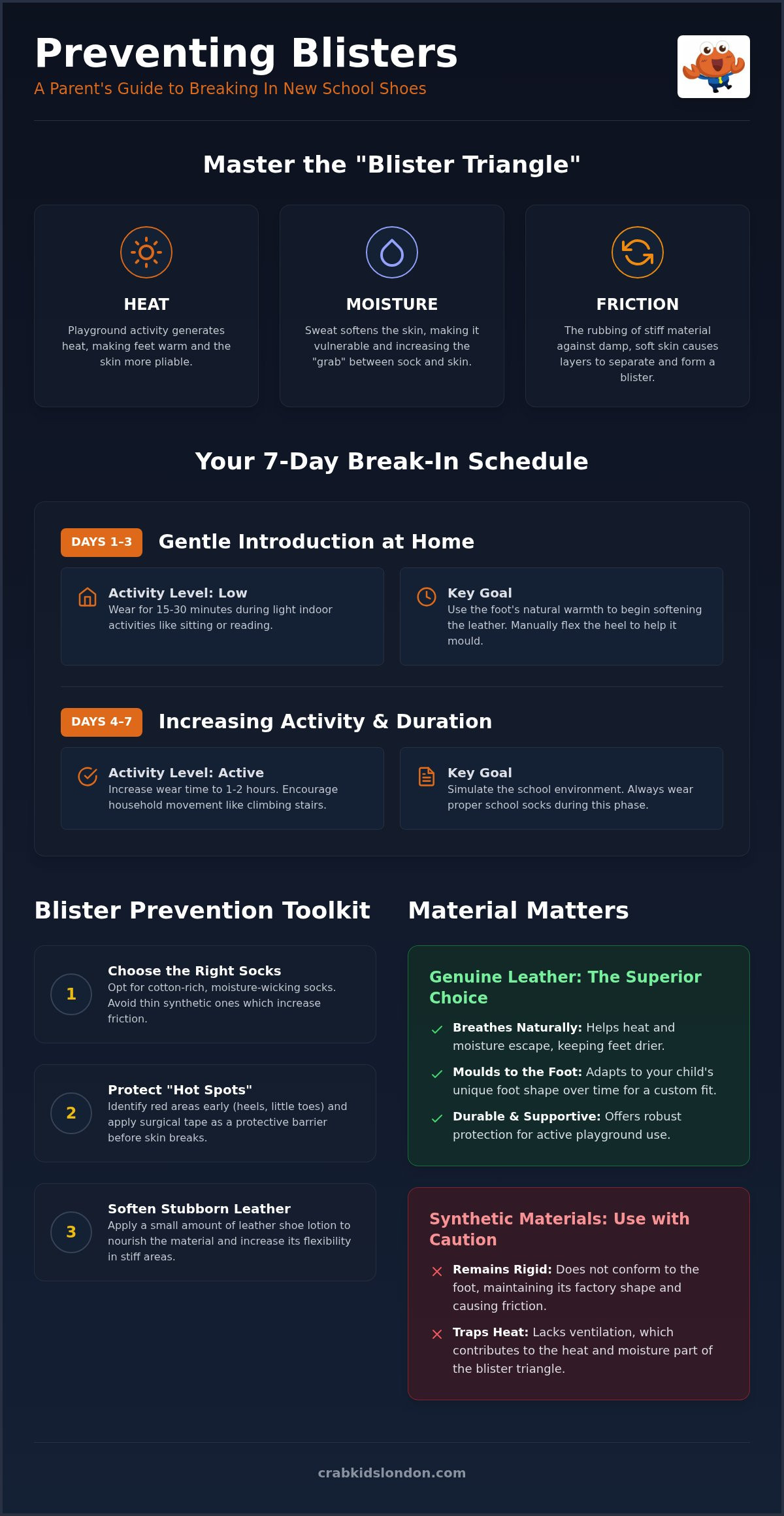
Parents often assume a painful shoe is a poorly fitted one. This isn't always the case. To master the art of preventing blisters from new school shoes, you must first understand the "Blister Triangle". This consists of heat, moisture, and friction. When your child runs, their feet generate heat. This leads to sweat, which softens the skin. Friction then acts on this vulnerable surface, causing the layers to separate. Understanding what a blister is scientifically allows you to tackle the root causes effectively before the first day of term.
New leather is naturally rigid. It's a robust, durable material designed to survive the playground rigours. However, this strength means it hasn't yet adapted to the specific shape of your child's heel or toes. These "hot spots" usually occur where the shoe's structure is firmest, such as the Achilles or the outer edge of the little toe. Distinguishing between a shoe that's "too small" and one that's simply "not yet broken in" saves time and money. If the toes have room to move but the heel rubs, it's a break-in issue. You can verify the fit using a shoe size guide before assuming the worst.
The Role of Moisture and Heat in the Playground
Playground activity spikes during break time, generating significant heat. As feet warm up, skin becomes damp and pliable. This moisture increases the "grab" between the sock and the skin, accelerating tissue damage. Synthetic shoes often lack the ventilation needed to let this heat escape. Using moisture-wicking materials is the most effective way to reduce friction by maintaining a dry environment for the foot.
Leather vs Synthetic: What to Expect
Genuine leather is a superior choice for foot health. It's a natural fibre that breathes and eventually moulds to the foot's unique geometry. Synthetics remain rigid, maintaining their factory shape regardless of the wearer's needs. Patent finishes present a challenge because the plastic coating adds stiffness. High-quality shoes often include padded collars to protect sensitive skin. Applying a leather shoe cleaning lotion can also help nourish and soften the material during the initial wear period.
The 7-Day Break-In Schedule for Maximum Comfort
Start the break-in process at least one week before the first day of term. Leaving this task until the night before is a recipe for Monday morning tears. Effective results in preventing blisters from new school shoes come from gradual, repeated exposure. Consistency matters far more than total duration. Wearing the shoes for ten minutes every day is significantly more effective than forcing a child into a painful one-hour session on Sunday evening. This methodical approach allows the natural fibres of the leather to relax without causing trauma to the skin.
Days 1-3: Short Bursts at Home
During the first three days, aim for 15-30 minutes of wear whilst sitting or performing light indoor activities. This stage isn't about walking miles. Instead, use the natural warmth of the foot to begin softening the internal structure. Pay close attention to the heel counter. You can help the process by manually flexing the back of the shoe to encourage moulding. Watch your child's behaviour closely during this time. If they begin to limp, fidget, or attempt to remove the shoes, take them off immediately. Checking for redness now is the most effective first-aid for blisters, as it identifies friction points before the skin actually breaks.
Days 4-7: Increasing Activity and Duration
From day four onwards, increase the duration to 1-2 hours. Move from sitting to active household movement. Encourage your child to climb stairs or help with chores to force the sole to flex and the leather to crease naturally above the toes. It's vital that they wear the exact specialist school socks they will use in class. Simulating the real school environment is the only way to ensure the fit is accurate. If your child has sensitive skin, don't rush. Keep the sessions short but increase the frequency to twice a day to build tolerance safely.
Use these final days to inspect the shoes for any stubborn areas. If the leather feels particularly rigid around the ankle, applying a small amount of leather shoe cleaning lotion can help nourish the hide and increase flexibility. By the end of the week, the footwear should feel supportive rather than restrictive. This structured schedule removes the guesswork and ensures your child is ready for the playground. For parents who value longevity and comfort, investing in quality school shoes makes this transition much smoother for everyone involved.
Choosing the Right Socks and Foot Care Essentials
Quality hosiery is the first line of defence in preventing blisters from new school shoes. Whilst many parents focus on the leather, the fabric sitting directly against the skin determines the level of friction. Cotton-rich blends are superior to cheap synthetic options because they allow the foot to breathe. Synthetic fibres often trap heat and moisture, leading to the damp skin conditions that cause painful friction tears. You can browse our range of comfortable school socks to find pairs specifically designed for the school environment.
Avoid "trainer socks" during the first few weeks of term. These low-cut styles frequently slip down inside the shoe, exposing the heel to the rigid leather collar. This leads to immediate rubbing. Consider these essentials when selecting hosiery for new footwear:
- Sock Height: Choose ankle or knee-high styles that stay securely above the shoe line.
- Material: Stick to cotton-rich blends for superior moisture management.
- Double-Socking: Use a thin liner under a standard sock to ensure friction occurs between fabric layers rather than against the skin.
This simple adjustment provides a significant barrier of protection. For particularly stubborn leather, the double-socking technique is a professional secret that prevents the "grab" of new material from damaging delicate heels.
The Importance of a Seamless Toe
A well-fitted shoe leaves very little room for error. Bulky seams across the toes can create pressure points that lead to irritation or "hot spots". Crabkids prioritises smooth, flat-seam finishes amongst its hosiery range to eliminate this risk. Ensure the sock height is sufficient to clear the shoe collar completely. This provides a protective barrier between the ankle and the footwear's edge, preventing the leather from biting into the skin during movement. Small details in construction make a massive difference in daily comfort.
Ensuring the Perfect Fit First
It is vital to remember that no specialist sock can compensate for a shoe that is fundamentally the wrong size. If the shoe is too tight, even the thinnest cotton sock will cause pressure. If it is too large, the foot will slide, creating excessive friction. Before making a purchase, consult our Shoe Size Guide to ensure a precise match. A correct fit ensures the shoe's internal padding aligns correctly with the foot's anatomy. Taking the time to measure properly avoids the stress of returns and ensures your child is ready for the playground from day one.
Immediate Fixes for Hot Spots and Stubborn Leather
Identification is the first step in preventing blisters from new school shoes. A "hot spot" is a localised area of redness that signals friction is occurring before the skin breaks. Spotting this early allows you to intervene before a painful blister forms. Applying surgical tape directly to the skin acts as a sacrificial layer, absorbing the rubbing that would otherwise damage the tissue. For shoes that feel slightly loose, adhesive heel grips provide a physical stop that prevents the foot from sliding against the collar.
To tackle the material itself, apply leather cleaning lotion to the heel area. This nourishes the hide, making it more pliable and comfortable. Genuine leather responds well to this treatment, whereas patent leather is more stubborn. Because patent has a plastic-coated finish, it doesn't absorb oils as easily. It requires more manual manipulation and a longer break-in period to achieve flexibility without cracking the surface. Understanding this difference ensures you don't waste time applying products that can't penetrate the finish.
Softening Rigid Heel Counters
A gentle massage of the heel counter can speed up the softening process. Use your thumbs to knead the leather, focusing on the top edge where it meets the Achilles. If the material is exceptionally stiff, you can use a shoe stretcher. Some parents find success using a hairdryer to warm the leather whilst wearing thick socks. Be careful; excessive heat can dry out the leather or damage the construction. Always maintain a safe distance and move the heat source constantly to avoid over-heating the finish or damaging the adhesive bonds.
Lacing Techniques for a Secure Hold
A secure fit prevents the internal movement that causes blisters. Use the "Heel Lock" lacing method by creating loops with the final eyelets and threading the opposite lace through them. This pulls the foot firmly into the back of the shoe. These methods are essential tools for preventing blisters from new school shoes during the first week of term. Ensure your child pushes their heel right into the heel cup before they start fastening. Organise the laces so they sit flat across the tongue, reducing pressure on the bridge of the foot. For the best start to the term, choose high-quality school shoes designed for all-day comfort.
Investing in Quality: How Crabkids Designs for Blister-Free Days
Whilst preparation is key, the most effective strategy for preventing blisters from new school shoes starts with the shoe's construction. Superior materials and thoughtful engineering reduce the reliance on "hacks" by addressing friction at the source. Crabkids designs prioritise the high-energy reality of childhood, ensuring that durability never comes at the expense of comfort. By selecting shoes that work with the foot's natural anatomy, you significantly shorten the break-in period and protect sensitive skin.
- Padded Collars: These provide a cushioned barrier; protecting the sensitive Achilles area from direct friction and the "bite" of new leather.
- Genuine Leather: This breathable material moulds to the foot's unique shape, whereas synthetics remain rigid and trap heat.
- Flexible Soles: A pliable sole allows for natural movement, reducing the heel slippage that often leads to rubbing during playground games.
Choosing the right style is a vital first step for any parent. For a deeper look at specific models designed for resilience, read The 2026 Buying Guide for Durable Boys School Shoes to see how we balance strength with immediate comfort.
Designed for the British School Day
Our designs centre the child's foot health, acknowledging the resilience needed for the playground. A typical school day involves thousands of steps; constant running and varied surfaces require a robust build. Crabkids footwear handles these rigours whilst maintaining a supportive environment for growing feet. We focus on natural movement, ensuring our shoes act as a reliable partner for every activity. You can find more tailored advice in our 2026 UK Buying Guide for Girls School Shoes, which highlights designs built specifically for longevity and ease of wear.
Next Steps for a Comfortable Term
Preparation doesn't have to be stressful. Start by checking our latest range to find styles that include our signature comfort features. You can explore our New Arrivals to see the newest additions to our collection. Before Monday morning arrives, ensure you have your final checklist ready. This includes cotton-rich socks, properly fitted leather shoes, and care products for maintenance. By following these steps, you ensure your child steps into the new term with quiet confidence. Preventing blisters from new school shoes is a manageable task when you start with the right foundation and a professional approach to foot care.
Step Into the New Term with Confidence
A successful return to school starts with a proactive approach to foot health. By following a structured seven-day break-in schedule and choosing cotton-rich specialist socks, you can ensure your child remains comfortable throughout the day. Remember that preventing blisters from new school shoes is a combination of gradual preparation and investing in the right materials. Genuine leather construction and padded collars provide the essential flexibility and cushioning needed to protect active feet from the very first bell.
Don't let the new term be defined by morning stress or playground pain. Our designs prioritise resilience and ease, offering the professional reliability you need for a busy school schedule. With fast UK delivery available for those urgent replacements, you can get everything you need well before Monday morning. Shop our collection of blister-ready school socks and durable shoes to give your child the best start possible. We're here to do the heavy lifting so you don't have to; making every step of the school journey a comfortable one.
Frequently Asked Questions
How long does it typically take to break in new school shoes?
It typically takes seven days of consistent, short-duration wear to fully break in new school shoes. Start with 15-minute sessions at home and gradually increase the time as the leather softens. This methodical approach is the most reliable way of preventing blisters from new school shoes before the term begins. Avoid rushing the process; forcing a full day of wear too early often leads to painful friction points and unnecessary morning stress.
Should I buy school shoes a size larger to prevent rubbing?
You should never buy school shoes a size larger to prevent rubbing; an oversized shoe actually increases the risk of blisters. When a shoe is too big, the foot slides back and forth, creating excessive friction against the heel and toes. A precise fit ensures the internal padding and support structures align correctly with your child's foot. Use a professional size guide to confirm the correct length and width for maximum comfort.
Can I use Vaseline to stop my child’s school shoes from causing blisters?
Vaseline can be used as a temporary lubricant to reduce friction, but physical barriers like surgical tape or specialist socks are generally more effective. Whilst petroleum jelly creates a slippery surface, it can also trap heat and moisture against the skin. For long-term comfort, focus on softening the leather and using moisture-wicking hosiery. These methods provide a cleaner and more reliable solution for preventing blisters from new school shoes throughout the school day.
What are the best socks to wear with new school shoes?
The best socks for new footwear are cotton-rich blends with seamless toes and moisture-wicking properties. These materials keep the feet dry, which is essential because damp skin is far more susceptible to tearing and friction damage. Avoid thin synthetic trainer socks that often slip down and expose the heel to the rigid shoe collar. Choosing high-quality hosiery provides a sturdy protective layer that complements the durable leather of the school shoes.
Is it normal for patent leather school shoes to be stiffer than plain leather?
Yes, patent leather school shoes are naturally stiffer than plain leather because of the protective plastic coating used to achieve the high-shine finish. This coating prevents the leather from stretching as easily, meaning they often require a slightly longer break-in period. You can help soften them by manually flexing the heel counter and using a dedicated leather lotion on the interior surfaces to increase pliability without damaging the exterior shine.
How can I tell if a shoe is rubbing because it’s too small or just new?
You can tell a shoe is too small if there is less than a thumb's width of space between the longest toe and the end of the shoe. If the toes have plenty of room but the heel is rubbing, the shoe is likely just new and needs breaking in. Constant pressure on the sides of the foot or toes usually indicates the width is too narrow, which requires a different size rather than more wear.
What should I do if my child already has a blister from their school shoes?
If a blister has already formed, clean the area gently with mild soap and apply a hydrocolloid bandage to protect it. It's vital that you don't pop the blister, as the skin provides a natural sterile barrier against infection. Switch your child to an older, softer pair of shoes for a few days to allow the skin to heal. Once recovered, resume the gradual break-in process with protective tape on the sensitive area.
Can I wet new leather shoes to help them stretch and soften faster?
You should never wet new leather shoes to stretch them, as water can cause the leather to dry out, crack, or lose its shape. Moisture can also damage the internal adhesives and structural reinforcements. Instead, use the natural warmth of the feet during short wear sessions or apply a professional leather softening lotion. These methods safely encourage the fibres to relax and adapt to the foot's shape without compromising the shoe's longevity.