

Making School Shoes Last the Whole Year: A Practical Parent’s Guide
Making school shoes last the whole year starts with a comfortable fit and small, regular care habits, not a special cleaning trick. Scuffs, muddy soles and worn fastenings can appear during a busy school week, and it is not always obvious whether a mark needs cleaning or a shoe needs replacing.
It is frustrating when shoes look tired sooner than expected, especially when you are unsure which care method suits the material or whether wear could affect comfort. No routine can guarantee a pair will last all year, but regular checks and sensible care can help you spot problems early and get more use from shoes that still fit well.
This guide explains how to check fit and wear, clean shoes according to their material, and dry and store them carefully. You will also find simple habits, including a quick weekly inspection, to help you decide whether shoes need cleaning, monitoring or replacing, while keeping your child comfortable throughout the school year.
Key Takeaways
- Making school shoes last the whole year starts with a comfortable fit, sensible care and realistic expectations.
- Alternating suitable pairs and letting damp shoes dry naturally can support everyday wear.
- Check the shoe label or manufacturer’s guidance before choosing a cleaning method.
- A quick weekly check can help you spot sole wear, loose parts, damaged fastenings or discomfort early.
- Consider comfort, condition and care needs together when deciding whether shoes need cleaning or replacing.
Making school shoes last the whole year starts with realistic expectations
Scuffs from the playground, wet weather and busy days on their feet are ordinary parts of school-shoe wear. It is understandable to want a pair to stay smart, but making school shoes last the whole year is not simply about keeping them spotless. A more useful measure is whether they remain comfortable, wearable and suitable for school.
How long shoes stay usable depends on their fit and construction, how actively they are worn and how they are cared for. Appearance does not tell the whole story. A shoe can look marked but still feel comfortable and work properly. Another may look clean but rub or have a damaged fastening.
No care routine can guarantee that a pair will last the entire school year. Maintenance may help limit avoidable wear and keep shoes presentable, but it cannot reverse damage or stop a child’s feet from growing.
What can affect how long school shoes stay wearable?
Daily walking and repeated wear place ongoing demands on shoes. Running, climbing and changing direction during play can also affect soles, fastenings and other parts. Wet shoes may need time to dry before they are worn again. These factors vary from child to child, so a standard lifespan is not a reliable way to judge every pair.
Fit and comfort matter as much as appearance. Shoes that pinch, rub or feel unstable are not suitable just because they look smart. Ask your child how the shoes feel and look them over regularly. If you use shoe polish on leather, choose an appropriate product and follow its instructions. Polish can improve appearance, but it will not fix functional damage. Shoe polish has a specific role in caring for leather, rather than restoring a worn sole or fastening.
What does “lasting the whole year” really mean?
Think usable, not brand new. Light marks and scuffs are usually cosmetic. Splitting, loose parts, damaged fastenings or wear that affects how a shoe feels or functions deserve closer attention. Judge the shoe’s condition alongside your child’s comfort and fit, rather than relying on appearance alone.
A quick check can help you choose what to do next: clean ordinary dirt, monitor minor marks, or assess a problem that affects comfort or function. Care has limits. It may help maintain a wearable pair, but it cannot undo damage or compensate for shoes that no longer fit. The aim is a sensible balance of condition, comfort and suitability, not a promise that every pair will last from the first day of term to the last.
How fit, rotation and drying habits affect school-shoe durability
Good habits can help shoes stay wearable, but they start with a comfortable fit. Buying shoes that are too large in the hope they will last longer can leave a child uncomfortable and does not prevent the shoes from wearing out. Fit checks and sensible drying are more useful than trying to stretch a pair beyond its suitable life.
Check fit and comfort as children grow
Children’s feet change, so check regularly rather than assuming a pair still fits because it did a few weeks ago. Ask whether anything rubs or feels tight, and look for looseness or a change in how your child walks. These signs do not diagnose a fit issue on their own, but they are useful prompts to reassess comfort. Use the children’s shoe size guide as a practical reference when checking size.
Regular fit checks help protect comfort and make sure shoes remain useful for as long as they fit. When choosing school footwear, compare the fit guidance with your child’s current comfort rather than selecting a larger size to extend wear.
Give shoes time to dry between wears
After a wet or muddy day, brush or wipe away loose dirt if appropriate for the shoe, then let it air-dry naturally in a well-ventilated spot. Keep it away from radiators, hairdryers and other direct heat unless the manufacturer says otherwise. Heat may affect some materials, so check the care instructions for the specific pair before cleaning or drying it.
If your family already has another suitable pair, alternating shoes can give each pair more time to air between wears. It is a helpful option, not a requirement. There is no need to buy extra footwear just to follow a rotation routine. For broader background on caring for shoes, this comprehensive guide to shoe care also discusses cleaning and drying.
Fit and drying are practical parts of making school shoes last the whole year, but they cannot guarantee a pair will remain suitable for that long. Growing feet, daily activity and the shoe’s condition all affect how long it can be worn comfortably. Check the fit and the manufacturer’s care guidance as part of your routine. If you are reviewing what your child needs, explore children’s school shoes and shoe-care options.
Cleaning school shoes: choose care that suits the material
A simple routine can keep cleaning manageable, but the right method depends on the shoe. Leather, patent finishes, textiles and other materials may need different care. Before applying polish, lotion or water, check the shoe label or manufacturer’s guidance. If the instructions are unclear, avoid experimenting with a product that could mark or damage the surface.
A simple routine for cleaning school shoes
Use this as a starting point, adapting each step to the shoe’s care instructions:
- Remove loose dirt. Use a soft, dry cloth or brush if appropriate for the material. Work gently, especially around seams and fastenings.
- Clean with a compatible product. Follow the shoe guidance and the cleaner’s label. Do not assume water, polish or a household cleaner is suitable for every pair.
- Dry naturally. Wipe away excess moisture as directed and leave the shoes to air-dry fully before the next wear.
For leather shoes, check whether the manufacturer recommends a specific type of care. If lotion is suitable, review the details of this leather shoe cleaning lotion before use. It is intended for leather care, not as a universal cleaner for every school-shoe material.
Other surfaces need their own approach. A method that works for leather may not suit a textile upper or coated finish. Follow the care instructions for the specific pair, and do not treat a cosmetic mark with a product unless its label says it is appropriate.
Avoid care shortcuts that could cause damage
Soaking shoes may expose materials and joined parts to more water than their care guidance allows. Household chemicals may also be unsuitable, so do not use them unless the manufacturer approves. When trying a compatible product for the first time, test it on a discreet area if the instructions permit, then check for an unwanted change before treating the rest of the shoe.
Avoid radiators, hairdryers and other direct heat unless the manufacturer specifically permits them. Excessive heat may affect some materials and adhesives. Natural drying takes longer, but avoids applying heat that may be unsuitable for the shoe.
Consistency matters more than an elaborate routine. Removing dirt gently, using material-appropriate care and allowing shoes to dry fully can help keep them presentable. These steps support making school shoes last the whole year, but they cannot reverse damage or guarantee a full year of wear. Check the instructions first, then choose the simplest suitable method.
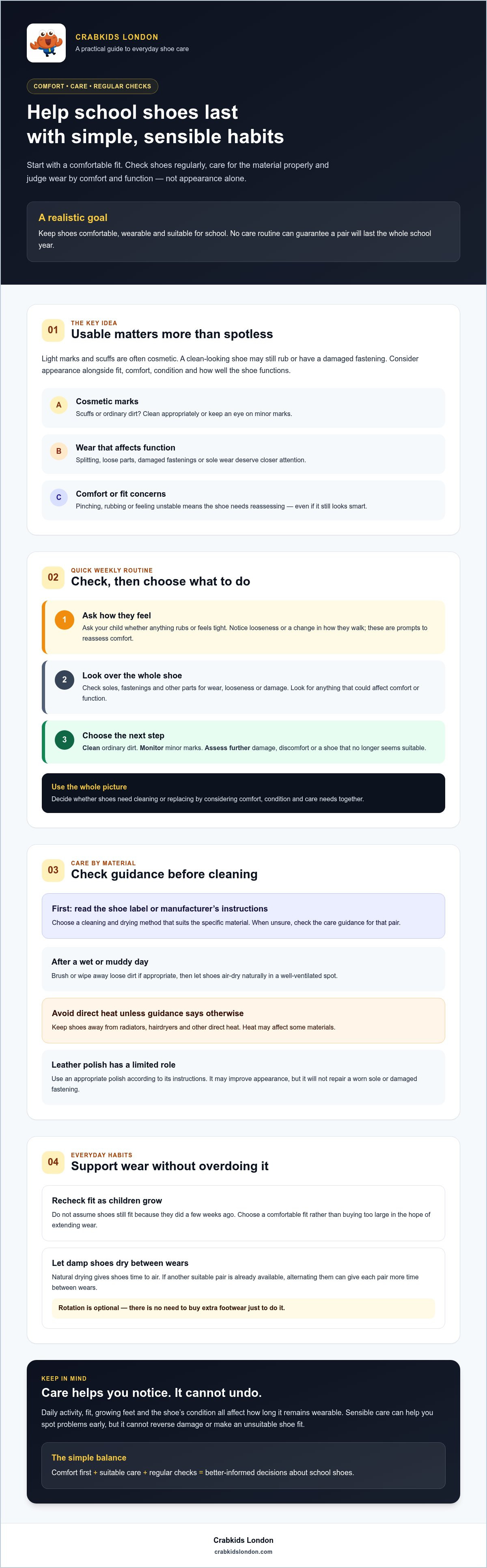
A weekly school-shoe check helps catch wear before it becomes a problem
A quick check once a week can help you spot changes before they affect comfort or how a shoe works. Choose a regular moment, such as after cleaning or before putting shoes away. Look at both shoes, then ask your child how they feel. Small cosmetic marks are common and do not automatically mean a pair needs replacing.
What should parents look for during a quick check?
Check the parts that take everyday wear, and compare one shoe with the other. Uneven wear or damage on one side may be easier to notice this way. Look for:
- Soles and heels: areas worn smooth, unevenly or substantially.
- Seams and joins: visible gaps, looseness or parts starting to separate.
- Fastenings: straps, laces or other closures that are damaged or no longer hold securely.
- Comfort: repeated reports of rubbing, pressure or pain during wear.
Ask about discomfort even if the shoes look tidy. Children may not mention a problem straight away, so a simple question can prompt a useful check.
When should school shoes be repaired or replaced?
Repair may be possible for some damage, but suitability depends on the shoe’s construction and the part affected. A loose fastening is different from a damaged sole or a shoe that no longer fits. Do not assume every fault can be repaired, or that cleaning will resolve a functional problem.
If damage affects comfort, fit or stable walking, stop using the shoes and seek suitable footwear advice. A scuff or surface mark alone is usually not a reason to replace a pair if it remains comfortable and works as intended. Consider fit and condition together.
This regular check supports making school shoes last the whole year by helping you act on wear early, not by promising how long a pair will last. Keep a simple note of anything you are monitoring, such as a fastening that feels loose, and check it again the following week. If comfort or function worsens, reassess promptly rather than waiting for the next routine check.
If you are reviewing your child’s footwear, explore children’s school shoes and shoe-care options.
Choose practical school shoes and build a care routine that works
A suitable pair is a starting point, not a promise of a full school year’s wear. To make school shoes last the whole year, balance a comfortable fit with shoes suited to your child’s school day, care instructions you can follow and regular checks of their condition. Durability matters, but so do comfort and continued suitability as your child grows.
What to consider before choosing a school shoe
Start with fit and how the shoes will be worn day to day. Check the product information for details about material, fastening and recommended care. This helps you understand what routine maintenance may involve and whether the shoes suit your child’s needs. Avoid choosing a larger pair simply to extend its use. Comfort and fit should come first.
You can browse boys’ school shoes or explore the girls’ school shoes range, then use the relevant product information to guide your choice. No single feature guarantees that a pair will last a particular length of time. A comfortable fit, appropriate use and manageable care all play a part.
Make a low-effort routine easier to maintain
Keep the cleaning items you use together, and check the shoe’s care guidance before using them. A routine is easier to maintain when the right cloth or suitable shoe-care product is close to hand. Set aside a regular moment to look over the shoes and spot anything that needs attention.
Children can help by brushing or wiping away loose dirt when appropriate, and by telling you if a shoe feels uncomfortable. They do not need to manage the whole routine. Their feedback can help you notice a change in fit or comfort that is not obvious from appearance alone.
Keep the approach simple: choose shoes that fit comfortably, follow the care instructions and reassess their condition as your child wears them. Even well-chosen shoes may need replacing if they become uncomfortable, stop fitting or are no longer suitable. Explore Crabkids London school shoes and shoe care to review the range.
Keep school-shoe care practical and consistent
Making school shoes last the whole year is a useful aim, but every child’s feet, routine and footwear are different. Focus on whether shoes remain comfortable and suitable for school, rather than expecting them to stay mark-free. Simple care habits and regular checks can help you notice when a pair needs attention, while the manufacturer’s guidance helps you avoid unsuitable cleaning methods.
Choose footwear for your child’s needs, and treat durability as one consideration rather than a promise of year-long wear. Crabkids London sells children’s school shoes and shoe-care products, and presents its school footwear as durable, comfortable and suitable for active school life. The right choice still depends on your child’s fit and how the shoes are used.
Ready to review the options? Explore Crabkids school shoes and shoe care. A comfortable fit and manageable care routine can help you make thoughtful decisions as your child’s needs change throughout the school year.
Frequently Asked Questions
Can school shoes really last the whole school year?
Some pairs may stay wearable for a full school year, but this cannot be guaranteed. Fit, construction, how actively the shoes are worn and how they are cared for all affect their useful life. For making school shoes last the whole year, focus on comfort and function rather than keeping them mark-free. Check fit and condition regularly, and follow the care instructions for the specific pair.
How often should I clean my child’s school shoes?
Clean them when dirt builds up or they need attention, rather than following a strict schedule. Remove loose dirt gently, then use a method suitable for the shoe’s material. Check the label or manufacturer’s guidance before applying water or a product. A quick weekly condition check can help you notice dirt and wear early, but it does not mean the shoes need a full clean every week.
Can I dry wet school shoes on a radiator?
Avoid drying school shoes on a radiator unless the manufacturer specifically permits it. Direct heat may affect some materials and adhesives. After removing loose dirt, let damp shoes air-dry naturally in a well-ventilated place, following the shoe’s care instructions. Do not use a hairdryer or place the shoes close to another heat source as a shortcut. Allow them to dry before your child wears them again.
How can I tell if my child’s school shoes no longer fit?
Ask your child whether the shoes rub, feel tight or cause pressure, and check whether they feel loose or unstable. Notice any change in how your child walks, too. These signs are reasons to reassess fit, even if the shoes look tidy. Children’s feet grow, so do not rely only on how the shoes fitted previously. A children’s shoe size guide can help you check the size.
What should I use to clean leather school shoes?
Use only a product that the shoe’s label or manufacturer’s guidance says is suitable for that leather. Start by removing loose dirt gently with a soft cloth or brush if appropriate, then follow the product instructions. Do not assume polish, lotion or water will suit every shoe. If trying a compatible product for the first time, test it discreetly when its instructions allow, and let the shoes dry naturally.
When should I replace worn school shoes?
Replace them when they no longer fit comfortably or damage affects how they function. Check for substantial or uneven sole wear, loose parts, damaged fastenings and persistent discomfort. A scuff or other cosmetic mark alone does not necessarily mean the shoes need replacing. If a problem affects comfort, fit or stable walking, stop using the pair and seek suitable footwear advice rather than relying on cleaning to resolve it.
Does alternating school shoes make them last longer?
Alternating between suitable pairs can give each pair more time to air between wears, especially after a damp day. It is an option if your family already has another pair that fits comfortably, not a requirement or a reason to buy extra shoes. Whichever pair your child wears, follow its care instructions, let damp footwear dry naturally and check fit and condition regularly.