

How to Stop School Shoes Smelling: A Parent's Guide
Imagine the scene: your child walks through the front door, kicks off their shoes, and a wave of stale, damp odour hits the hallway. It is a familiar, frustrating moment for parents across the UK. You are likely wondering how to stop school shoes smelling without having to bin a perfectly good pair of leather shoes every half-term. We understand that active playground life leads to sweaty feet; the resulting bacteria can make even the most expensive footwear feel like a lost cause. It is embarrassing for the kids and a drain on the family budget when you feel forced to replace shoes prematurely.
You don't have to settle for the smell or the extra expense. This guide provides practical, expert-approved methods to eliminate stubborn odours and keep your child’s school shoes fresh all term long. We will explore a simple 60-second daily routine to prevent moisture build-up, share natural home remedies that actually work, and explain why choosing breathable materials like leather and high-quality socks is the ultimate defence against bacteria. By the end of this article, you will have a robust plan to win the battle against moisture and keep those school shoes in top condition.
Key Takeaways
- Identify how bacteria thrive in damp environments and learn to neutralise the root cause of stubborn footwear odours.
- Master effective home remedies, such as the baking soda hack, to discover how to stop school shoes smelling without using harsh chemicals.
- Establish a simple daily maintenance routine that includes immediate shoe removal and airing out insoles to prevent moisture build-up.
- Understand the vital role of breathable cotton or bamboo socks in wicking sweat away from the skin during active school days.
- Recognise why genuine leather is a superior choice for long-term freshness due to its natural, porous structure that allows feet to breathe.
Why Do School Shoes Smell? Understanding the Root Cause
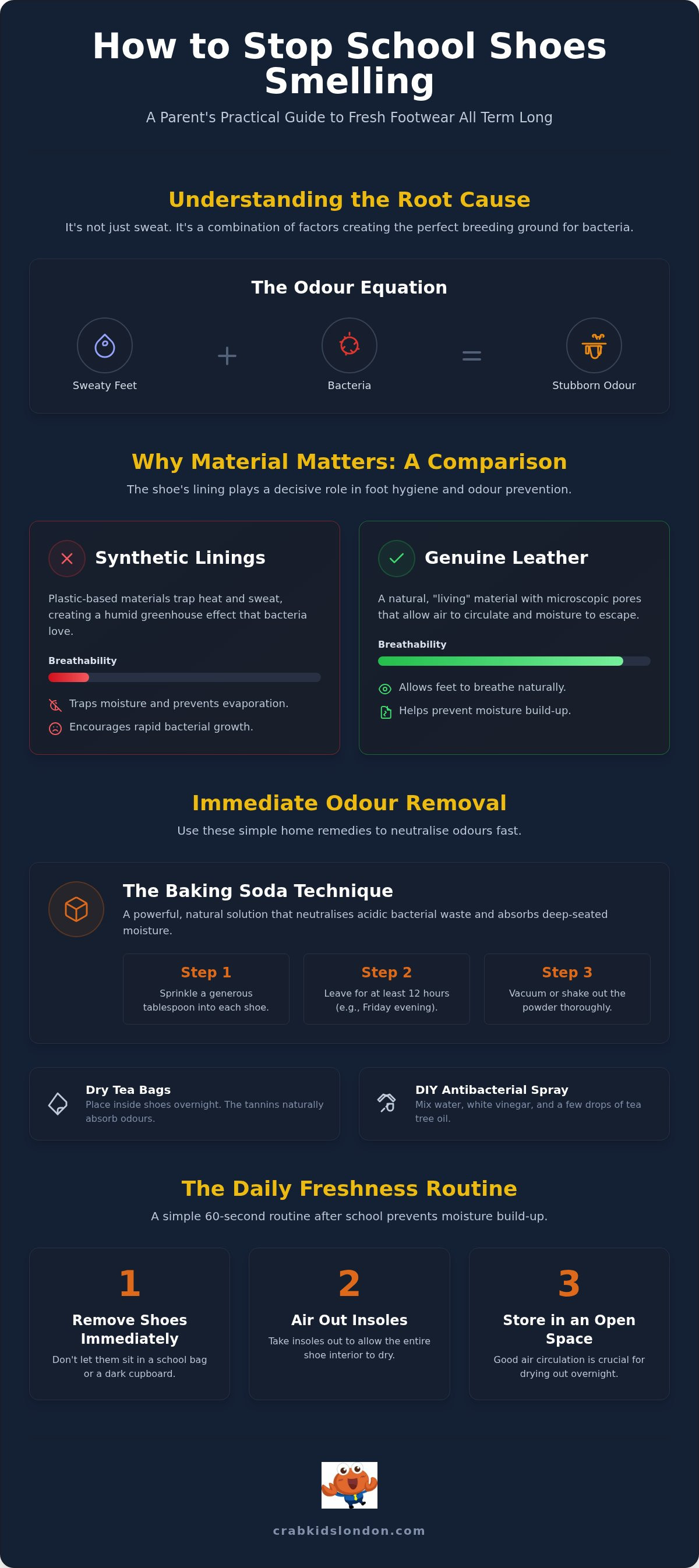
To understand how to stop school shoes smelling, you must first identify the true culprit. It isn't actually the sweat itself that creates that pungent aroma. Instead, the smell is a byproduct of bacteria living on the skin and inside the shoe. These micro-organisms consume the sweat and dead skin cells, releasing odorous gases in the process. Bromodosis is the medical term used to describe this common condition of persistent smelly feet. When you consider the causes of foot odor, it becomes clear that moisture management is the only way to win the battle.
The inside of a school shoe is essentially a dark, warm, and damp "petri dish" where bacteria thrive. Without proper airflow, moisture remains trapped against the material, allowing colonies to grow throughout the day. This environment is exacerbated by the long hours children spend in their footwear, often from breakfast until late afternoon. Understanding this biological process is the first step in learning how to stop school shoes smelling before the problem becomes permanent.
The Role of Moisture and Sweat
Children have a higher concentration of active sweat glands relative to their body size than adults do. During a typical school day, a child might take upwards of 15,000 steps whilst running, jumping, and playing in the playground. This intense physical activity generates significant moisture that has nowhere to go if the shoe is tightly fastened. When shoes don't dry out properly between wears, the dampness accumulates. This constant state of humidity is the primary cause of deep-seated odour that seems impossible to shift with simple sprays alone.
Synthetic vs Natural Linings
The materials used in footwear construction play a decisive role in foot hygiene. Plastic-based or synthetic linings often act like a greenhouse for the feet, trapping heat and preventing sweat from evaporating. This lack of breathability forces the moisture to sit on the surface of the skin and the shoe lining. In contrast, genuine leather is a "living" material with microscopic pores that allow air to circulate and moisture to escape. At Crabkids London, we prioritise natural materials in our boys' school shoes and girls' school shoes to ensure better airflow. By choosing shoes with breathable leather uppers and linings, you provide a hostile environment for bacteria, making it much easier to maintain freshness all term long.
Immediate Odour Removal: Effective Home Remedies
When the smell becomes noticeable, you need solutions that work fast. You don't always need expensive equipment to manage how to stop school shoes smelling; often, the best tools are already in your kitchen cupboard. These methods focus on neutralising the bacteria identified in the previous section. By acting quickly, you can prevent odours from becoming permanently embedded in the shoe's lining.
The Baking Soda Technique
Baking soda is exceptionally effective because it is alkaline. Since the waste produced by bacteria is acidic, the powder neutralises the odour rather than just masking it. It also acts as a powerful desiccant, drawing out deep-seated moisture from the shoe's lining. This dual action makes it a staple for any parent's maintenance kit.
- Sprinkle a generous tablespoon of bicarbonate of soda into each shoe.
- Tilt the shoe to ensure the powder covers the entire footbed.
- Leave for at least 12 hours in a dry area.
- Thoroughly vacuum the interior or shake it out over a bin before wearing.
We recommend doing this on a Friday evening. This allows the shoes a full weekend to reset, ensuring they are fresh for Monday morning. It is a simple, no-nonsense way to maintain hygiene without using synthetic perfumes.
Essential Oils and Natural Sprays
If the smell is mild, placing dry tea bags inside the shoes overnight can help. The tannins in the tea absorb odours naturally. For a stronger antibacterial boost, consider essential oils like tea tree or lavender. These oils possess natural antimicrobial properties that help manage footwear hygiene. You can create a simple DIY spray by mixing one part white vinegar with one part water and adding five drops of tea tree oil.
Mist the interior lightly, but remember that sprays should only be used on dry shoes. Applying liquid to a damp shoe creates more humidity, which encourages further bacterial growth. For advice on personal hygiene, the NHS offers excellent guidance on how to treat smelly feet alongside these footwear tips. Combining personal care with shoe maintenance is the most effective approach.
Some parents suggest the "Freezer Method" to kill bacteria by placing shoes in a sealed bag in the freezer overnight. Whilst this works for canvas trainers, use extreme caution with leather school shoes. Freezing can cause genuine leather to become brittle and crack. Similarly, avoid harsh chemical bleaches or household cleaners. These strip the natural oils from the leather, damaging the finish and shortening the shoe's lifespan. To maintain the material properly after cleaning, using a dedicated leather shoe cleaning lotion ensures the leather remains supple and resilient.
The Daily Freshness Routine: How to Organise Shoe Maintenance
Establishing a consistent routine is the most effective way to manage how to stop school shoes smelling without resorting to daily chemical treatments. It starts the moment your child steps through the front door. Enforce an "immediate removal" rule; shoes should never be worn around the house after a long day at school. This gives the materials an extra hour or two of breathing time before bedtime. If your budget allows, a two-pair rotation strategy is the gold standard for footwear health. By alternating between two pairs, you give each shoe a full 24 hours of rest. This rest period is essential to battle stinky feet and preserve the structural integrity of the leather.
The Evening Air-Out Habit
To maximise airflow, open the shoe tongues as wide as possible every evening. If the shoes have removable insoles, take them out. This simple action significantly increases the surface area available for drying, allowing moisture trapped underneath the footbed to evaporate. Place the shoes in a well-ventilated area, such as a hallway or a dedicated shoe rack. This drying centre should be cool and airy. Never place leather shoes directly on or against a radiator. Whilst it might seem like a quick fix, direct heat causes genuine leather to shrink, become brittle, and eventually crack. Slow, natural evaporation is always the better choice for longevity.
Managing Damp and Rain-Soaked Shoes
UK weather often presents a challenge for footwear maintenance. When your child returns with rain-soaked shoes, you must act before the dampness sets in. Never put damp shoes away in a dark, enclosed cupboard. This creates the perfect breeding ground for the bacteria we discussed earlier. Instead, use the newspaper method. Stuff the interior with crumpled, plain newspaper to draw out moisture from the inside. Replace the paper every few hours if it becomes saturated. This is a vital part of learning how to stop school shoes smelling after a stormy playground session.
Before the shoes dry completely, ensure you clean off any surface mud. Dried mud blocks the natural pores of the leather, preventing it from "breathing" and trapping sweat inside. Use a soft brush or cloth to remove debris. Whilst the interior dries naturally, you can maintain the exterior by applying a leather shoe cleaning lotion. This keeps the leather supple and creates a protective barrier against future moisture, ensuring the shoes look as fresh as they smell.
Beyond the Shoe: The Importance of Breathable Socks
Even the highest quality leather shoes cannot maintain freshness if the base layer is compromised. When parents ask how to stop school shoes smelling, they often overlook the critical role of hosiery. Socks act as the first line of defence, absorbing moisture before it ever reaches the shoe lining. Choosing high-quality school socks made from natural fibres is just as vital as selecting the shoes themselves. These accessories work in tandem with the footwear to manage the foot's microclimate throughout a busy day.
Synthetic materials like polyester or nylon are frequently found in "value" multi-packs, but these fibres are non-porous. They trap sweat against the skin, creating a slippery, damp environment that accelerates bacterial growth. In contrast, cotton and bamboo are considered the gold standard for school environments. These natural materials facilitate airflow and moisture transfer, ensuring that feet stay dry during lessons and active play sessions alike.
Wicking Moisture Away from the Skin
The effectiveness of natural fibres lies in capillary action. This scientific process allows the fabric to pull moisture through its structure and away from the skin's surface. Bamboo is particularly impressive in this regard; it is naturally antibacterial and anti-fungal, providing an extra layer of protection against the micro-organisms that cause odour. During the warmer summer term, avoid thick, non-breathable hosiery. Lighter, moisture-wicking blends ensure the foot remains cool even during intense playground activity, preventing the build-up of dampness that leads to smells.
Foot Hygiene for Active Kids
Maintaining the footwear is only half the battle. Personal hygiene is equally important for active children. Encourage your child to dry thoroughly between their toes after a morning shower, as this is where moisture often lingers and bacteria thrive. If your child is particularly active or prone to sweating, applying a foot-specific talc can provide an additional absorbent barrier that lasts all day.
Proper fit also plays a significant role in temperature regulation. When feet are cramped, airflow is restricted and sweating increases. Always consult shoe size guides to ensure there is enough room for the toes to move and for air to circulate. A shoe that is too tight will trap heat, undermining your efforts in learning how to stop school shoes smelling. Finally, enforce a strict "Fresh Pair" rule. Socks must be changed every single day, regardless of how clean they appear, to prevent old bacteria from being reintroduced to the shoe interior.
Ready to upgrade your child's daily comfort? Shop our range of breathable school socks to keep feet dry and fresh all term long.
Investing in Quality: Choosing Leather for Long-Term Freshness
Selecting the right material is the ultimate strategy when deciding how to stop school shoes smelling. Genuine leather is often described as a "living" material because of its unique cellular structure. It contains thousands of microscopic pores that allow air to circulate around the foot. This natural ventilation ensures that moisture can escape through the surface of the shoe rather than remaining trapped inside. Whilst high-quality leather footwear requires a larger initial outlay, it represents a significant long-term saving. You won't find yourself forced into premature replacements because of embedded, unshiftable odours that often plague cheaper, synthetic alternatives.
Beyond the cost benefits, quality footwear should be viewed as a vital health investment. Shoes that breathe help prevent fungal infections and maintain skin integrity throughout the rigours of the school day. Our durable boys leather school shoes are specifically engineered for this kind of playground resilience, combining robust construction with the natural breathability required for active children. By prioritising materials that manage moisture naturally, you reduce the daily workload of deodorising and deep-cleaning.
Why Leather Beats Synthetic Alternatives
Synthetic shoes, often made from PU or plastic-based materials, act as a barrier rather than a filter. They trap heat and sweat, creating the humid environment where bacteria thrive. Over time, these materials often begin to peel or crack at the flex points, further trapping moisture in the layers of the shoe. Leather behaves differently; it is flexible and gradually shapes itself to the unique contours of the child's foot. This custom fit reduces friction and heat build-up, which in turn minimises sweating. For parents seeking smart, breathable options, our durable girls leather school shoes offer the perfect balance of aesthetic appeal and functional hygiene.
Maintaining the Breathability of Your Shoes
Even the best leather can lose its effectiveness if it isn't cared for correctly. A common mistake is over-polishing with thick, heavy waxes. These products can clog the microscopic pores of the leather, effectively "suffocating" the shoe and blocking the very airflow you are trying to encourage. Instead, use light, liquid-based cleaners or high-quality lotions that nourish the material without sealing it off. Regular light cleaning to remove dust and playground grit is essential. Dust particles can settle into the pores, preventing air from circulating freely and undermining your efforts in learning how to stop school shoes smelling. Keep the exterior clean, and the interior will stay much fresher for longer.
Investing in the right footwear makes daily maintenance much simpler and more effective. Browse our new arrivals to find fresh, high-quality school footwear that is built to last the whole term.
Step Into a Fresher School Term
Winning the battle against footwear odour doesn't require constant replacements or expensive chemicals. By establishing a 60-second daily air-out routine and switching to natural, breathable socks, you can neutralise bacteria before it takes hold. Remember that managing how to stop school shoes smelling is ultimately a battle against moisture; keeping interiors dry and allowing materials to rest is your most powerful tool. These small, consistent habits prevent deep-seated smells and extend the life of your child's footwear, saving you both stress and money.
Investing in high-quality materials ensures your child's comfort throughout the long school year. Genuine leather provides the natural ventilation needed for active playground life, preventing the dampness that synthetic shoes often trap. Explore our range of breathable, durable school shoes to give your child a fresh start this term. Our collection is expertly crafted from 100% genuine leather and specifically designed for the rigours of the British playground. We also offer free UK delivery on all orders over £50. With the right routine and robust footwear in place, you can look forward to a fresh, odour-free term ahead.
Frequently Asked Questions
Can I put school shoes in the washing machine to remove smells?
No, you should never put leather school shoes in the washing machine. The high heat and immersion in water strip the natural oils from the leather, causing it to shrink, warp, and crack once dry. Additionally, the detergent can dissolve the adhesives holding the sole to the upper. For effective maintenance, stick to surface cleaning with a damp cloth and using a specialised leather cleaning lotion to preserve the material's integrity.
How often should I change my child’s school socks?
You must change your child's school socks every single day. Even if they look clean, they are saturated with sweat and bacteria after a full day of playground activity. Reusing socks reintroduces old bacteria into the shoe, which is a major factor in why parents struggle with how to stop school shoes smelling. Fresh cotton or bamboo socks provide a clean, absorbent layer that protects the shoe lining from excessive moisture.
Does baking soda really work for smelly shoes?
Baking soda is an exceptionally effective remedy for neutralising deep-seated odours. Because it is alkaline, it chemically balances the acidic waste produced by bacteria, which is what actually causes the smell. Sprinkle a generous amount inside the shoes on a Friday evening and leave them until Sunday. Vacuuming out the powder thoroughly ensures the shoes are fresh and dry for the start of the new school week without using synthetic perfumes.
Will putting shoes in the freezer kill the odour-causing bacteria?
Putting shoes in the freezer can kill some bacteria, but it is not recommended for leather footwear. The extreme cold causes the moisture within the leather fibres to freeze and expand, which often leads to permanent cracking and structural damage. Whilst it might work for canvas trainers, leather requires more gentle care. Stick to natural drying and antibacterial essential oils like tea tree to manage hygiene without risking the shoe's longevity.
What are the best materials for breathable school shoes?
Genuine leather uppers and natural fibre linings are the best materials for preventing odour. Leather is naturally porous, allowing heat and moisture to escape rather than trapping them against the foot. Pair these with socks made from at least 70% cotton or bamboo. These materials facilitate airflow and moisture wicking, which is a fundamental part of how to stop school shoes smelling during the more active months of the school term.
How long does it take for leather school shoes to dry naturally?
Leather school shoes typically take about 24 hours to dry naturally in a well-ventilated room. If they have been caught in a heavy downpour, they may require up to 48 hours to shed all internal moisture. Using the newspaper method helps speed up this process safely. Never use a radiator or hairdryer; the intense heat will make the leather brittle and uncomfortable, potentially ruining a high-quality pair of shoes prematurely.
Can ill-fitting shoes make my child’s feet smell worse?
Yes, ill-fitting shoes significantly contribute to foot odour. If a shoe is too tight, there is no space for air to circulate, which causes the temperature inside the shoe to rise rapidly. This increased heat triggers more sweat production. Friction from a poor fit also creates more dead skin cells, providing more "food" for bacteria. Checking a size guide ensures enough room for the foot to breathe and stay cool during the day.
Are there any natural ways to stop school shoes smelling?
There are several natural methods to maintain freshness. Placing dry tea bags inside shoes overnight is a brilliant way to absorb mild odours using natural tannins. You can also use a few drops of lavender or tea tree oil on a cotton wool ball to provide antibacterial protection. Cedarwood shoe inserts are another excellent natural option; they absorb moisture and release a pleasant, woody scent that keeps the leather smelling fresh without using sprays.