

How to Repair Scuffed School Shoes: 2026 Parent's Guide
It is 7:30 AM on a Monday morning, and you have just spotted a deep, grey graze across your child’s supposedly "indestructible" leather shoes. We have all been there. You spent time and money selecting durable footwear, only to find the playground has left its mark within days. It is exhausting trying to keep your kids looking smart whilst second-guessing which polish or cream will actually hide the damage.
The good news is that those battered toes are not a lost cause. Learning how to fix scuffed school shoes is simpler than you might think, and it doesn't require a professional repair shop. This guide shares the practical secrets to restoring leather in minutes, making them playground-ready before the school bell rings. We will explore a proven three-step restorative cycle: using a leather cleaning lotion to prep the surface, matching the colour, and sealing the finish. By the time you finish reading, you'll know exactly which products are worth your money and how to achieve an "as new" look every single weekend.
Key Takeaways
- Identify the difference between surface streaks and deep grain gouges to ensure you apply the most effective restoration technique.
- Master the professional "Clean-Colour-Seal" method to learn how to fix scuffed school shoes quickly and reliably at home.
- Build a sturdy home maintenance kit featuring professional-grade leather cleaning lotion and lint-free microfibre cloths for a factory-fresh finish.
- Learn why specific finishes like patent leather require specialised care products rather than traditional wax polishes to maintain their shine.
- Reduce your future workload by choosing playground-tested footwear designed with protective features like integrated rubber toe bumpers.
Assessing the Damage: What Kind of Scuff Are You Fixing?
Before reaching for your Leather Shoe Cleaning Lotion, you must understand the damage you are facing. Not all marks are permanent. Some are merely transfers of rubber or dirt that sit on top of the finish. Others are physical wounds where the playground has eaten into the material. Learning how to fix scuffed school shoes effectively starts with a proper inspection. Diagnosing the damage correctly saves you time and prevents you from using the wrong products on delicate finishes.
Surface Scuffs vs. Deep Gouges
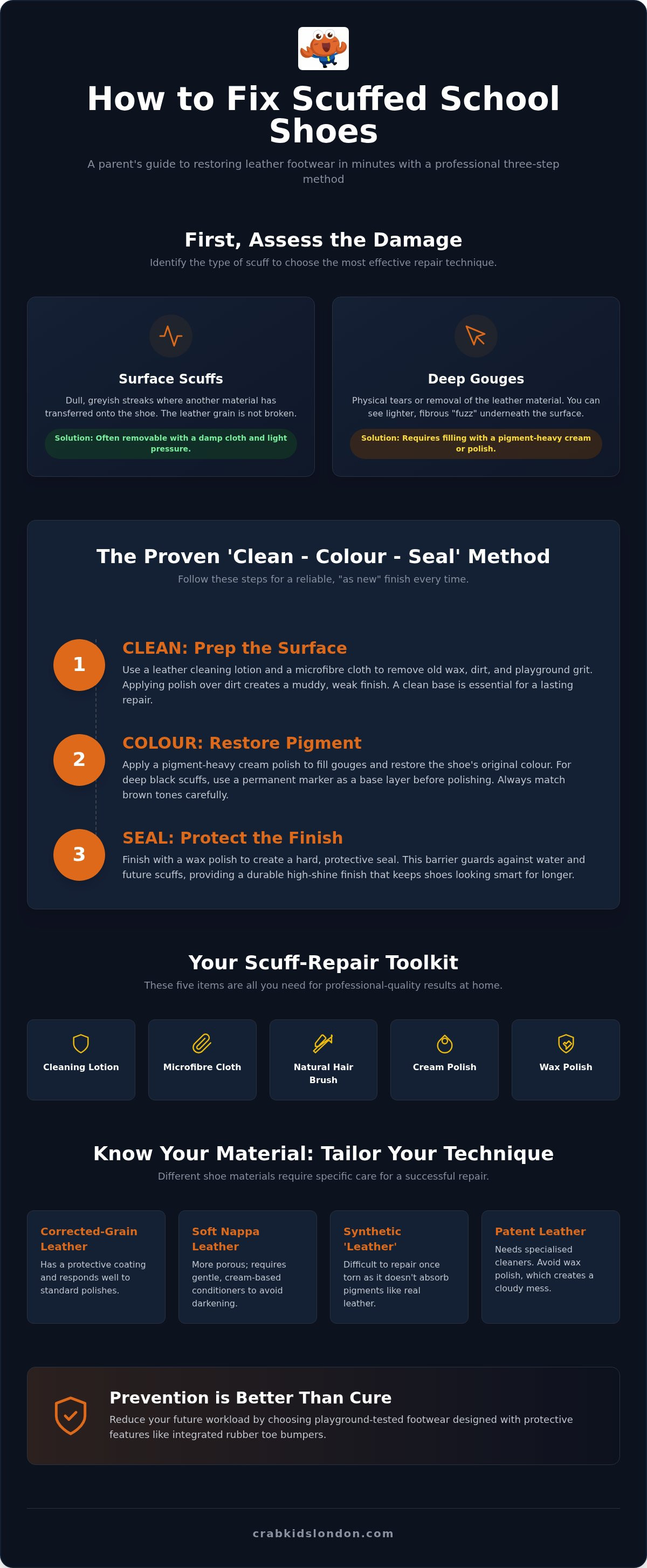
Surface scuffs usually appear as dull, greyish streaks across the toe box or heel. These marks haven't broken the leather grain; they are friction deposits. You can often remove these with light pressure and a damp cloth. In contrast, deep gouges are physical removals of the leather material. If you can see the "fuzz" or a lighter, fibrous texture underneath the smooth surface, the leather has been torn. Fixing these requires more than a quick wipe. You'll need to fill the gap with a pigment-heavy shoe polish or cream to restore the level surface and hide those exposed fibres.
You should also look for colour loss. This happens in high-friction areas where the top layer of pigment has simply worn away. Look for patches that appear brown or grey on a black shoe. Whilst aesthetics are easy to manage, structural damage is a different story. If the sole is peeling away or the stitching has failed, the shoe is likely beyond home repair. Safety is paramount; no amount of polish can fix a trip hazard.
Why Material Matters for Repair
The success of your repair depends on the shoe's material. Most durable school shoes use corrected-grain leather. This has a protective coating that responds well to standard polishes. Soft nappa leather is more porous and requires gentle, cream-based conditioners to avoid darkening the hide. Synthetic "leather-look" shoes are the most difficult to restore. Since they are essentially plastic, they don't absorb pigments. Once the top layer of a synthetic shoe is torn, you cannot "heal" the material like you can with genuine leather. Patent leather is another outlier. Its high-shine plastic coating needs specialised cleaners. Using traditional wax on patent leather will only result in a cloudy, smeared mess that ruins the signature shine.
The Essential Toolkit for Scuff-Repairing Parents
A proper toolkit is the difference between a temporary cover-up and a lasting repair. If you want to know how to fix scuffed school shoes like a professional, you must start with the right ingredients. High-quality tools do the heavy lifting for you, saving time on busy Sunday evenings. Learning how to fix scuffed school shoes becomes a five-minute task once your kit is ready.
Your home shoe-care station should include these five must-have items:
- Cleaning Lotion: Essential for stripping old wax and salt.
- Microfibre Cloth: Provides a lint-free surface for a smooth finish.
- Natural Hair Brush: Horsehair or pig-hair bristles reach into the grain without scratching.
- Cream Polish: Best for restoring deep colour and pigment.
- Wax Polish: Creates a hard, protective seal against water and future scuffs.
Using a high-quality microfibre cloth ensures you don't leave dust trapped under the new finish. Natural hair brushes are superior to synthetic sponges because they distribute oils evenly. Sponges often crumble, leaving debris that ruins the final shine.
Professional Prep Products
Preparation is the most overlooked step in shoe maintenance. We recommend using our Leather Shoe Cleaning Lotion to remove old wax buildup and playground grit. Applying new polish over old dirt creates a muddy finish that lacks durability and peels away quickly. pH-balanced cleaners protect leather fibres by maintaining the material's natural moisture levels, preventing the leather from cracking over time. For more stubborn stains, knowing How to Remove Scuff Marks before you apply colour ensures the cleanest possible base.
Colour Matchers and Applicators
Deep black gouges often need a base layer before you reach for the polish. A permanent marker is a clever "felt-tip hack" for filling in white or grey gouges on black leather. This provides a dark base for the polish to sit on. When it comes to brown footwear, matching the undertone is vital. Using a red-toned mahogany polish on a yellow-toned tan shoe will look patchy and unnatural. Use a small applicator brush for the seams and a soft cotton cloth for the larger panels to ensure even coverage. Keeping your kit organised at Crabkids London ensures you're always ready for the next playground adventure.
Step-by-Step: How to Fix Scuffed Leather School Shoes Fast
Restoring footwear doesn't have to be a time-consuming chore. By following the "Clean-Colour-Seal" method, you can achieve professional-level results at your kitchen table. This systematic approach ensures that repairs are durable enough to survive the next football match or playground chase. Knowing how to fix scuffed school shoes efficiently allows you to maintain a high standard of uniform without the stress of constant replacements.
Start by removing the laces and brushing away loose playground grit. This simple step prevents you from rubbing dirt further into the leather grain. The secret to a long-lasting finish lies in patience; applying multiple thin layers of product is always superior to one thick, gloopy coat. Thick layers often peel away within hours, whilst thin layers bond securely to the leather fibres.
Step 1: Deep Cleaning and Surface Prep
Before adding any pigment, the leather must be pristine. Use a damp cloth to remove surface mud, followed by a specialised cleaner to open the leather pores. This allows the new colour to penetrate the material rather than just sitting on top. Ensuring the shoe is 100% dry before adding colour is vital; moisture trapped under polish causes bubbling and uneven tones. For a detailed breakdown on maintaining the base material, see our guide on How to Clean Leather School Shoes. Using a dedicated Leather Shoe Cleaning Lotion at this stage provides the ideal foundation for the repair.
Step 2: Pigment Restoration and Buffing
Once the leather is dry, it's time to restore the aesthetic. Use a dabbing motion for deep gouges to "fill" the void with pigment. For lighter surface scuffs, a circular motion works best to blend the edges into the surrounding leather. Apply the pigment directly to the damaged area, avoiding the untouched parts of the shoe to keep the finish uniform. Follow the "Wait and See" rule: allow at least 10 minutes for the pigment to bond and cure before moving to the next stage. This curing time is what most parents skip, leading to polish rubbing off on trousers. Finally, use a natural hair brush to buff the area vigorously. This generates heat, which melts the waxes in the polish to create a hard, protective seal. Mastering this technique is the most effective way to learn how to fix scuffed school shoes for the long term.
A Roundup of Material-Specific Fixes
Modern school footwear uses a range of materials beyond traditional cowhide. Knowing how to fix scuffed school shoes made from patent leather or synthetic materials requires a shift in strategy. Applying standard wax to a high-shine finish will result in a dull, smeared appearance that is difficult to reverse. Tailoring your approach to the specific material ensures you don't accidentally cause more damage whilst trying to restore the look.
Many parents feel frustrated when "scuff-resistant" shoes eventually show wear. These designs often feature rubberised toe caps or reinforced bumpers. To manage marks on rubber, avoid polish entirely. A simple pencil eraser is often the most effective tool for "rubbing out" grey streaks from playground equipment. For suede or nubuck accents, use the "Steam and Brush" method. Hold the shoe briefly over the steam from a boiling kettle to loosen the fibres, then use a stiff suede brush to lift the nap and hide the graze.
Restoring the Shine to Patent School Shoes
Patent leather is essentially a plastic-coated finish. Because of this non-porous layer, standard pigments cannot soak into the material. To remove surface scratches, use a specialised patent cleaner or a tiny drop of olive oil on a soft cloth. Rub in small, firm circles to lift the mark, then buff with a clean microfibre cloth to restore that mirror-like shine. Avoid abrasive brushes at all costs, as they will scratch the delicate film and leave the shoes looking cloudy.
Fixing Matte and Synthetic Finishes
Matte leather requires specialised creams instead of hard waxes to maintain its flat, modern look. Using a high-shine wax on matte shoes will create an uneven, patchy gloss. For synthetic or "vegan" leather, the reality is that the material cannot be truly restored. These polyurethane-based fabrics don't "heal" or absorb oils like genuine hide. Focus on camouflage by using a colour-matched marker or a thin layer of cream to hide the grey base material. Never use a high-heat hair dryer to speed up the drying process on synthetics. Excessive heat can cause the plastic layers to warp, bubble, or peel away from the backing.
If your child's current pair is beyond these material-specific repairs, it might be time to invest in a more resilient foundation. Browse our latest collection of durable school shoes to find styles built for longevity and ease of maintenance.
Preventing Future Scuffs: Choosing the Right Footwear
While knowing how to fix scuffed school shoes is a vital skill for any parent, the best strategy is reducing the frequency of the damage. Selecting footwear designed for the high-energy reality of the playground saves you hours of maintenance over the school term. It is not just about the material; it's about the engineering of the shoe itself. A well-designed shoe acts as a shield, absorbing the impact of daily activity so the leather doesn't have to.
Poorly fitted shoes are a primary cause of premature wear. When a shoe is too large, children often drag their toes to keep the footwear secure, leading to deep gouges in the leather grain. You should consult our Shoe Size Guide to ensure a snug, supportive fit that encourages natural movement. A correct fit prevents that tell-tale "toe-drag" that ruins the front of the shoe within weeks.
We also recommend implementing a "Sunday Night Routine." A quick, two-minute wipe-down with a damp cloth prevents playground grit from becoming embedded in the leather. This simple habit keeps the surface clean and ensures that when you do need to learn how to fix scuffed school shoes, the process is much faster and more effective.
Design Features That Resist Scuffing
When shopping for new footwear, look for high-walled soles that wrap around the toe box. These rubber bumpers act as a physical barrier during football matches or climbing. Reinforced leather panels in high-wear areas also provide an extra layer of protection against the rough textures of tarmac. You can explore our New Arrivals to see these scuff-resistant features in action, designed specifically for active UK students.
The Long-Term Value of Quality Leather
High-quality leather is a parent's best friend because it is inherently easier to repair. Full-grain leather is naturally resilient and absorbs pigments much better than "split" or "coated" versions. Whilst cheaper alternatives might look similar on the shelf, they often peel beyond repair after a few days of heavy use. Investing in Durable School Shoes means you are choosing a product that stands up to the rigours of the school day. Quality shoes don't just look better; they do the heavy lifting for you, remaining smart from Monday morning through to Friday afternoon.
Mastering Your Sunday Shoe Care Routine
Keeping your child's footwear in top condition doesn't have to be a source of morning stress. By identifying the difference between surface marks and deep gouges, you can apply the right restorative method every time. Mastering how to fix scuffed school shoes with the "Clean-Colour-Seal" cycle ensures that even the most active playground veterans look smart for Monday morning assembly. Remember that the foundation of easy maintenance is always the quality of the shoe itself.
Choosing footwear with reinforced toe bumpers and high-quality leather makes your job significantly easier. We specialise in playground-proof designs as standard, providing the durability your kids need for their daily adventures. Whether you need a mid-term replacement or specialist leather-care products, we offer fast UK-wide delivery to keep your household running smoothly.
Shop our Scuff-Resistant Boys' and Girls' School Shoe Collections and invest in footwear that stands up to the school day. With the right tools and a little knowledge, you can keep those shoes looking as new as the day they were bought. You've got this.
Frequently Asked Questions
Can I use a permanent marker to fix scuffed black school shoes?
Yes, you can use a permanent marker as a base layer for deep gouges that have exposed the grey or white leather core. This hides the high-contrast damage before you apply a proper polish. However, it isn't a standalone fix. Markers lack the protective waxes and oils needed to nourish the leather and prevent the material from cracking over time.
How do I fix scuffs on patent leather school shoes without ruining the shine?
You should use a specialised patent cleaner or a tiny drop of olive oil on a microfibre cloth. Avoid standard wax polishes at all costs; they leave a cloudy, dull residue on the plastic coating. Gently rub the mark in circular motions to lift the scuff. Buffing with a clean, dry cloth afterwards restores the signature mirror finish without scratching the film.
Is it possible to repair a deep gouge where the leather has actually peeled?
You can repair peeled leather by using a pigment-heavy cream to fill the physical gap. If a flap of leather is still attached, use a tiny amount of flexible leather glue to secure it first. Once the glue is dry, apply colour-matched polish in thin layers. This fills the "fuzz" of the exposed fibres and creates a level, smooth surface again.
How often should I polish school shoes to prevent scuffs from becoming permanent?
A weekly polish is the most effective way to prevent permanent damage. Regular application of wax creates a sacrificial layer that absorbs playground friction before it reaches the leather grain. This routine makes it much easier to learn how to fix scuffed school shoes because the material remains supple, hydrated, and much more resilient to daily wear and tear.
What is the best way to remove mud before fixing a scuff?
Allow the mud to dry completely before brushing it away with a stiff, natural hair brush. Once the loose grit is gone, use a damp cloth or a dedicated leather cleaning lotion to prep the surface. Never apply polish or cream over damp leather. Trapping moisture under a layer of wax can cause the finish to bubble and peel away within hours.
Can I use Vaseline to hide scuffs on leather shoes?
Vaseline provides a temporary shine, but it isn't a recommended repair tool for school footwear. It lacks the pigments required to hide the greyish marks of a scuff and can actually attract dust and playground dirt. For a professional result that lasts all week, stick to wax-based polishes that offer both colour restoration and a hard, protective seal.
Will scuff-repair products rub off on my child's school trousers?
Repair products will not rub off if you allow them to cure for at least 10 minutes and buff them vigorously. The heat generated by a natural hair brush melts the waxes into the grain, creating a dry, hard finish. This sealing process is the most critical step in how to fix scuffed school shoes without leaving marks on uniform fabrics or carpets.
How do I know if my child's school shoes are beyond repair?
Footwear is beyond home repair if the sole has started to detach, the stitching has failed, or there is a hole through the leather. These structural issues are safety hazards that cannot be fixed with polish or cream. If the damage is purely aesthetic, such as surface grazes or colour loss, the shoes can usually be restored to an "as new" condition.