

How to Make Black Leather School Shoes Last Longer: The 2026 Parent’s Guide
Imagine the scene; it’s only the third week of term, yet your child’s brand-new footwear already looks like it has survived a decade of playground football. It’s a common frustration for parents who invest in quality but find themselves searching for how to make black leather school shoes last longer before the first half-term break even arrives. You aren't alone in feeling that the battle against scuffs, damp weather, and persistent odours is a losing one.
We understand that your schedule is packed and you need solutions that actually work without taking up hours of your evening. This 2026 guide reveals the professional maintenance secrets and daily habits that ensure those sturdy leather shoes stay smart until the final bell rings in July. We will cover everything from the 24-hour rest rule to using professional leather cleaning lotions to buff away the day's damage. You'll discover how a few simple, methodical steps can protect your investment and keep your child looking sharp every single morning.
Key Takeaways
- Understand why genuine leather is the essential foundation for any shoe intended to survive the full school year.
- Master how to make black leather school shoes last longer with a simple 60-second habit that stops damage before it starts.
- Learn the professional distinction between cleaning and polishing, including why a specialised Leather Shoe Cleaning Lotion is vital for suppleness.
- Discover the "Two-Pair Strategy" and how strategic rest can effectively double the lifespan of your child's footwear.
- Find out the #1 enemy of leather longevity and why your radiator might be doing more harm than good.
Start with Quality: Why Material Choice Dictates Longevity
Quality isn't just a buzzword; it's the blueprint for durability. When considering how to make black leather school shoes last longer, the journey starts before the first school bell rings. Genuine leather provides a sturdy foundation that synthetic materials simply cannot replicate.
Genuine Leather vs Synthetic Materials
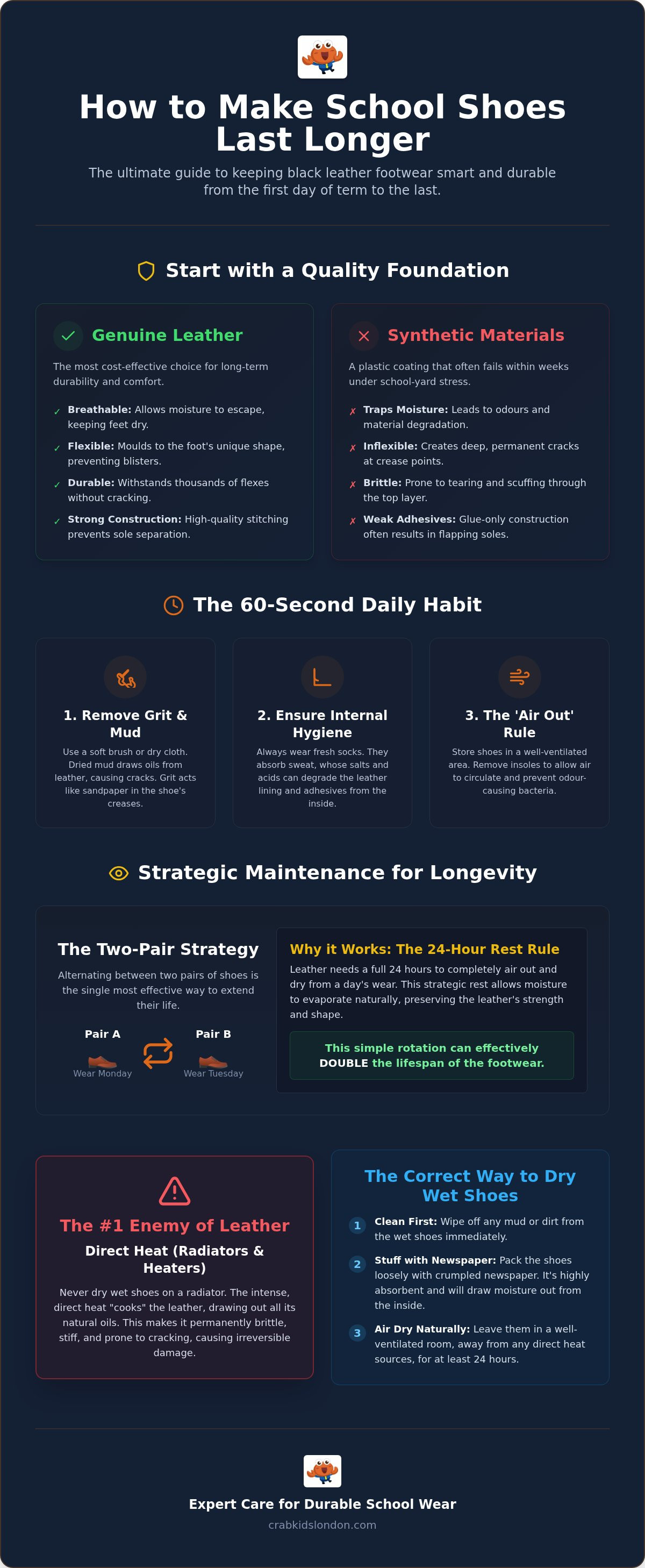
Real leather is a natural, fibrous material that adapts to the wearer. It moulds to the unique shape of a child's foot over time. This reduces internal friction points that often lead to blisters or lining tears. In contrast, synthetic "leather" is essentially a plastic coating over fabric. It lacks flexibility. You'll often notice that synthetic shoes develop deep, permanent cracks along the natural crease lines of the toes within weeks. Investing in premium leather might seem like a higher upfront cost, but its ability to withstand thousands of flexes makes it the most cost-effective choice for the long term.
Durability also depends on what you can't see. Leather is naturally breathable, allowing moisture from active feet to escape. Synthetic alternatives trap this dampness. This moisture weakens the adhesives and causes the material to delaminate or rot from the inside out. High-quality stitching is another hallmark of longevity. Reinforced seams ensure the upper remains firmly attached to the sole, preventing the "flapping" effect common in cheaper, glue-only constructions.
The Role of Proper Sizing in Durability
Even the best materials will fail if the fit is wrong. Achieving a correct shoe fit is a critical, yet often overlooked, part of maintenance. A proper fit is a fundamental secret of how to make black leather school shoes last longer. If a shoe is too large, the child's foot slides around. This causes "heel drag" that grinds down the sole prematurely. If it's too small, the leather is forced to stretch beyond its limit. This causes seams to burst and the shape to distort.
We recommend checking our shoe size guide every three months. Children's feet grow in spurts. A quick check ensures they aren't putting unnecessary strain on the leather. Use the "thumb rule" during fitting. There should be about a thumb's width of space between the end of the toes and the front of the shoe. This provides enough room for growth and movement without compromising the structural stability of the footwear.
The 60-Second Daily Routine to Prevent Premature Wear
Establishing a simple "doorway habit" is the most effective way to protect your investment. Consistency beats intensity every time. By spending just one minute each afternoon, you can stop minor issues from becoming permanent damage. This proactive approach is the secret to how to make black leather school shoes last longer without adding stress to your evening schedule.
Internal hygiene is just as critical as the exterior finish. Active children produce significant amounts of moisture through their feet during a typical six-hour school day. This sweat contains salts and acids that can gradually degrade the internal leather lining and adhesives. Ensuring your child wears fresh school socks daily is a simple but vital step. These socks act as a primary wick, absorbing moisture before it can saturate the shoe's structure. If the current pair is already showing signs of neglect, you might want to browse our new arrivals for a fresh, sturdy start.
Removing Playground Grit and Mud
Leaving dried mud on leather overnight is a common mistake. As mud dries, it draws out the natural oils from the leather, making it brittle and prone to cracking. Use a soft brush or a dry cloth to flick away loose grit as soon as your child returns home. Focus particularly on the "crease zone" across the toes. This is where the leather flexes most; if grit gets trapped in these folds, it acts like sandpaper, grinding down the finish with every step.
Avoid the temptation to use harsh household detergents or wet wipes for daily cleaning. These chemicals often contain alcohol or degreasers that strip the leather of its protective finish. A simple, dry wipe-down is usually sufficient for daily maintenance, preserving the material's integrity for the weeks ahead.
The Essential "Air Out" Rule
Leather is a porous material that needs time to breathe. It typically requires 24 hours to fully dry from the moisture accumulated during a day of wear. To speed up this process safely, pull out the insoles if they are removable. This allows air to circulate right down to the toe box, preventing the build-up of bacteria and the dreaded "school shoe odour."
Always store footwear in a well-ventilated area. Never leave shoes inside a school bag or a cramped locker overnight. The stagnant, humid environment inside a bag prevents drying and encourages the leather to become misshapen. By following this methodical airing process, you significantly improve how to make black leather school shoes last longer by maintaining the structural health of the material from the inside out.
Intensive Care: Cleaning and Polishing for Lasting Shine
A quick wipe with a damp cloth is a great daily habit, but it isn't enough for long-term resilience. To master how to make black leather school shoes last longer, you need a weekly intensive care routine. There is a fundamental difference between cleaning and polishing. Cleaning removes the accumulated grime and old, suffocating wax. Polishing restores the deep black pigment and adds a protective barrier against the elements.
Conditioning is the most overlooked step in shoe care. Leather is a natural material that contains oils. When these oils evaporate, the leather becomes brittle and begins to crack at the flex points we discussed earlier. Using a specialised Leather Shoe Cleaning Lotion ensures the material remains supple and hydrated. This prevents the structural breakdown that often forces parents into mid-term replacements.
Before you start, gather these essential items for your home maintenance kit:
- A soft-bristled brush for grit removal
- A professional Leather Shoe Cleaning Lotion
- A jar of black cream polish for colour restoration
- A tin of black wax polish for water resistance
- Two lint-free cloths and a horsehair buffing brush
The Weekly Deep Clean Sequence
Follow this methodical process every Sunday to reset the shoes for the week ahead. First, remove the laces. This allows you to reach the tongue and eyelets where dust and moisture often hide. Apply a small amount of cleaning lotion to a cloth and work it into the leather in circular motions. This step is vital because it strips away old, dirty wax that can trap moisture against the leather. Finally, allow the shoes to air dry naturally. Avoid heat sources; patience is key to maintaining the leather's integrity.
Choosing and Applying Black Polish
Selecting the right product depends on the shoe's condition. Cream polish is your best tool for colour restoration. It contains more pigment and oils that penetrate the leather to hide scuffs. Wax polish is different; it sits on the surface to provide a high-shine finish and a waterproof seal. You'll find that using both in sequence provides the best results for how to make black leather school shoes last longer.
The golden rule is that less is more. Applying a thick layer of wax leads to a heavy build-up that eventually flakes off. Apply a thin, even coat and let it sit for five minutes. Finish by buffing the surface with a horsehair brush. Fast, light strokes generate the slight heat needed to melt the wax into a smooth, brilliant shine. This creates a smart, professional look that lasts all week.
The Playground Defence: Handling Rain and Scuffs
The playground is the ultimate testing ground for any footwear. Between rainy lunchtimes and rough-and-tumble games, damage is almost inevitable. However, learning how to make black leather school shoes last longer involves mastering the art of damage control. Most parents think a deep scuff or a soaked shoe is the end of the line. In reality, with the right recovery plan, you can restore even the most battered pair to a smart, functional state.
Starting with a sturdy foundation is half the battle. Many of our designs feature scuff-resistant leather specifically engineered for active children. These materials are playground-tested to ensure they don't just look good on the first day but maintain their integrity through the toughest terms. If you're looking for footwear built to survive these conditions, you can browse our durable school shoe collection today.
The Correct Way to Dry Wet Leather
Water is a challenge, but heat is the real enemy. When your child returns home with soaking wet shoes, your first instinct might be to place them on a radiator. Don't do it. Direct heat sources cook the leather, causing it to shrink, warp, and eventually crack. Once the natural fibres are burnt by a radiator, the damage is irreversible. Follow this safe drying sequence instead:
- Wipe away any surface mud or grit immediately with a soft cloth.
- Remove the insoles to allow air to circulate inside the shoe.
- Stuff the shoes tightly with recycled newspaper. This absorbs internal moisture whilst helping the leather maintain its original shape.
- Leave them to dry naturally at room temperature in a well-ventilated area.
This slow drying process is a fundamental secret of how to make black leather school shoes last longer. It preserves the flexibility of the leather and prevents the adhesives from failing prematurely.
Repairing Scuffs and Scratches
Scuffs are often just surface-level damage to the pigment rather than the leather itself. For deep playground scrapes, a standard polish might not be enough. Use a black renovator cream, which contains a higher concentration of pigment to fill in the gaps. If the leather has "feathered" or lifted at the toe box, gently smooth the edges down with a very fine-grit sandpaper before applying the cream. This creates a level surface for the polish to grip.
Consistency is vital here. Treating a scuff the day it happens prevents moisture from entering the exposed leather fibres. However, keep an eye on the structural health of the shoe. If the scuffs are accompanied by a separating sole or a collapsed heel, it might be a sign that the shoes need replacing. You can verify the structural integrity and remaining growth room by checking our shoe size guide. By addressing small marks early, you ensure the shoes stay smart and sturdy for the entire school year.
Strategic Maintenance: Rotation and Storage
Even with a disciplined cleaning routine, constant daily wear places immense strain on footwear. Strategic maintenance focuses on the internal structure and the physical recovery of the leather fibres. If you are looking for the most effective way regarding how to make black leather school shoes last longer, the answer often lies in rotation. Giving a pair time to rest is not a luxury; it is a mechanical necessity for natural materials.
Proper storage is the final piece of the puzzle. Leather has a "memory" for shape. If shoes are left crumpled in a hallway or crushed under a pile of coats, they will eventually lose their structural integrity. This misshaping leads to uneven pressure on the seams, causing them to fail long before the leather itself wears out. Checking our new arrivals for a secondary pair before the mid-term rush ensures you are never caught out by a sudden structural failure.
Why Rotating Pairs Saves Money
The "Two-Pair Strategy" involves alternating between two sets of school shoes throughout the week. Whilst this requires a higher initial investment, it significantly extends the lifespan of both pairs. Leather fibres are essentially a network of proteins that compress during walking. Resting the leather for 48 hours allows these fibres to expand and recover their original shape. This prevents the deep, permanent creasing that leads to cracking.
Rotation also helps parents identify wear patterns before they become critical. By comparing two pairs, you can quickly spot if a child is dragging one heel or scuffing a particular toe. Addressing these gait issues or adding a small repair early is a key part of how to make black leather school shoes last longer. Additionally, perfectly dry shoes are far less prone to bacterial growth, which keeps the internal lining intact and the odour manageable.
Proper Storage Habits
Organised storage prevents physical damage that cleaning cannot fix. Never stack shoes on top of each other. The weight of one shoe can crush the heel counter or toe box of the one beneath it. Instead, store them side-by-side in a cool, dry environment. Extreme temperatures in conservatories or near boilers can cause the leather to dry out and the sole adhesives to perish.
- Use shoe trees or crumpled acid-free tissue paper to support the toe box.
- Ensure the storage area is well-ventilated to prevent dampness.
- Keep shoes away from direct sunlight to prevent the black pigment from fading.
By treating storage with the same discipline as cleaning, you protect the shoe's silhouette. A pair that maintains its shape provides better support for the foot and resists the "tatty" look that often leads to premature replacements. This methodical approach ensures your child’s footwear remains a sturdy foundation for their entire school year.
Step into the New Term with Confidence
Mastering the art of how to make black leather school shoes last longer doesn't require hours of your time. It simply requires a shift from reactive repairs to proactive habits. By choosing premium leather from the start, implementing a quick daily air-out, and following a methodical weekly cleaning routine, you ensure your child’s footwear remains smart and sturdy throughout the school year.
Crabkids London provides the sturdy foundation your child needs with durable, playground-tested designs built for the rigours of the British playground. We also offer expert-approved leather care products to help you maintain that professional finish. If a mid-term replacement is unavoidable, our next-day delivery options support busy parents when they need it most. Our goal is to alleviate parental stress by providing footwear that stands up to the high-energy reality of childhood.
Shop Durable Black Leather School Shoes for Boys and Girls
With these maintenance secrets in your toolkit, you can stop worrying about scuffs and start focusing on the term ahead. Your investment is protected, and your child is ready for every playground adventure. Here is to a smart, scuff-free year ahead.
Frequently Asked Questions
How often should I polish my child’s black leather school shoes?
Apply polish once a week to maintain a protective barrier. Sunday evening is the perfect time to prepare for the week ahead. Regular polishing feeds the leather and prevents it from becoming brittle. If you notice the black colour fading or scuffs appearing sooner, a mid-week touch-up helps. This consistent care is a primary factor in how to make black leather school shoes last longer by keeping the material supple.
Can I put leather school shoes in the washing machine if they are very muddy?
No, you should never put leather footwear in a washing machine. The high heat and excessive water saturation destroy the natural oils in the leather, causing it to shrink and crack. The mechanical action can also loosen the adhesives holding the sole in place. Instead, allow mud to dry and brush it off. Use a damp cloth for stubborn stains and always follow up with a conditioning treatment to restore the material.
What is the best way to get rid of bad smells in school shoes?
The most effective method is ensuring the shoes dry completely between uses. Odours are caused by bacteria thriving in damp environments. Pull out removable insoles and place the shoes in a well-ventilated area. For persistent smells, try using cedar wood inserts or a sprinkle of baking soda overnight to absorb moisture. Avoiding the same pair two days in a row is another great tip for how to make black leather school shoes last longer.
How do I fix a deep scuff on the toe of a black leather shoe?
Use a high-pigment renovator cream specifically designed for black leather. Standard wax polish often fails to fill deep gouges. First, smooth any ragged edges with a fine-grit sandpaper. Apply the renovator cream directly to the damaged area and let it dry. Finish with a layer of wax polish to seal the repair and restore the shine. This simple process keeps shoes looking smart even after a rough playground session.
Is it okay to dry wet leather shoes on a radiator?
It's never a good idea to use a radiator or any direct heat source. Rapid drying causes the leather to stiffen and split, which permanently ruins the shoe's structure. The safest method is to stuff the shoes with recycled newspaper to draw out moisture from the inside. Leave them in a room with good airflow. This patient approach preserves the leather's flexibility and ensures the shoes don't become misshapen.
Do scuff-resistant school shoes actually work?
Yes, these designs utilise a specialised coating or a tougher grain of leather to withstand abrasions. They are specifically engineered for children who spend a lot of time on their knees or playing football. Whilst no shoe is completely indestructible, scuff-resistant materials significantly reduce the appearance of surface damage. They provide a more durable exterior that requires less frequent intensive repair, making them an excellent choice for active school life.
Should I use a protector spray on new leather school shoes?
Yes, applying a water-repellent protector spray before the first wear is highly recommended. This adds an invisible layer that helps the leather resist water spots and salt stains. It's particularly useful during the winter months. You should reapply the spray after every deep clean or after a particularly rainy day. This small step provides an extra line of defence that helps maintain the leather's pristine condition for much longer.