

How to Label School Shoes So the Name Doesn’t Rub Off
If you’re wondering how to label school shoes so it doesn't rub off, choosing the toughest-looking sticker isn’t enough. School shoes face daily friction, sweat and moisture, so the surface and position matter just as much as the label itself.
A name can fade or peel if the method doesn’t suit the shoe. A label that sticks well to a smooth surface may not hold on a textured insole, while a poorly placed one can rub against your child’s foot or wear away quickly.
This guide explains how to match a marking method to the shoe material, choose a spot that’s easy to find and less exposed to friction, and check your work without damaging the footwear. Before applying anything, check the shoe’s care instructions as well as the label or marker directions.
Key Takeaways
- To learn how to label school shoes so it doesn't rub off, match the method to the shoe’s material and the label maker’s instructions.
- Choose a spot that’s easy to find but less exposed to rubbing from feet, socks and movement.
- Check the shoe’s care guidance before preparing the surface, then make sure it’s clean and fully dry before applying a label.
- Inspect the name regularly. If a label edge lifts, follow its maker’s guidance rather than pulling it off.
- Test your chosen method first and follow both the footwear and labelling instructions.
Why school shoe labels rub off and what makes them last
A child’s name can start the school day clearly marked and end it faded, peeling or hard to read. Often, the problem comes down to the shoe’s surface and how much rubbing, dampness and dirt the label encounters. A method that works on one shoe may not suit another.
A durable shoe label is one that suits the shoe’s surface and sits somewhere with less everyday friction. The insole, tongue and lining may be made or finished differently, so consider the materials used in shoe construction before choosing where and how to mark a pair.
What causes shoe labels to fade or peel?
Ink can fade through rubbing or exposure to moisture and dirt. With an adhesive label, the edges may lift after repeated contact or because the surface doesn’t give the adhesive a good hold. Sweat and dampness inside the shoe can also affect how well a name stays readable or attached.
Texture and finish matter. A smooth, clean area may suit one label, while a textured or treated surface may not. Shoe finishes vary, so check the footwear care instructions before cleaning or preparing an area. Don’t assume a method that’s suitable for one material will work on another.
Where should a child’s name go on a school shoe?
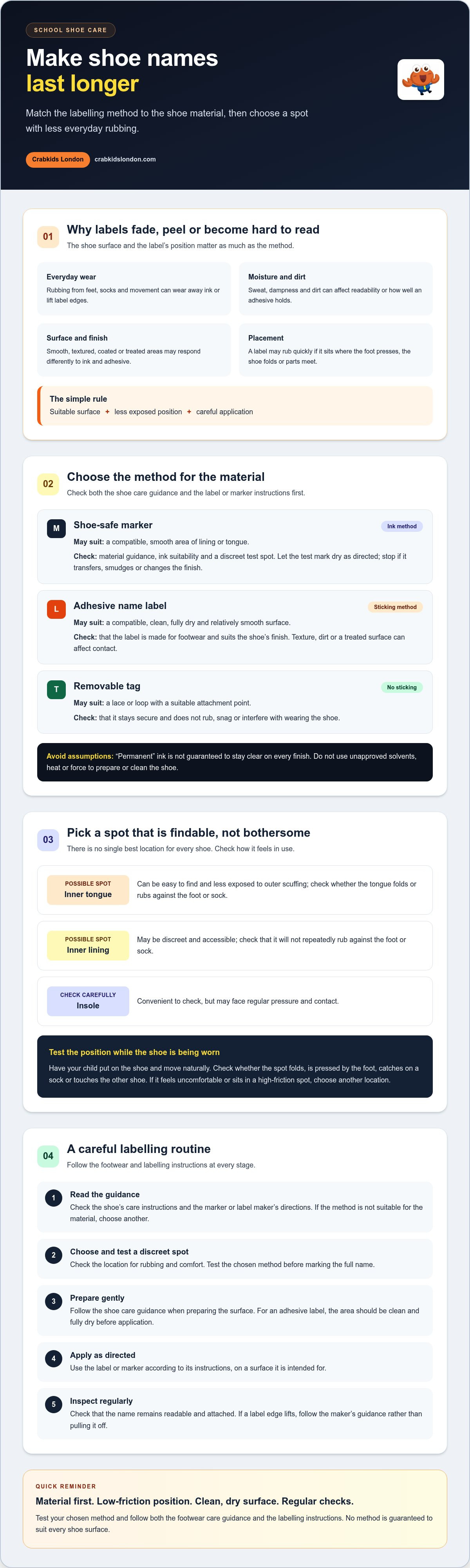
A discreet spot on the inner tongue or lining can be easy to find and may be less exposed to scuffing than an outer surface. However, the tongue may fold, and the lining can rub against the foot or sock. The insole is convenient to check, but it may face regular pressure and contact.
Before applying anything, have your child put on the shoe and move naturally. Check whether the chosen spot folds, gets pressed by the foot, catches on a sock or touches the other shoe. Avoid areas that repeatedly meet the ground or rub against a moving part of the foot. If the label feels uncomfortable or sits in a high friction spot, choose another location.
That’s the practical starting point for how to label school shoes so it doesn't rub off: match the method to the material, then choose a position that stays visible without interfering with wear. No single option is guaranteed to work on every surface. Check the label instructions as well as the shoe care guidance before applying it.
Choose a school shoe labelling method for the material
The right choice depends on what the shoe surface can handle. A smooth, coated area may respond differently to ink or adhesive than a textured lining. A removable tag avoids sticking anything to the shoe, but it needs a suitable place to attach. Check the label or marker instructions and the shoe care guidance before deciding. If either says the method isn’t suitable for that material, choose another.
| Method | Potentially suitable surfaces | Check before applying |
|---|---|---|
| Shoe safe marker | A compatible, smooth area of lining or tongue | Material guidance, ink suitability and a discreet test spot |
| Adhesive name label | A compatible, clean, dry and relatively smooth surface | That the label is made for footwear and suits the shoe’s finish |
| Removable tag | A lace or loop, if the shoe has a suitable attachment point | That it stays secure and doesn’t rub, snag or interfere with wearing the shoe |
Are permanent markers suitable for school shoes?
Use a marker only if its instructions allow it on the shoe’s material. “Permanent” doesn’t mean the ink will remain clear on every finish. It may fade, spread or show poorly on a coated or textured surface. Test a small, discreet area first and let it dry as directed. If the test mark transfers, smudges or changes the finish, don’t write the full name there.
Do adhesive labels work on leather and synthetic shoes?
They can be an option, but check that the label is designed for footwear and approved for the specific surface. A clean, fully dry, smooth area may help an adhesive sit evenly. Dirt, texture or a treated finish can interfere with contact. Don’t use unapproved solvents, heat or force to prepare the shoe or remove a label, as these could damage its finish.
Choose a removable tag only if there’s a practical attachment point and it won’t catch or press against the foot. Whichever method you select, test it discreetly and follow both sets of instructions. That material first approach is central to how to label school shoes so it doesn't rub off.
For leather shoes, follow the maker’s care instructions before preparing any area. If you’re checking care options for leather footwear, you can view leather shoe care products from Crabkids London.
How to label school shoes step by step without damaging them
A careful application starts before you take out the label. Shoe materials and finishes respond differently to cleaning and adhesives, so check the footwear care guidance and the label or marker instructions first. Follow the steps in order, and don’t rush the drying or setting time.
Safest order: check the care guidance, choose and test a low friction spot, clean it gently, let it dry fully, apply as directed, then check readability and comfort.
- Check the care instructions. Confirm how the shoe material should be cleaned and whether the chosen marker or label is suitable for it. Don’t use a cleaner, solvent or preparation method unless it’s approved for that material.
- Choose the position. Pick a discreet, easy to find area that’s less likely to rub against the foot, sock, other shoe or ground. Avoid seams, sharp curves and surfaces that fold or move repeatedly.
- Prepare the spot gently. Remove loose dirt using a method suitable for the shoe. The surface must be clean and fully dry before you apply an adhesive label or write a name. If you’re considering leather care, check the product directions first. Don’t apply a shoe care product immediately before labelling unless the shoe care instructions and the labelling maker’s directions allow it.
- Test before committing. Try the marker or label in a small, discreet area. Wait for the time specified by its maker before judging the result. Check that ink hasn’t smudged or affected the finish, or that the label sits flat and adheres as intended. If the test doesn’t look right, stop and choose another compatible method or spot.
- Apply the name carefully. Write clearly within the label’s usable area, or position the adhesive label without stretching it over a seam or curve. Press it down as instructed, paying attention to the edges. For ink, follow the stated drying or setting time, and avoid touching or rubbing the mark before it’s ready.
- Inspect the fit and finish. Check that the name is easy to read and the label is secure. Have your child put on both shoes and move naturally. If the marked area rubs, catches or feels uncomfortable, choose a different position.
This gives you a practical starting point for how to label school shoes so it doesn't rub off while helping protect the shoe’s finish. Use the product directions for pressure, drying and setting time rather than guessing.
Make shoe labels easier to find and harder to wear away
Check the label occasionally, especially after busy days in damp or muddy conditions. Add a quick look to your shoe care routine and check again at the start of each school term. There’s no fixed lifespan for a label. Readability depends on the method, position, shoe surface and amount of wear.
How often should parents check school shoe labels?
Look for blurred or faded writing, lifted corners and names partly hidden by dirt. Check that the name is still easy to read without bending the shoe or rubbing the surface. If it’s obscured, clean the area only as the shoe care instructions allow, then check again once it’s dry.
- If ink has worn: refresh it only if the marker instructions and shoe care guidance permit another application to that material.
- If an adhesive edge lifts: don’t tug at it or pull it across the shoe’s finish. Check the label instructions. If they allow it, gently press the edge back into place on a clean, dry surface. If it won’t stay flat, follow the maker’s guidance for removal and choose another suitable method.
Don’t add a second label over a lifting one or use heat, solvents or extra adhesive unless the makers specifically approve them. These could affect the shoe’s finish or make the label less secure.
What if the shoe has no good flat labelling spot?
Consider a removable tag only if the shoe has a suitable attachment point and the tag stays secure without changing the fit. Have your child wear the shoes and move naturally to check that it doesn’t catch, press against the foot or loosen. If there’s no safe, practical place to attach a tag or label, follow the school’s guidance for identifying shoes.
Careful inspection is part of how to label school shoes so it doesn't rub off: look for early signs of wear and follow the instructions, rather than waiting until the name can’t be read. For broader maintenance advice, see this guide to caring for children’s shoes. If you’re looking for children’s school shoes or shoe care products, explore Crabkids London’s footwear and care range.
A simple labelling routine for school shoes that lasts
Reliable labelling comes down to three choices: identify the shoe material, select a method approved for that surface, and place it somewhere less exposed to friction. Test first, then follow the label or marker instructions alongside the shoe’s care guidance. No method lasts indefinitely, so an occasional check is more dependable than assuming the name will stay readable all term.
A quick checklist before the first school day
Before the shoes go into the school day routine, check the finished result. The name should be clear, and any adhesive label should sit firmly without lifting at the edges. Have your child wear the shoes and walk around. A label or tag shouldn’t rub, catch or press against the foot.
- Can you read the name easily? Check it in the light and from the angle a child or adult would use to identify the pair.
- Is it secure and comfortable? Look for loose corners or a tag that moves, then check that nothing irritates the foot during normal movement.
- Is a replacement method appropriate? Pack one only if its maker’s instructions support carrying or storing it that way. Keep any marker or adhesive product safely away from children when not in use.
If a mark needs refreshing, first check that the shoe surface and labelling product instructions allow another application. Don’t layer on more ink or adhesive simply because the name looks faint. A fresh method may not suit the existing finish or label.
Choosing school shoes that are ready for everyday wear
Labelling helps identify a pair, but it doesn’t improve the shoe’s fit or protect it from wear. Choose children’s school shoes with fit and comfort in mind, and follow the care advice for their material as they’re worn through active school days. This also gives you a sound basis for deciding where a name can be added without interfering with how the shoe feels.
If you’re still considering how to label school shoes so it doesn't rub off, keep the routine simple: check the material and instructions, test a suitable method, then inspect the result before the shoes are worn to school. For children’s school shoes, explore children’s school shoes from Crabkids London.
How to label school shoes so it doesn't rub off: a simple routine
A name that stays readable begins with a considered choice, not a one size fits all label. Match the marking method to the shoe material, place it where everyday rubbing is less likely, and check that it remains clear and comfortable after application. If you’re deciding how to label school shoes so it doesn't rub off, remember that an occasional inspection is more dependable than expecting any label to last indefinitely.
Good shoe care supports the routine, too. Follow the footwear’s care guidance when preparing a surface or refreshing a worn name, and avoid methods that could affect the shoe’s finish. These small checks help keep identification practical through busy school days.
Crabkids London offers children’s school shoes and shoe care products for active school life. Explore Crabkids London’s children’s school shoes and shoe care range to find a pair to suit your child’s everyday needs.
With a compatible method and an occasional check, you can send your child off with shoes that are easier to identify and ready for the day ahead.
Frequently Asked Questions
What is the best way to label school shoes so the name does not rub off?
Choose a method that the maker says is suitable for the shoe’s material, then place it where it’s less likely to rub against the foot, sock or other shoe. A footwear specific adhesive label or compatible marker may work, but no method suits every finish. For how to label school shoes so it doesn't rub off, test a discreet area first, follow the application instructions and check the name periodically.
Can I use a permanent marker to write my child’s name inside school shoes?
Use one only if its instructions allow it on that shoe material. Permanent ink may still fade, smudge or show poorly on a particular lining or finish. Try a small, hidden mark first and wait for the stated drying time before checking the result. If the ink transfers, changes the surface or is hard to read, don’t write the full name there. Choose another compatible method or spot.
Do stick on name labels stay on leather school shoes?
They may adhere to leather if the label is designed for footwear and its maker confirms it’s suitable for that leather finish. Leather can be treated or textured, so don’t assume an adhesive will hold simply because the surface looks smooth. Check the shoe care guidance, test discreetly, and apply only to a clean, fully dry area. Avoid unapproved cleaners or solvents, which could affect the finish or adhesive.
Where should I put a name label in a school shoe?
Look for an easy to find area on the inner tongue or lining that doesn’t fold or press against the foot. Before applying a label, have your child wear the shoe and move naturally to see whether the spot rubs against a sock, foot or the other shoe. Avoid exposed areas that repeatedly meet the ground. Comfort comes first, so change position if the label catches, irritates or gets hidden.
How can I label school shoes without damaging the material?
Start by checking the footwear care instructions and the label or marker guidance. Remove loose dirt gently using a material appropriate method, then let the surface dry completely. Test your chosen method in a discreet place and wait as directed before applying the name. Don’t use unapproved solvents, heat or force to prepare the area or remove a label. If the test affects the finish, stop and choose another option.
Can I put a name label on the sole of a school shoe?
The outsole is usually a poor choice because it repeatedly touches the ground and is exposed to scuffing, dirt and moisture, which can quickly obscure or wear away a name. An insole may be easier to reach, but it can also face regular pressure and rubbing. Check the label’s instructions and try a less exposed inner tongue or lining spot if suitable, making sure it doesn’t affect comfort.
How do I replace a school shoe label that has started peeling?
Don’t pull a lifting label across the shoe’s finish. Check the label maker’s removal guidance and the footwear care instructions first. If they allow it, gently press the edge back onto a clean, dry surface. If it won’t lie flat, follow the approved removal method, then test a compatible replacement in a different suitable spot. Avoid adding glue, heat or solvent unless the relevant instructions specifically permit it.