

How to Clean a Fabric School Backpack: A Safe, Step-by-Step Guide
The washing machine may not be the safest first step for a grubby school bag. If you’re wondering how to clean a fabric school backpack without harming its fabric or finish, start gently and check the care label before using water or detergent. Some bags need more careful handling, especially if they have delicate details or a special coating.
It’s understandable to be unsure about machine washing or to worry that scrubbing could leave marks of its own. Everyday dirt, food spots and lingering odours often need only a simple, careful clean. This guide explains how to start with the least aggressive method and when machine washing may be suitable.
You’ll find clear steps for emptying and cleaning the bag, treating stubborn stains and freshening the inside. We’ll also cover rinsing and air drying, so the backpack is fully dry before it’s packed for school again.
Key Takeaways
- Learn how to clean a fabric school backpack by choosing a method that suits its care label and level of soiling.
- Prepare the bag by emptying pockets and removing loose items, inserts and detachable accessories.
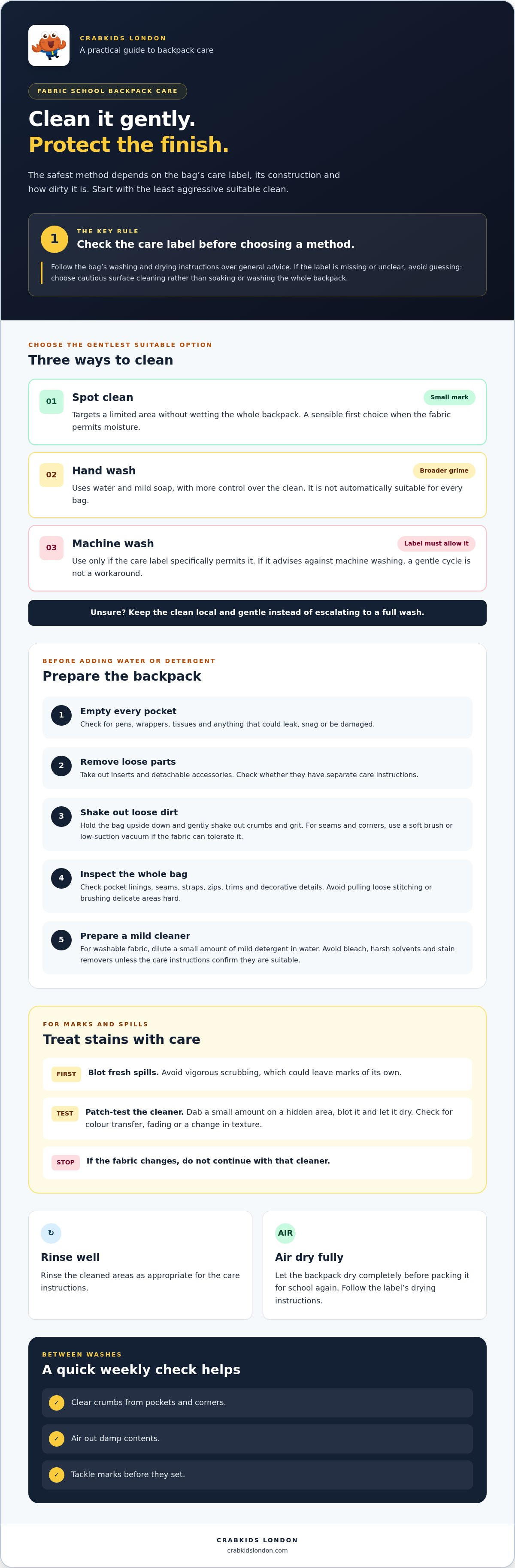
- Compare spot cleaning, hand washing and machine washing, and use only a method the care label allows.
- Blot fresh spills, test stain treatments on a hidden area and let the backpack air dry fully.
- Make a quick weekly check to clear crumbs, air out damp contents and tackle marks before they set.
How to clean a fabric school backpack without damaging it
Crumbs in the corners, muddy marks on the base and the smell of yesterday’s snack are familiar school-bag problems. But a backpack is more than a piece of fabric: its lining, padding, straps, zips, trims and any water-resistant coating can all affect how it should be cleaned. A method that suits one bag may damage another.
For how to clean a fabric school backpack safely, let the care label guide you and begin with the gentlest suitable option. A light surface mark may need only spot cleaning, while a heavily soiled bag might need more. Don’t assume every fabric backpack can go in the washing machine, even if it looks sturdy.
Rule to remember: check the label before choosing a cleaning method. Follow its washing and drying instructions over general advice. If the label uses symbols you don’t recognise, this guide to understanding laundry care symbols can help you interpret them.
What to check before cleaning a school backpack
Find the care label, which may be inside a pocket or along an inner seam. Check its instructions for washing, water temperature and drying. Before cleaning, inspect the whole bag, including pocket linings, seams, straps, zips and decorative details. These areas can hold debris or need gentler handling than the main fabric.
If the label is missing or unreadable, avoid guessing. Choose cautious surface cleaning rather than soaking or washing the entire backpack. Take extra care around trims, coatings and parts that could lose their shape or finish when wet.
Which cleaning method is safest for the fabric?
Choose the approach according to the care label and how dirty the bag is:
- Spot cleaning targets a small mark without wetting the whole backpack. It’s a sensible first choice for limited dirt when the fabric permits moisture.
- Hand washing cleans more of the bag with water and mild soap. It gives you greater control, but isn’t automatically suitable for every construction.
- Machine washing is an option only if the care label specifically allows it. If the label advises against it, don’t use a gentle cycle as a workaround.
When the instructions are unclear, keep cleaning local and gentle rather than escalating to a full wash. This cautious start helps protect the bag and gives you a clear basis for deciding what to do next.
Prepare a fabric school backpack before washing or spot cleaning
A little preparation helps stop loose dirt spreading and prevents small items being overlooked. Before adding water or detergent, work through these steps. Keep the care label’s instructions in mind, as they determine which cleaning methods and products are suitable for that particular bag.
- Empty every pocket. Check small compartments for pens, wrappers, tissues and anything else that could leak, snag or become damaged.
- Remove loose parts. Take out inserts and detachable accessories. Set them aside and check whether they have separate care instructions.
- Shake out debris. Hold the backpack upside down and gently shake out crumbs and grit. Use a soft brush or a vacuum on low suction for debris in seams and corners, if the fabric can tolerate it.
- Inspect the bag. Note where the marks are and check seams, straps, zips and trims for damage. Avoid pulling at loose stitching or brushing hard against delicate areas.
- Prepare a mild cleaner. For washable fabric, dilute a small amount of mild detergent in water. Don’t use bleach, harsh solvents or stain removers unless the care instructions confirm they’re suitable.
Empty, inspect and remove loose dirt
Take your time with the inside pockets. A forgotten pen can leak once the bag gets wet, while a tissue may break apart and cling to the lining. Brush gently, following the fabric rather than scrubbing across it. If you spot a tear or loose seam, take care around that area so cleaning doesn’t make the damage worse.
Choose a gentle cleaner and test it first
Before treating a visible mark, test the diluted cleaner on a small, hidden patch, such as an inconspicuous area inside the bag. Dab it on with a clean cloth, blot the patch and leave it to dry. Check for colour transfer, fading or a change in texture. If anything changes, stop and don’t apply that cleaner to the rest of the backpack.
This patch test is a useful final check before following the next steps for how to clean a fabric school backpack. If careful cleaning can’t restore a bag, you could browse children’s backpacks when considering a replacement.
How to wash a fabric school backpack by hand or machine
The right cleaning method depends on how dirty the backpack is and what its care label permits. A small mark may need only spot cleaning; broader grime may call for hand washing if the label allows it. Machine washing is not a default shortcut. Padding, trims, coatings and construction can all affect how a bag responds to a full wash.
Washing method depends on the care label and the backpack’s construction. If the instructions rule out a method, follow the label rather than general advice. If the bag has no usable care instructions, stick to cautious surface cleaning instead of assuming a full wash is safe.
Hand wash or spot clean a fabric backpack
For a limited mark or light surface dirt, start with a clean cloth or soft sponge dampened with a little water and diluted mild detergent. Avoid soaking the backpack straight away. Dab or wipe gently from the outside edge of the mark towards its centre to help limit spreading. Don’t scrub hard, as this may roughen the fabric or affect its finish.
For a larger area, hand washing may be suitable only if the care label allows it. Follow the recommended washing instructions and work gently, paying attention to dirty areas without twisting or stretching the bag. Once clean, wipe away detergent with a separate cloth dampened with clean water. Removing residue matters because leftover soap can leave visible marks as the fabric dries.
When can a fabric backpack go in the washing machine?
Use a washing machine only when the care label explicitly permits it. If it does, prepare the bag as instructed, secure the zips and choose a gentle cycle. A mesh laundry bag can help protect straps and zips during the wash, but it doesn’t make machine washing suitable for a backpack whose label advises against it.
Use only detergent and a water temperature allowed by the care instructions. Don’t add bleach or other strong cleaners unless the manufacturer specifically recommends them. If the bag has delicate trims or parts that could catch, consider whether the machine-washing guidance applies to the whole backpack as it’s made, not just the main fabric.
After washing, air dry the backpack fully, with pockets open to help air circulate. Don’t tumble dry it unless the manufacturer explicitly says that’s suitable. Heat may damage or shrink some materials, so follow the bag’s drying instructions and make sure it’s completely dry before using it again.
Remove backpack stains and odours, then dry it completely
Stain treatment and drying matter as much as the wash itself. Before applying anything, check the backpack’s care label and test your chosen cleaner on a hidden patch. If the colour transfers or the fabric changes in texture, stop and follow the manufacturer’s guidance instead. A cleaner that works on one material may not suit another.
Blot fresh spills; don’t rub them into the fabric. Use a clean cloth to lift as much of the spill as possible, working gently. Rubbing can push food or drink further into the fibres and spread the mark. Once you’ve lifted the excess, treat the area only with a method permitted by the care instructions.
Treat everyday marks without harsh scrubbing
For a compatible washable fabric, use a clean cloth with a small amount of mild detergent diluted in water. Dab the mark gently, working from its outer edge towards the centre to help contain it. Avoid saturating the surrounding material, and wipe away detergent residue with another clean, damp cloth. Don’t mix cleaning products; combining them can create an unsuitable cleaner or affect the fabric.
If a stain remains, resist the urge to scrub harder or reach for a stronger chemical. Check the manufacturer’s advice for persistent marks, particularly if the bag has a coating, coloured trim or delicate details. Repeating a cautious treatment is preferable to risking damage with an unverified stain remover.
Air dry the backpack and prevent lingering smells
Odours can linger if damp contents stay inside or moisture remains trapped in the lining. After cleaning, open all pockets and leave the backpack in a well-ventilated place to air dry. Keep it away from direct heat and sunlight, which can affect some fabrics. Don’t put it away while it’s still damp.
Check the areas that dry slowly: seams, padding, pocket corners and the base. Feel inside each compartment as well as across the outer fabric. If any part still feels cool or damp, give it more time with the pockets open. This final check is an essential part of how to clean a fabric school backpack and helps prevent a musty smell returning.
Put the backpack away only when its interior is dry. If careful cleaning can’t restore the bag, you can browse children’s backpacks for another school-day option.
Keep a school backpack cleaner between washes
A short weekly check can stop crumbs, damp kit and small spills building up into a bigger cleaning job. It doesn’t need to become another complicated task. Emptying the bag and dealing with fresh marks promptly helps keep it ready for the next school day while avoiding unnecessary full washes.
A quick routine for busy school weeks
At the end of the school day, empty food wrappers and remove damp items such as a water bottle or wet sports kit. Check the pockets for crumbs, then shake them out or use a soft brush where needed. Leave the bag open to air before putting it away in a cupboard or locker. If you spot a fresh mark, dab it promptly with a clean cloth and use only a cleaning method suitable for that fabric.
A quick weekly check can catch things that are easy to miss during the rush: residue at the bottom of a lunch pocket, a damp lining or dirt around the straps. Regular attention is often more manageable than waiting until the whole bag needs cleaning. Follow the care label whenever you treat a mark, and don’t use a full wash unless the instructions allow it.
When to consider a replacement backpack
Appearance alone doesn’t mean a backpack needs replacing. If a mark responds to safe cleaning and the bag still works properly, there may be no reason to replace it. Look at its practical condition instead: straps that are torn or no longer secure, broken fastenings that stop pockets closing, or a persistent odour that remains after the bag has been cleaned and dried thoroughly.
Visible damage around a seam or strap may affect how reliably the bag carries its contents. Check whether the problem is worsening and whether the backpack can still be used as intended. If cleaning hasn’t helped and the bag is damaged or difficult to use, comparing another option may make sense. Check the care information for any replacement before cleaning, as fabrics and construction can vary.
If you’re considering another school-day bag, explore the school bags collection. A simple upkeep routine, alongside cleaning methods that suit the care label, can make how to clean a fabric school backpack a less frequent concern.
Keep your school backpack ready for the next day
A reliable clean starts with the care label. Choose the gentlest method it allows, treat marks without harsh scrubbing and let the backpack dry fully before packing it again. These steps make how to clean a fabric school backpack easier to manage while helping you avoid damage from unsuitable washing or drying.
If cleaning can’t restore the bag or its straps and fastenings are damaged, a replacement may be the practical choice. Crabkids London offers children’s backpacks and school accessories. Care instructions vary by bag, so check the label for specific cleaning guidance.
Browse children’s school bags for an option for the school day ahead. With a gentle approach and a little regular upkeep, you can keep the current backpack in use or choose a replacement.
Frequently Asked Questions
Can you put a fabric school backpack in the washing machine?
Only use a washing machine if the backpack’s care label says machine washing is suitable. Fabrics, padding, trims and finishes can react differently to water and agitation, so don’t assume a bag is washable because it looks sturdy. Empty it, secure the fastenings and choose the gentlest setting the label permits. If the label is missing or unclear, stick to cautious spot cleaning rather than risking a full wash.
How do you clean a school backpack without washing it?
Empty every pocket, then shake out crumbs and remove loose dirt with a soft brush or suitable low-suction vacuum. For fabric that permits damp cleaning, mix a small amount of mild detergent with water and use a clean cloth to treat marks gently. Test the solution on a hidden area first. Wipe away residue with a separate damp cloth, then leave the bag open until it’s fully dry.
What is the best way to remove stains from a fabric backpack?
Check the care label and test your cleaning solution on a hidden patch before treating a visible stain. Blot a fresh spill with a clean cloth rather than rubbing it further into the fabric. If the material allows, dab with a little diluted mild detergent, working from the edge of the mark towards the centre. Avoid bleach and harsh stain removers unless the manufacturer specifically recommends them.
How do you get a bad smell out of a school backpack?
Empty the bag and remove any damp or forgotten items, then clean visible marks using a method suitable for its fabric. Open every pocket and air the backpack in a well-ventilated place until the lining, seams and interior are dry. Don’t mask the smell with fragrance or put the bag away while damp. If the odour persists after cleaning and thorough drying, check the manufacturer’s care guidance.
Can you use washing-up liquid to clean a fabric school backpack?
A small amount of mild washing-up liquid diluted in water may suit some washable fabrics, but check the care label first. Test the solution on a hidden patch and look for colour transfer or a change in texture once it’s dry. Use very little, then wipe away residue with a clean, damp cloth. Don’t use concentrated liquid, scrub hard or apply it where the care instructions prohibit detergents.
How long does a fabric school backpack take to dry?
There’s no reliable fixed drying time: it depends on the fabric, padding, room conditions and how much water the bag has absorbed. Open every pocket and leave the backpack in a well-ventilated place. Check the seams, padded areas and pocket interiors before storing or using it. Avoid direct heat and don’t tumble dry unless the care label specifically allows it.
What should I do if the backpack care label is missing?
Choose the least aggressive approach. Empty the bag, remove loose dirt, then test diluted mild detergent on a small hidden area. If the fabric shows no colour change or damage once dry, cautiously spot clean the mark. Avoid soaking or machine washing when the materials and construction are unknown. For delicate trims or a persistent stain, contact the manufacturer for care advice before trying a stronger treatment.