

Expert Guide to Leather School Shoe Polish: Protect Your 2026 Investment
Most parents view shoe care as a cosmetic chore, but the right leather school shoe polish is actually a structural necessity for surviving the British school year. It is a common frustration to watch a quality pair of leather shoes lose their lustre or develop deep scuffs within the first week of term. You want footwear that stands up to the high-energy reality of the playground without cracking under pressure or succumbing to the damp UK weather. We understand that your priority is resilience and value, not spending hours on a complicated maintenance routine.
This guide shows you how to select the perfect leather school shoe polish to nourish the hide and master a maintenance routine that doubles the lifespan of your investment. You'll discover why choosing the correct formula is vital for long-term durability; we'll break down the differences between wax, cream, and liquid options. By following our expert steps, you can keep your child's footwear looking smart and professional until the final bell of 2026. We've organised everything you need to transform a quick weekly task into a powerful protective shield for their shoes.
Key Takeaways
- Learn how a consistent care routine creates a protective barrier against playground grit whilst preventing leather from drying out or cracking.
- Distinguish between wax and cream polishes to achieve the perfect balance of high-shine water resistance and deep pigment restoration.
- Master a quick-start maintenance routine using the correct leather school shoe polish to effectively double the lifespan of your investment.
- Understand the importance of material-specific care, including how to safely treat patent leather and match colours accurately.
- Discover professional tips for drying and rotating footwear to maintain the shape and structural strength of durable leather shoes.
Why Leather School Shoe Polish is Essential for Longevity
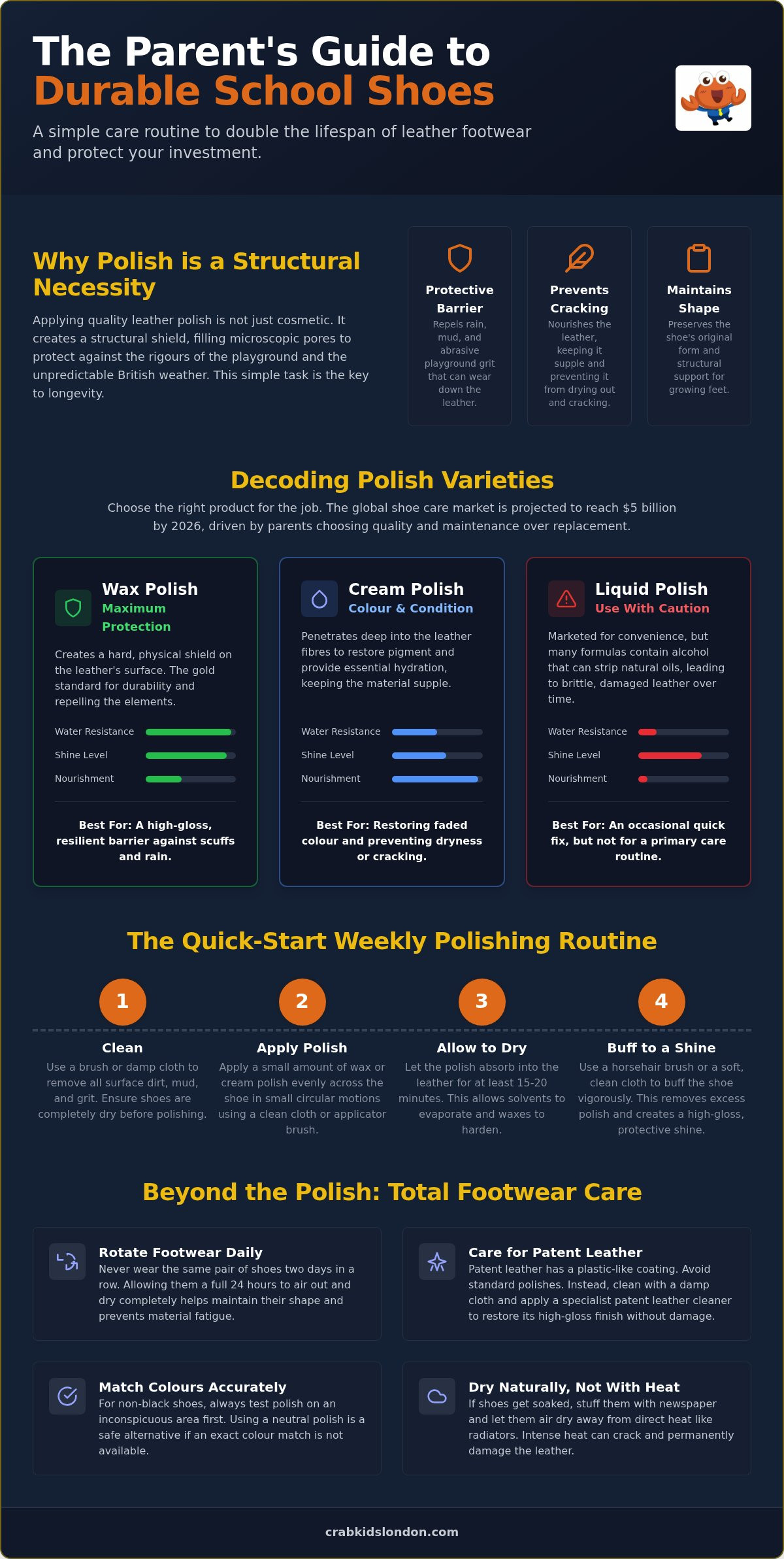
School shoes endure more in a single week than most adult footwear faces in a year. Applying a high-quality leather school shoe polish isn't just about vanity; it's about structural survival. This simple layer fills microscopic pores in the hide, creating a breathable shield against the inevitable British rain and playground mud. Without this protection, grit acts as an abrasive, slowly grinding down the leather grain until the material fails.
Regular maintenance prevents the leather from drying out and developing deep cracks. When leather loses its natural moisture, it becomes brittle and prone to failure. Polishing provides several structural benefits:
- Fills surface scuffs to prevent them from becoming deep tears.
- Maintains the shoe’s original shape and arch support.
- Creates a barrier that repels playground grit and abrasive mud.
Once a crack appears, the shoe's integrity is compromised, leading to leaks and a total loss of comfort. By maintaining the material's flexibility, you ensure the footwear remains resilient for the entire academic year.
The Science of Leather Preservation
Leather is a natural material consisting of interwoven fibres. These fibres must slide against each other whilst a child runs, jumps, and climbs. The fats and oils found in leather school shoe polish keep these fibres supple amongst constant movement. Using a leather cleaning lotion to remove dirt first ensures the polish can penetrate deeply. The wax component then creates a water-resistant seal. This is vital for the UK climate; unpolished leather is highly susceptible to permanent salt and water stains that can ruin the material's texture permanently.
Aesthetic vs Structural Maintenance
Whilst a high-gloss finish looks smart, it's a secondary benefit to preventing material fatigue. Nourished leather is resilient leather. A shoe that remains flexible and strong provides better support for growing feet, whereas neglected leather stretches and sags. There's also a psychological impact to consider. Maintaining a tidy uniform can influence a child’s school behaviour, fostering a sense of discipline and self-respect. A well-polished pair of shoes signals that the wearer is ready for the day, providing a boost of confidence that lasts from the first lesson to the final bell.
Wax, Cream, or Liquid: Decoding Shoe Polish Varieties
Choosing the right leather school shoe polish depends on whether you need a cosmetic shine or deep structural protection. High-street shelves are often packed with tins, jars, and bottles, but each serves a distinct purpose in the maintenance cycle. Selecting the wrong variety can lead to dehydrated leather or a finish that offers no protection against the elements. Understanding these differences ensures your investment remains resilient throughout the academic year.
The shoe care market is growing, with a projected value of approximately $5 billion in 2026. This growth is driven by a "buy less, buy better" mentality amongst parents who prefer maintaining quality footwear over frequent replacements. To achieve this, you must match the product to the specific needs of the leather.
Wax Polish for Maximum Protection
Wax is the gold standard for durability and water resistance. It contains a high concentration of hard waxes, such as Carnauba, which sit on the surface to create a physical shield. This variety is best for older children who can take responsibility for their kit, as it requires more time to apply and buff than other options. It provides the thickest layer of protection against playground scuffs and is unmatched for repelling rain. Whilst it takes more effort, the result is a resilient barrier that deflects grit and moisture effectively.
Shoe Creams for Colour Restoration
Unlike wax, shoe creams are designed to penetrate the leather fibres. They contain higher levels of oils and fats, making them ideal for pigment restoration and deep hydration. If black leather school shoes have developed greyish scuffs, a cream will soak in to restore the deep colour rather than just masking it. We recommend a cream application every few months to keep the material supple. This prevents the structural cracking that occurs when leather becomes too dry from constant use.
Liquid polish is frequently marketed as a convenient "quick fix" for busy mornings. However, these require caution. Many liquid formulations contain higher alcohol content, which can strip natural oils and cause leather to become brittle over time. If you need a fast solution, ensure you are using a high-quality shoe care product that prioritises nourishment. Always start by removing surface salt and dust with a damp cloth; applying any polish over dirt simply traps abrasives against the grain, which accelerates wear and tear on the leather surface.
Matching Your Polish to School Shoe Materials
Identifying the specific material of a shoe is the first step in effective maintenance. Whilst most parents reach for a standard tin of black wax, "black" isn't a universal shade. Some leathers have deep blue undertones; others are more charcoal or matte. Using a mismatched pigment can lead to patchy discolouration over time. A neutral leather school shoe polish is a versatile essential for every parent’s kit. It provides nourishment without altering the original colour profile, making it perfect for shoes with contrast stitching or lighter details.
Smooth Leather Maintenance
Smooth leather is the standard choice for classic school footwear. It requires a careful balance between deep hydration and a professional appearance. If you have invested in Durable Boys Leather School Shoes, maintaining that resilience is your top priority. Use a cream polish every few weeks to keep the hide supple. This prevents the leather from becoming brittle during the colder months. Follow this with a light layer of wax to create a water-resistant seal that deflects rain and playground grit.
Patent and Specialised Finishes
Patent leather is a different beast entirely. It features a high-gloss lacquer coating that standard wax polish will actually damage. Applying heavy wax can dull the shine and eventually cause the surface to peel or crack. Instead, patent finishes require silicone-based cleaners that maintain the gloss without building up a greasy residue.
Many modern shoes also feature a synthetic scuff-resistant coating. These often have a distinct matte finish that can be ruined by heavy polishing. For these specialised materials, prep is more important than the polish itself. Always start by using a leather shoe cleaning lotion to remove surface salt and dust. This ensures you aren't rubbing abrasives into the coating. If you aren't sure whether a shoe is genuine smooth leather or has a synthetic shield, test a tiny amount of neutral polish on the tongue first. This simple check prevents you from accidentally stripping away the manufacturer's protective layers.
The Quick-Start Polishing Routine for Busy Mornings
Morning routines are often a race against the clock. However, a systematic approach to shoe care actually saves time by preventing the need for emergency replacements. Mastering the application of leather school shoe polish ensures your child leaves the house looking smart with minimal effort. Efficiency is key; you don't need a professional setup to achieve a resilient finish.
Follow this simple five-step sequence for reliable results:
- Step 1: Brush away surface dirt whilst the leather is dry. Trapping grit under polish can scratch the grain.
- Step 2: Apply a small amount of polish in firm, circular motions. Use a dedicated applicator or a soft cloth.
- Step 3: Allow the polish to settle for at least 60 seconds. This gives the oils time to penetrate the hide.
- Step 4: Buff the surface with a clean cloth or a horsehair brush. Use brisk movements to generate heat and create a natural shine.
- Step 5: Inspect for any missed scuffs. Re-apply a tiny amount of pigment to stubborn areas if necessary.
The 5-Minute Weekly Maintenance
Sunday evening is the best time to organise your shoe maintenance programme. Getting ahead of the Monday rush reduces stress and ensures the leather is fully dry and protected before the school week begins. You don't need fancy kits; a sturdy brush, a soft cloth, and a tin of leather school shoe polish are all that is required. This is also an excellent opportunity to teach children how to care for their own belongings. Transforming shoe polishing into a quick weekly habit builds a sense of responsibility and pride in their appearance.
Emergency Scuff Repair for Busy Parents
Mid-week scuffs are inevitable in a high-energy playground environment. For fast touch-ups, liquid polish can be used safely if you avoid over-saturation. If the shoes were well-polished on Sunday, you can often use the "buff-only" trick. Simply take a soft cloth and briskly rub the existing wax layer to restore the shine without adding more product. If you notice persistent scuffing on the heels or toes, it may be a sign of a sizing issue. Check our shoe size guide to ensure the scuffs aren't being caused by a poor fit that alters your child's walking pattern.
Ensure your child is ready for the playground with durable footwear designed to last. Explore our full range of quality school shoes and care products today.
Beyond the Polish: Total Care for Crabkids Leather Footwear
Polishing is only one element of a successful maintenance cycle. Leather is an organic material that requires periods of rest to recover from the stresses of a full school day. Rotating two pairs of shoes allows the hide to release moisture absorbed during activity. When leather remains damp for extended periods, the fibres weaken, making even the best leather school shoe polish less effective at preventing structural tears. If shoes get soaked on the school run, always dry them naturally away from direct heat sources like radiators or fires. High heat strips the natural oils from the material, causing it to shrink, warp, and eventually crack beyond repair.
Maintaining the shoe’s centre and original silhouette is equally vital for longevity. Stuffing wet shoes with newspaper or using simple shoe trees helps preserve the structural integrity whilst the leather dries. This simple step prevents the "curling" effect often seen in neglected footwear. You must also identify when a shoe is truly beyond polishing. Whilst wax can mask surface scuffs, it cannot repair a worn-through sole or a detached upper. If the internal support has collapsed or the tread is dangerously thin, it is time to prioritise your child’s foot health and invest in a new pair.
Managing Moisture and Odour
Damp leather is the primary enemy of shoe longevity. Bacteria thrive in moist environments, leading to persistent odours and material rot from the inside out. To deodorise shoes overnight, place a small sachet of bicarbonate of soda inside or use cedarwood inserts to draw out dampness naturally. Choosing the right accessories also helps manage this moisture; browse our school socks for moisture-wicking options that keep feet dry and reduce the amount of sweat absorbed by the leather lining during the day.
Investing in Quality from the Start
The success of any maintenance routine depends on the quality of the base material. High-quality leather features a natural grain that absorbs nourishment better than cheap, heavily coated alternatives. Using a premium leather school shoe polish on high-grade hides ensures the oils reach the core fibres, rather than just sitting on a plastic-like surface. Crabkids London is committed to providing durable school footwear that rewards regular care with exceptional service. A well-maintained pair of premium leather shoes will always outlast several pairs of budget synthetic versions. Prepare for the next term by exploring our New Arrivals to find resilient styles designed for the rigours of the 2026 school year.
Maximising the Life of Your Child's School Footwear
Proper maintenance transforms a basic chore into a powerful investment strategy. By selecting the correct leather school shoe polish and following a methodical routine, you ensure that footwear remains resilient against the harsh realities of the playground. You now understand how to distinguish between nourishing creams and protective waxes. This knowledge ensures every scuff is managed before it becomes a structural failure. Remember that total care involves more than just shine; it requires proper drying and rotation to maintain material strength.
Pairing high-quality materials with consistent care is the most effective way to guarantee comfort and value throughout the academic year. Our playground-tested range is designed to withstand the high-energy lifestyle of active children whilst remaining easy to maintain. With fast UK delivery and an expert-approved shoe care range, we provide the tools you need to keep your child's shoes looking smart until the final bell. Protecting your investment today ensures a more comfortable and confident term for your child tomorrow.
Shop Durable Leather School Shoes and Care Accessories
Frequently Asked Questions
How often should I polish my child’s leather school shoes?
You should aim to polish leather school shoes once a week to maintain a consistent protective barrier. Sunday evening is often the best time to organise this task before the new school week begins. For high-activity children, a quick mid-week buff can restore the shine between full applications. Regular maintenance ensures the leather remains supple and resistant to the drying effects of central heating and damp British weather.
Can I use black shoe polish on scuffed navy or brown shoes?
No, you should never use black polish on navy or brown footwear as it will permanently stain the leather and create a patchy appearance. Instead, opt for a neutral leather school shoe polish or a colour-matched cream. Neutral products provide the necessary nourishment and protection without altering the original pigment. This is a versatile solution if your household has multiple children wearing different coloured uniform shoes.
Is liquid shoe polish bad for leather school shoes?
Liquid polish isn't inherently bad, but many formulations contain higher levels of alcohol which can dry out leather over time. It is best used as a convenient "quick fix" for busy mornings rather than a primary care method. For long-term durability, prioritise wax or cream polishes that penetrate deeper into the fibres. If you use liquid varieties, ensure you periodically apply a conditioning lotion to restore lost moisture.
How do I remove old layers of polish from leather shoes?
To remove built-up layers of old polish, use a specialised leather cleaning lotion and a soft cloth. Gently rub the surface to dissolve the wax without saturating the material. Avoid using harsh household chemicals or dish soap, as these can strip natural oils and cause the leather to crack. Removing old residue every few months allows new applications of leather school shoe polish to bond more effectively with the hide.
What is the best way to fix deep scuffs on the toes of school shoes?
The most effective method for deep scuffs is a two-step process using pigmented cream followed by wax. First, apply a colour-matched shoe cream to the area to restore the lost pigment and hydrate the damaged fibres. Once dry, apply a layer of hard wax polish to seal the surface and provide a scuff-resistant shield. This combination fills the texture of the scratch whilst creating a durable, water-resistant finish.
Can I polish school shoes that have a scuff-resistant coating?
Yes, you can polish these shoes, but you must be careful not to ruin the matte finish. Many scuff-resistant leathers have a synthetic top layer that doesn't absorb heavy waxes well. Use a light application of neutral cream to maintain flexibility without creating a greasy buildup. Always test a small area first to ensure the product doesn't alter the manufacturer's specialised coating or dull the intended appearance.
Does polishing shoes make them more waterproof for the walk to school?
Polishing significantly improves water resistance by creating a physical barrier on the leather surface. Hard wax polishes are particularly effective at repelling rain and preventing mud from soaking into the grain. Whilst it won't make a leather shoe entirely waterproof like a Wellington boot, a well-maintained wax layer ensures feet stay dry during a typical walk to school whilst protecting the material from permanent water stains.
What household items can I use if I run out of shoe polish?
If you are in a rush, a small amount of olive oil or the inside of a banana skin can provide a temporary shine and light conditioning. However, these are emergency measures only and don't provide the structured protection of a professional leather school shoe polish. Household oils can sometimes attract more dust or leave a sticky residue, so it is important to return to specialised care products as soon as possible.