

Ergonomic School Bags for Children's Backs: The 2026 Parent's Guide
Did you know that health experts recommend a child's loaded rucksack should never exceed 10 to 15 per cent of their total body weight? For many parents, watching their child slouch under a mountain of textbooks is a daily worry. You want gear that supports their growing spine, but you are also tired of cheap straps snapping before the first half-term is even over. Finding high-quality ergonomic school bags for children's backs is about more than just a comfortable fit; it is about protecting their long-term posture whilst surviving the high-energy reality of the school day.
We understand that you need a reliable partner in your child's education, not a bag that needs replacing every few months. This 2026 guide shows you how to identify genuine spinal support and even weight distribution. You will discover the essential features that keep bags sturdy and comfortable, from padded S-curve straps to playground-tested materials. We are here to help you choose a durable solution that offers both physical protection and the peace of mind that your child is set up for success.
Key Takeaways
- Learn why shifting weight to the strongest muscle groups is the key to preventing "heavy bag syndrome" in developing spines.
- Identify the essential features of ergonomic school bags for children's backs, such as padded straps and back panels that mirror the natural 'S' curve.
- Use specific sizing guidelines to ensure a rucksack never sits wider than your child's torso or higher than their neck line.
- Organise the bag using the "Heavy-to-Back" principle to keep the centre of gravity close to the body for better stability.
- Recognise the importance of playground-tested materials that offer a balance between lightweight design and year-long durability.
Why Ergonomic Support Matters for Growing Spines
An ergonomic school bag is more than just a storage solution for books and lunchboxes. It is a carefully engineered system designed to shift the load from a child’s delicate neck and shoulders towards their strongest core muscles. High-quality ergonomic school bags for children's backs use technical features to manage gravity, ensuring the weight does not pull the spine out of alignment. Understanding how backpacks are designed to distribute weight helps parents realise that a bag is an active piece of health equipment rather than a simple fashion accessory.
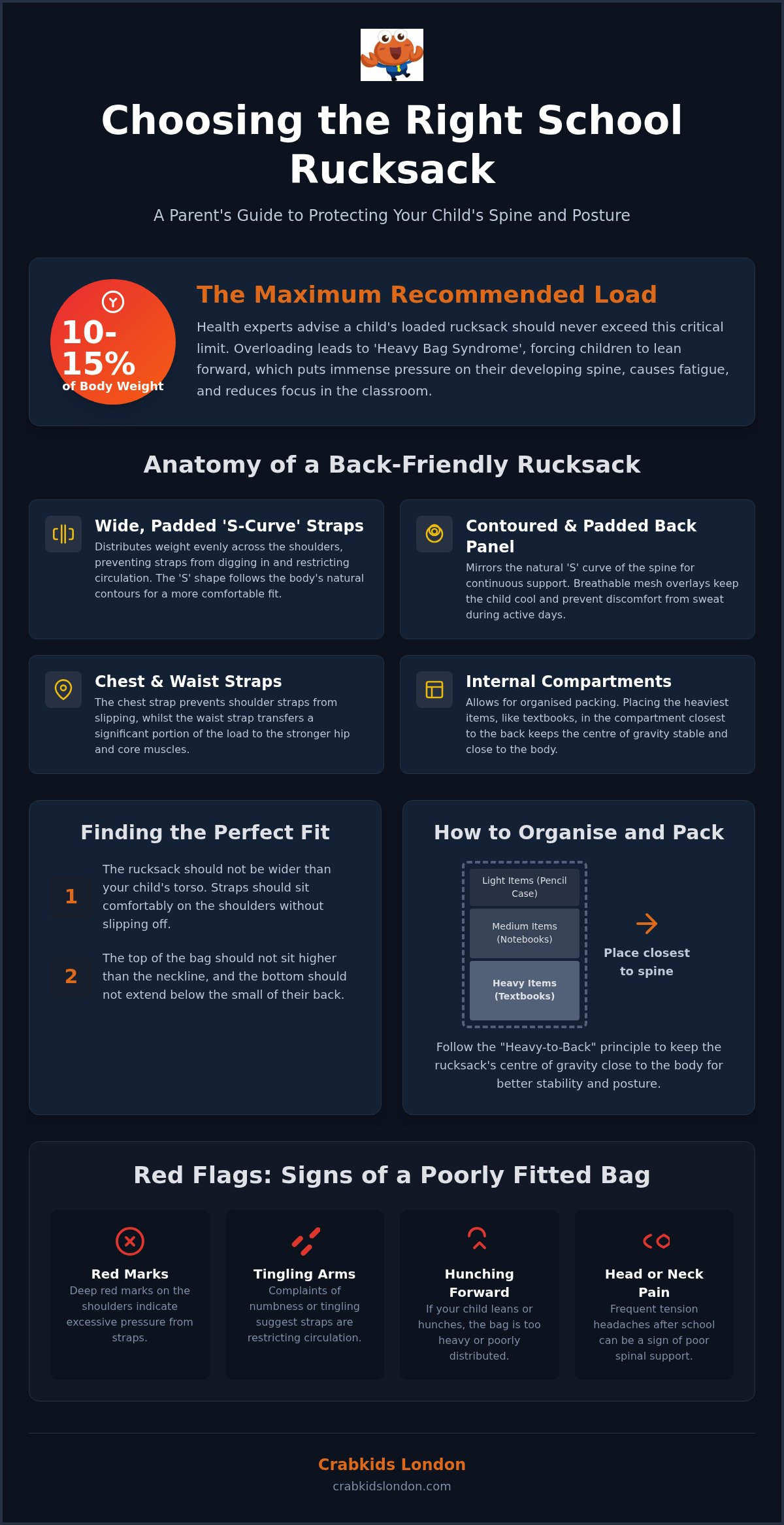
When a rucksack is poorly designed, children often suffer from 'heavy bag syndrome'. This occurs when a load exceeding 10 to 15 per cent of their body weight forces the child to lean forward to compensate for the pull. This constant leaning puts immense pressure on developing vertebrae and soft tissues. Over time, this poor posture whilst walking to school leads to significant physical fatigue. A tired body often results in a lack of focus in the classroom, as the child's energy is spent managing physical discomfort rather than absorbing new information.
Spinal health does not exist in isolation. There is a direct synergy between a supportive bag and properly fitted school shoes. If a child’s footwear lacks stability or correct sizing, their gait becomes uneven. This makes even the best ergonomic bag less effective because the body's foundation is weak. A reliable partner in school prep looks at the whole child, ensuring their feet and back work together to maintain a natural, healthy posture throughout the high-energy school day.
The Long-Term Benefits of Early Spinal Care
Investing in the right support now prevents musculoskeletal issues that often persist into adulthood. Proper weight distribution encourages an upright, open-chest posture, which can actually improve lung capacity by allowing the ribs to expand fully. Beyond the physical benefits, it builds healthy habits amongst children. They learn to value their physical well-being and understand how to care for their bodies during their most active developmental years.
Identifying the Signs of a Poorly Fitted Bag
Parents should regularly check for red flags that suggest a bag is failing their child. Look for red marks on the shoulders or listen for complaints of tingling arms; these indicate that straps are digging into the trapezius muscles or restricting circulation. If you notice your child leaning significantly forward or 'hunching' whilst walking, the weight is not distributed correctly. Frequent headaches or neck tension after a long school day are also common indicators that the bag is providing zero spinal support.
Anatomy of a Back-Friendly School Backpack
Selecting ergonomic school bags for children's backs requires a look beyond the external design. A high-performance bag is an assembly of specific parts that work together to neutralise heavy loads. The foundation of this system starts with wide, padded shoulder straps. These are essential for preventing the straps from digging into the trapezius muscles, which can cause numbness or restricted blood flow. Following established Backpack safety guidelines ensures that these features actually perform their intended role rather than just providing a visual illusion of comfort.
The back panel is equally critical. It should be contoured to mirror the natural 'S' curve of a child's spine, providing continuous contact and support. Without this contouring, the bag creates gaps that lead to uneven pressure points. For active British school life, look for breathable mesh overlays on these panels. This keeps the child cool during the warmer summer term or whilst running between classrooms, preventing the discomfort that often leads to slouching.
Don't overlook the chest and waist straps. Whilst often seen as optional, they are vital for weight distribution. A chest strap pulls the shoulder straps inward, preventing them from slipping and keeping the bag centred. The waist strap shifts a portion of the load to the hips; these are far better suited for carrying weight than the shoulders alone. This setup is particularly important for active children who might be running or jumping on their way to the school gates.
Structural Integrity and Load Distribution
A bag’s interior is just as important as its exterior. Effective ergonomic school bags for children's backs feature dedicated internal compartments. These allow you to position heavy textbooks closest to the spine, maintaining a stable centre of gravity. A reinforced base panel is also a necessity. It prevents the bag from sagging, which would otherwise pull the child's shoulders backwards and cause strain. Compression straps on the outside further stabilise the load, ensuring the contents don't shift whilst the child is moving across the playground.
Durability Meets Comfort
Reliability is a hallmark of a good school bag. We focus on high-denier fabrics that withstand the rough-and-tumble of daily use. Sturdy zips and buckles are non-negotiable, as they must survive being opened and closed hundreds of times under pressure. Safety is also a practical concern, so ensure the design includes reflective strips to keep your child visible during dark British winter afternoons. If you are looking for a robust solution, you can explore our range of durable school backpacks designed for longevity and spinal health.
Finding the Perfect Fit: Size and Capacity Guidelines
Even the most advanced ergonomic school bags for children's backs cannot protect a child if they are the wrong size. A common mistake is buying a rucksack for a child to "grow into". However, an oversized bag shifts the centre of gravity too far away from the spine, forcing the child to lean forward to compensate. This posture negates the benefits of any built-in support system and leads to premature fatigue before they even reach the classroom.
Use the torso rule as your primary guide. A bag should never be wider than your child's chest, and the top must always sit below the neck line. Crucially, the base should rest in the small of the back rather than hanging over the buttocks. If the bag sits too low, it creates a "pendulum effect" that pulls on the shoulders and strains the lower back with every step. Proper positioning ensures the weight remains stable and close to the body's natural axis.
Measuring Your Child for a New Rucksack
Accuracy is vital for long-term comfort. To find the right fit, measure the torso length starting from the prominent bone at the base of the neck down to the top of the hip bone. You can then compare these figures against our school bag collections to find the most suitable match for your child's current build. Whilst children go through frequent growth spurts, it is better to adjust the straps regularly than to start with a bag that is physically too large for their frame.
Capacity vs Weight Limits
Capacity is usually measured in litres, which denotes volume rather than weight. A 20-litre bag packed with a lightweight fleece is very different from a 15-litre bag filled with hardback textbooks. Health experts agree that a loaded bag should never exceed 10 to 15 per cent of a child’s body weight. For example, if a child weighs 30kg, their total bag weight should ideally stay between 3kg and 4.5kg to avoid spinal stress.
Encourage a nightly "clear out" habit amongst your children. Removing unnecessary items, such as old handouts or heavy water bottles that can be refilled at school, ensures the load stays within safe limits. This simple routine, paired with high-quality ergonomic school bags for children's backs, provides the best defence against the daily rigours of carrying school equipment. It's about carrying only what is essential for the day ahead, keeping the load manageable and the spine protected.
How to Organise and Adjust the Bag for Better Posture
Owning high-quality gear is only half the battle. Even the most advanced ergonomic school bags for children's backs require correct daily management to function as intended. If a bag is loosely fitted or poorly packed, its supportive features remain dormant. Performance depends on how the load interacts with the child's body during movement. This means parents must look beyond the purchase and focus on the daily physics of the school run.
Start with the 'Heavy-to-Back' principle. Always place the heaviest items, such as hardback textbooks or tablets, in the compartment closest to the spine. This keeps the weight aligned with the child's centre of gravity, preventing the bag from pulling them backwards. Utilise side pockets for water bottles to maintain lateral balance. If one side is significantly heavier than the other, the child will naturally lean to compensate, causing muscle strain along one side of the neck and shoulders.
Daily strap checks are essential. Straps naturally loosen through friction and the high-energy movement of the playground. Ensure your child understands how to tighten them so the bag stays snug. Most importantly, never allow 'one-strapping'. Carrying a heavy load on a single shoulder forces the spine into an unnatural curve and creates long-term postural imbalances. Using both straps is a non-negotiable rule for spinal health.
A Step-by-Step Daily Adjustment Routine
Establishing a quick routine every morning ensures the bag provides maximum support throughout the day. Follow these steps for a perfect fit:
- Shoulder Straps: Put the bag on and tighten the straps so the pack sits snug against the back without gaps.
- Chest Strap: Fasten this to pull the shoulder straps inward. This frees up arm movement and prevents the straps from slipping off narrow shoulders.
- Waist Belt: Secure the belt firmly. This simple action can transfer up to 50 per cent of the total weight from the shoulders to the hips.
- Load-Lifters: If the bag has small straps at the top of the shoulders, pull them to bring the top of the bag closer to the body, reducing sway.
Packing for Balance and Stability
A well-organised bag prevents sudden shifts in the child's centre of gravity. Beyond the heavy books, you should distribute smaller items like stationery, calculators, and snacks amongst the front and side compartments. This keeps the load stable and prevents items from rattling. Secure any loose items to ensure the contents don't shift whilst the child is running for the bus or playing at break time. To find a rucksack that makes this organisation easy, explore our range of supportive school bags designed for the active British school day.
Durable Ergonomic Solutions from Crabkids London
Crabkids London understands that a school bag is more than a simple purchase; it's a commitment to your child's daily well-being. We build rucksacks that survive the British school year, standing up to rain, mud, and high-energy playground games. Our focus remains on "Playground Proof" materials that maintain their shape and support, ensuring that back health is never sacrificed for the sake of durability. We believe that ergonomic school bags for children's backs should be a standard, not a luxury. This is why our designs prioritise long-term resilience and ease of use, giving you quiet confidence in gear that doesn't quit before the summer holidays.
Our collection includes specific, functional designs like our boys' school rucksacks, which are engineered to handle the rigours of daily activity. These products complement our wider range of durable school shoes. We know that a child’s posture is affected by their entire kit, not just what they carry on their shoulders. By providing supportive, expert-fitted footwear alongside ergonomic bags, we help create a total comfort system. This holistic approach protects their growing bodies from head to toe, ensuring they move with confidence throughout the day.
Why Parents Trust Crabkids Gear
Reliability is built into every seam and fastener. We use buckles and zips specifically designed for small, active hands, ensuring they won't fail or jam under pressure. Our fabrics are easy-to-clean and water-resistant, allowing parents to quickly wipe away playground dirt and keep the bag looking smart all term. This no-nonsense approach to quality delivers genuine value for money. It prevents the stress and expense of mid-term replacements, allowing you to focus on your child's education rather than their equipment.
Completing the Back-to-School Kit
A truly ergonomic setup doesn't stop at the bag or the shoes. Pairing our rucksacks with comfortable school socks ensures there are no distractions from blisters, slipping, or general discomfort. This total comfort system means your child can focus on learning whilst we handle the heavy lifting of physical support. When every part of the kit is organised and works together, the result is a happier, more active student. Explore our full range of ergonomic school bags for children's backs today to find a robust solution for the new term.
Setting Your Child Up for a Healthy School Year
Choosing the right gear is a fundamental part of term-time preparation. The best ergonomic school bags for children's backs combine technical support with practical durability to ensure daily comfort. By prioritising the "heavy-to-back" packing principle and ensuring the bag never sits wider than your child's torso, you are actively protecting their spinal health. These small daily adjustments, paired with a high-quality rucksack, prevent the fatigue and slouching often caused by "heavy bag syndrome".
At Crabkids London, we bring specialist school-wear expertise to every product we offer. Our rucksacks feature playground-tested durability, built to withstand the high-energy reality of childhood whilst maintaining their structural integrity. We understand the pressure of last-minute prep, which is why we provide fast UK-wide delivery to get your kit ready for the first bell. It's about providing a reliable partner that does the heavy lifting so your child can focus on their learning. Shop our collection of durable, ergonomic school bags today and give your child the support they deserve for the year ahead.
Frequently Asked Questions
Is a backpack or a messenger bag better for a child's back?
Backpacks are the superior choice for spinal health. Unlike messenger bags, which place the entire load on a single shoulder and cause the spine to tilt, a rucksack distributes weight evenly across both sides of the body. This symmetry is vital for maintaining a neutral posture. When choosing ergonomic school bags for children's backs, ensure the design features two wide, padded straps to prevent muscle strain and long-term skeletal imbalance.
How can I tell if my child's school bag is too heavy?
You can identify an overloaded bag by observing your child's physical behaviour. If they lean significantly forward or "hunch" to compensate for the weight, the bag is too heavy. Other indicators include red marks on the shoulders, complaints of tingling arms, or difficulty putting the bag on without assistance. Ideally, the total weight should never exceed 10 to 15 per cent of their body weight to prevent "heavy bag syndrome."
At what age should a child start using a bag with a waist strap?
Children should generally begin using bags with chest and waist straps from around age six, or whenever they start carrying more than a simple lunchbox. As the school curriculum demands more textbooks and equipment, these straps become essential for transferring up to 50 per cent of the load from the shoulders to the stronger hip and core muscles. It is a practical habit that protects the spine during high-energy movement.
Can a poorly fitted school bag cause permanent spinal damage?
Whilst "permanent damage" is a serious term, prolonged use of a poorly fitted bag can lead to chronic musculoskeletal issues. Continuous strain on developing vertebrae and soft tissues can cause postural habits that persist into adulthood. These include rounded shoulders and an exaggerated spinal curve. Investing in ergonomic school bags for children's backs early on helps establish a healthy foundation for their physical development and long-term well-being.
How do I clean an ergonomic school bag without damaging the padding?
To protect the integrity of the internal padding and contoured panels, you should avoid machine washing your rucksack. Instead, spot clean the exterior using a damp cloth and mild, non-biological detergent. Focus on high-wear areas like the base and straps. Never submerge the bag in water if it contains internal frames or specialised foam, as this can cause the materials to lose their supportive shape and structural integrity.
What should I do if my child refuses to use the chest or waist straps?
If your child is reluctant, explain the practical benefits of the "50 per cent weight transfer" to their hips. Often, resistance comes from straps being too tight or poorly positioned, causing discomfort. Check that the straps don't chafe the neck or underarms. Demonstrating how the bag feels lighter and more stable whilst running in the playground usually convinces them that the extra buckles are worth the few seconds of effort.
How often should I replace my child's school bag for ergonomic reasons?
You should assess the bag's fit at the start of every school year. Growth spurts can mean a bag that was perfect last September is now too small for your child's torso length. Additionally, padding can compress over time, losing its ability to cushion the trapezius muscles. If the reinforced base begins to sag or the straps show signs of fraying, it is time to replace the bag to maintain ergonomic standards.
Are expensive ergonomic bags really worth the investment for primary school?
High-quality ergonomic bags are a worthwhile investment for primary students because their spines are at a critical developmental stage. Cheaper alternatives often lack the contoured back panels and reinforced bases needed for proper support. These budget options frequently fail mid-term, leading to extra costs. A durable, specialist rucksack provides peace of mind regarding your child's posture whilst surviving the rough-and-tumble of the playground for the full academic year.