

Buying Your Child’s First Pair of School Shoes: A Parent’s Guide
The roomiest-looking shoe isn’t necessarily the best choice for your child’s first day. A first school shoe should fit comfortably now, meet the school’s requirements and be manageable for your child to fasten. Buying first pair of school shoes can feel daunting when you’re unsure how to measure growing feet or judge whether a shoe fits properly.
Think beyond size, too. A fastening your child finds tricky can make mornings harder, while the wrong material may not suit their routine. A few practical checks can help you choose a pair that works for both your child and the school day.
This guide covers how to measure both feet and check toe room, heel hold and comfort. You’ll also learn how to compare fastenings and materials with school rules and your child’s abilities, and when to check the fit again.
Key Takeaways
- Before buying first pair of school shoes, check the school’s uniform policy for required colours and acceptable styles.
- Choose a fastening your child can manage reliably as part of their everyday routine.
- Use the retailer’s size guide and check its current returns terms before ordering online.
- Try new shoes indoors on a clean surface. Watch your child walk in them before deciding they’re ready for school.
- Build a simple after-school routine for airing and cleaning shoes, and checking their condition and fastenings.
Buying a first pair of school shoes: what matters before you shop?
Choosing a first pair doesn’t need to be a guessing game. Check the fit first, confirm the shoes meet school requirements, then consider features your child can manage each day. This order helps keep appearance or the idea of buying a larger size from taking priority over comfort and suitability.
Before buying first pair of school shoes, read the school’s current uniform guidance. Check the required colour and acceptable styles rather than relying on assumptions based on another child’s uniform or a different school.
Everyday school shoes may be different from PE footwear. Schools vary in what they require pupils to wear or bring, so check the guidance before you buy and keep it to hand while comparing options.
- Fit: Prioritise comfort and a secure feel.
- School suitability: Match the colour and style to the uniform policy.
- Practical features: Consider what your child can fasten and manage independently.
When should parents start looking for the first pair?
Check the school’s requirements and look at available options early enough to try the shoes properly before your child needs to wear them. There’s no universal shopping date, as school arrangements and children’s needs differ. If shopping online, read the retailer’s current size guide and returns terms before ordering. Crabkids London’s children’s shoe size guide can help you prepare measurements for an online purchase.
Which school requirements should you check first?
Look for specific instructions on colour and acceptable styles, including any rules about shoe shape or fastening. Policies differ between schools, even for pupils of the same age. Check whether PE shoes need to be separate from everyday school shoes, and when or where each pair should be worn.
Within those requirements, choose shoes that allow natural movement and feel comfortable on your child’s feet. For background on features discussed in ergonomic toddler shoes, see the overview of fit, flexibility and room for the foot. Use it as general context, then follow the school’s rules and assess the pair you’re considering.
How should a first pair of school shoes fit?
A good fit feels secure without pinching, rubbing or slipping. Don’t rely on extra space for future growth: shoes that are too large can move around as your child walks, while shoes that are too small may press on their toes. Fit can vary between designs, so treat the size label as a starting point, not proof that a shoe is suitable.
Try on both shoes with socks similar to the ones your child will wear at school. Have them stand, then walk a few steps, so you can check the fit while they’re moving. Feet can differ slightly in size, so make sure the larger foot is comfortable too. The American Podiatric Medical Association’s children’s footwear guide recommends about 10-15 mm of room in front of the longest toe. Use this as one guide alongside the feel of the whole shoe.
What can parents check during a try-on?
Start with the toes. They should have room to move without pressing against the front. Check that the heel feels held in place and doesn’t lift noticeably with each step. Look for tightness or rubbing around the sides, and ask your child how the shoes feel while standing and walking. Take discomfort seriously: shoes should feel comfortable straight away, not need breaking in.
- Toes: Check for movement and space at the front.
- Heel: Look for a secure hold without obvious slipping.
- Sides: Watch for pressure, rubbing or marks.
- Movement: Ask your child to stand and walk, then listen to their feedback.
These checks are useful guidance, but they can’t assess every fit concern. If your child has persistent discomfort or you’re unsure about the fit, seek advice from a qualified shoe fitter or an appropriate health professional.
How can you check fit when buying online?
Measure your child’s feet using the retailer’s current instructions, then compare the result with its size information. Crabkids’ children’s shoe size guide is a practical place to start. Don’t choose by age alone or assume the same size will fit every design. Before ordering, check the seller’s current returns information so you know what options apply if the fit isn’t right.
When the shoes arrive, assess them indoors on a clean surface. Repeat the standing and walking checks before deciding whether they fit. If you’re comparing children’s school shoes online, browse Crabkids’ school-shoe range with the size guide to hand.
Which first-school-shoe style and fastening suits your child?
The right style meets school rules and works for the child who’ll wear it. A smart shape won’t help if your child can’t manage the fastening during a busy morning. An easy fastening still needs to hold the shoe securely. Compare options with the school’s guidance and your child’s current skills, rather than choosing by age or appearance alone.
| Fastening | Ease of use | Check before choosing |
|---|---|---|
| Hook-and-loop | May be simpler for a child who’s still learning to fasten shoes independently. | Check that your child can pull the straps across and secure them firmly. Confirm the style is allowed by the school. |
| Laces | Can suit a child who can tie and tighten them reliably. | Make sure your child can secure the laces without help and that the school accepts the style. |
Are hook-and-loop fastenings or laces better for a first pair?
Neither is automatically best. Hook-and-loop fastenings may make shoes easier to put on and take off for a child still learning to manage them independently. Laces may suit a child who can tie and secure them consistently. Before buying first pair of school shoes, let your child practise the fastening. Check whether they can manage it confidently without rushing or leaving the shoe loose.
How should you compare material and everyday practicality?
First, check the school’s rules on colour, finish and style. Then think about your child’s routine. Shoes worn throughout the school day may need regular cleaning and time to air afterwards, so consider what care you can manage. Follow the instructions for the specific pair, as different materials can need different treatment.
Check the product details rather than assuming that every shoe in a broad material category has the same construction, feel or care needs. Look for confirmed information about materials and features on the individual product page. If a detail isn’t stated, ask the retailer instead of relying on appearance or a general description.
A fastening your child can manage, a finish you can care for and a style that follows uniform guidance can make the daily routine simpler. Compare practical features as well as appearance.
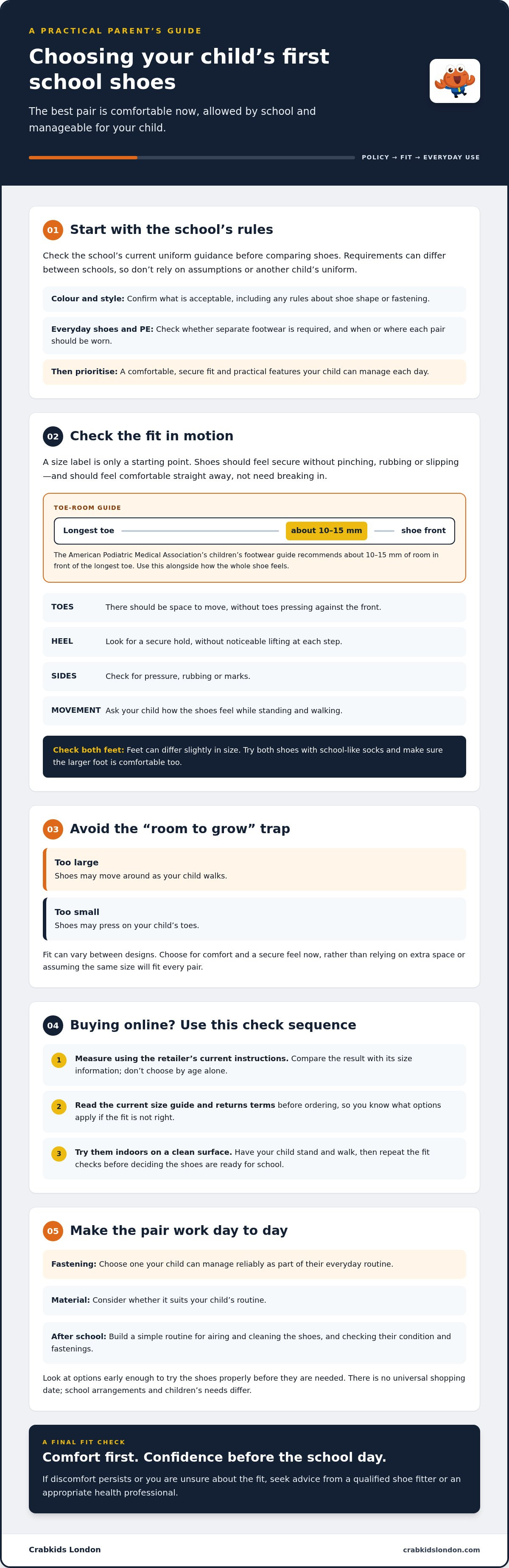
What should you do when choosing and trying on the first pair?
Work through the school requirements, fit and practical details in that order. Involve your child, but consider their feedback alongside how the shoes fit and work in practice. If you’re buying first pair of school shoes online, check the retailer’s current size guidance and returns terms before ordering.
What is a useful first-shoe shopping checklist?
- Confirm the school rules. Check the current uniform guidance for colour, acceptable styles and whether PE shoes need to be separate.
- Consider the daily routine. Think about your child’s school day and which fastening they can manage reliably.
- Measure and compare. Follow the retailer’s measuring instructions and use its current size information. Don’t choose a size based on age alone.
- Check both shoes. Have your child try the pair with socks similar to their school socks. Check each foot, as one may fit differently.
- Test movement and fastening. Ask your child to stand and walk, then fasten and unfasten the shoes themselves. Look for slipping, pinching or signs of discomfort.
- For an online order, check the terms. Read the seller’s current returns information before buying, including any instructions about trying shoes on.
Try a delivered pair indoors on a clean surface. Follow the retailer’s current terms so the shoes remain in an appropriate condition if you need to return or exchange them. Watch your child walk at a normal pace, not just stand still. A shoe that seems fine at first may feel different after a few steps.
What if the fit does not seem right?
Don’t keep a pair that pinches, slips or causes discomfort during the try-on. Recheck the measurements and size information, then review the retailer’s current exchange or returns terms. If the fit still seems uncertain or discomfort persists, seek advice from a qualified shoe fitter or an appropriate health professional.
Once you know the school’s requirements and your child’s practical needs, you can compare suitable options using clearer criteria. Explore children’s school shoes and use the retailer’s size information to help assess the fit.
How can you make the first school shoes work from day one?
A quick after-school routine can help you notice changes in comfort or condition. Shoes get worn through ordinary play and school activities, so check in regularly rather than assuming the fit will stay the same or relying on a fixed growth schedule.
How can you help your child get comfortable with the shoes?
Before the first day, practise putting the shoes on, taking them off and fastening them. This lets your child get used to the steps without the pressure of a busy morning. Have them walk indoors as they normally would and ask whether anything rubs or feels uncomfortable. Don’t assume every new pair needs a set break-in period. Pay attention to how the shoes actually feel.
After school, keep the care routine simple:
- Air them: Take the shoes off and leave them somewhere they can dry naturally.
- Check the outside: Brush or wipe away dirt using a method suitable for the shoe’s material.
- Inspect the fastening: Look for damage, loose laces or hook-and-loop straps that no longer hold securely.
- Ask your child: Find out whether the shoes felt comfortable throughout the day.
Follow the care instructions for the specific shoes rather than using the same cleaning method for every material. A regular routine makes it easier to spot changes and get the pair ready for the next school day.
When should you check the shoes again?
Check the fit whenever your child mentions discomfort or says the shoes feel different. Look for visible wear and damaged fastenings, and consider whether either affects how securely the shoes fit. If discomfort continues, don’t dismiss it as something your child simply needs to get used to. Reassess the fit and seek qualified advice if concerns remain.
For more ideas on checking fit alongside everyday wear, read a school shoe fit and durability guide. You can also use this school shoe care guide to help shape a suitable cleaning routine.
Buying first pair of school shoes is only the start. Paying attention to comfort, condition and secure fastenings helps you respond as your child’s needs change. Find school shoes for your child.
Choose a first pair with confidence
Buying first pair of school shoes feels more manageable when you follow a clear order: check the school’s rules, assess the fit on both feet and choose a fastening your child can manage. Don’t buy shoes to grow into or rely on the size label alone. Have your child stand, walk and practise the fastening during a short try-on at home. This can help you spot discomfort before the first day.
Keep checking in once school starts. Your child’s comfort can change, and regular checks of fit, wear and fastenings can help you notice when the shoes need attention. Cleaning and airing them can also become a practical part of the after-school routine.
Crabkids London sells boys’ and girls’ school shoes online, described by the brand as comfortable, durable and suited to active school life. Explore Crabkids’ school shoes and compare options using the school guidance and fit checks in this guide.
Frequently Asked Questions
When should I buy my child’s first pair of school shoes?
Buy them early enough to check the fit and sort out an unsuitable pair before your child needs to wear them. If you’re buying first pair of school shoes, first check the school’s uniform guidance and whether PE shoes are separate. There isn’t one ideal date for every family, as school arrangements, availability and children’s needs vary. If ordering online, leave time to try the shoes indoors and check the retailer’s current returns terms.
How do I know if my child’s first school shoes fit properly?
A well-fitting shoe should feel secure without pinching, rubbing or slipping. Check both feet with your child standing and wearing socks similar to their school socks. Their toes should have room to move, the heel should stay in place as they walk and the sides shouldn’t feel tight. Ask your child how the shoes feel, but also look for signs of pressure or discomfort.
Should I buy school shoes a size bigger so my child can grow into them?
No. Don’t choose an oversized pair to try to extend its use. Shoes that move around may feel unstable, while shoes that are too small can press on the toes. The American Podiatric Medical Association advises leaving around 10-15 mm in front of the longest toe. Treat that as a fitting guide, not a reason to buy a larger size, and check the actual shoe on both feet.
Are hook-and-loop fastenings or laces better for a child starting school?
Neither fastening is best for every child. Hook-and-loop straps may be easier for a child who’s still learning to manage shoes independently. Laces can suit a child who can tie and secure them reliably. Check that the school allows the style, then let your child practise before school starts. The useful test is whether they can fasten the shoes securely and manage them as part of their usual morning routine.
Can I measure my child’s feet at home before buying school shoes online?
Yes. Measure at home using the retailer’s current instructions, then use its size guide to find a starting point. Don’t estimate from your child’s age or the label on their existing shoes. Feet can differ, so measure both and use the larger foot when comparing sizes. Once the shoes arrive, try them indoors and check how they feel while standing and walking. Read the seller’s current returns information before ordering.
Does my child need separate shoes for PE and the classroom?
That depends on the school, so check its current uniform or PE guidance before buying. Some schools ask pupils to bring separate PE footwear, while others give different instructions. Don’t assume the rules are the same everywhere or that everyday school shoes will be suitable for PE. Confirm what your child needs for classroom wear and sport, then choose each pair for its intended use.
How often should I check whether my child’s school shoes still fit?
Check the fit regularly and whenever your child says the shoes feel uncomfortable or different. Look for worn areas and damaged fastenings that may affect how the shoes fit or stay on. Have your child stand and walk in the shoes as part of the check. If discomfort persists or you’re unsure about the fit, seek advice from a qualified shoe fitter or appropriate health professional.