

Best Way to Polish Children's School Shoes: A Practical Guide
What if the best way to polish children's school shoes starts with checking what they’re made of? A quick shine can make suitable leather look smart again, but the wrong product or technique may mark or damage other materials.
Scuffs and dull patches are hard to avoid after busy school days, and it isn’t always clear which polish or tools to use. A simple rule helps: identify the material first, then choose a compatible care routine.
This guide explains how to prepare, polish and buff suitable leather school shoes. You’ll also learn what to check on the care instructions, how to use products cautiously around children, and why patent leather, suede and fabric need different care from traditional polish. The aim is a practical routine that helps keep shoes presentable without adding unnecessary steps or risking avoidable damage.
Key Takeaways
- The best way to polish children's school shoes is to identify the material first and choose care that’s compatible with it.
- Brush off loose dirt before polishing so grit is less likely to leave marks as you work.
- Test polish on a discreet area, then apply a small amount with a soft cloth and buff when appropriate.
- Light scuffs may respond to careful cleaning, but peeling, deep scratches or a damaged finish may need a different solution.
- Keep shoe care manageable by checking for visible dirt or dullness and following the shoe’s care instructions.
The best way to polish children's school shoes starts with the material
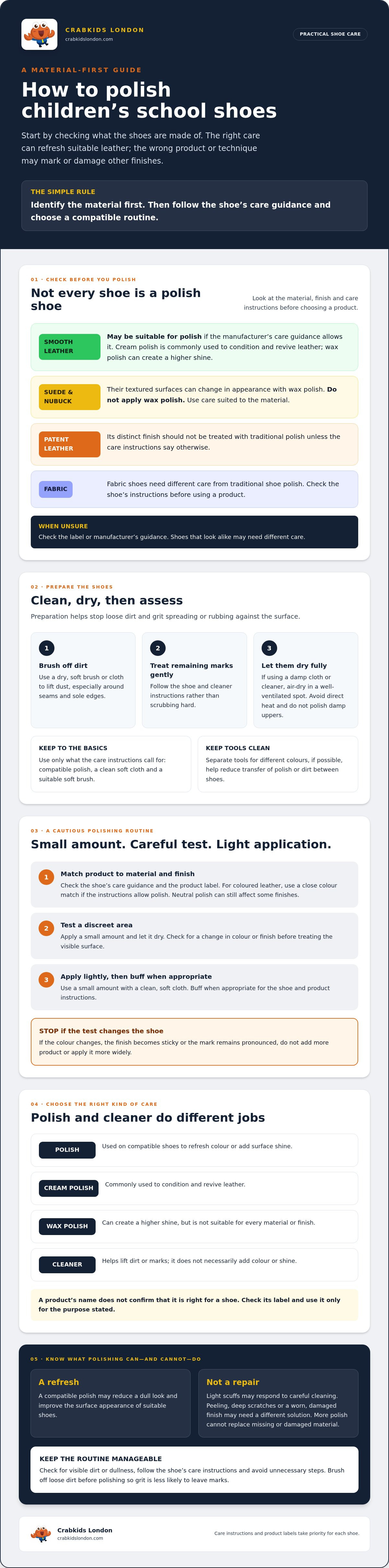
School shoes face playgrounds, corridors and changing weather. A manageable care routine can help keep suitable shoes looking smart, but the first step isn’t reaching for a tin or bottle. Check the material and care instructions. The best way to polish children's school shoes depends on what their uppers are made from and how they’re finished.
Polishing means applying a compatible product to improve the appearance of a shoe’s surface, for example by refreshing its colour or adding shine. It can reduce a dull look, but it won’t repair every deep scuff, scratch or worn finish. More polish can’t replace missing or damaged material.
Which school shoes can be polished?
Smooth leather may be suitable for polish if the manufacturer’s care guidance allows it. Suede and nubuck have textured surfaces, so wax polish can change their appearance. Don’t apply it to them. Fabric shoes also need different care. Patent leather has a distinct finish and shouldn’t be treated with traditional polish unless the care instructions say otherwise.
If you’re unsure of the material or finish, check the label or manufacturer’s guidance before using any product. Don’t assume that shoes which look alike can be cared for in the same way.
Polish, cream or cleaning product: what is the difference?
Polish is used to refresh colour or add surface shine on compatible shoes. Cream polish is commonly used to condition and revive leather, whilst wax polish can create a higher shine. A cleaning product has a different job: it helps lift dirt or marks, rather than necessarily adding colour or shine. Product names and instructions vary, so check that the product is suitable for the shoe material before applying it.
Material compatibility means choosing a shoe-care product only after confirming that it suits the shoe’s material and finish. This matters more than whether a product is called a cream, wax or cleaner. For a general overview of shoe polish and the types available, see Wikipedia, then follow the shoe and product instructions for practical care.
For a cautious first try, test a small amount on a discreet area and let it dry before treating the visible surface. If the colour changes, the finish becomes sticky or the mark remains pronounced, stop rather than adding more product. Polishing is for compatible surfaces that need a refresh, not a fix for peeling, deep damage or a finish that has worn away.
Prepare school shoes properly before applying polish
Preparation helps prevent dirt spreading across the shoe or grit rubbing against the surface. Before you start, set out only what the shoe’s care instructions call for:
- A polish compatible with the shoe’s material and finish
- A clean, soft cloth for applying product and buffing
- A suitable soft brush for removing dust and loose dirt
Keep the cloth and brush clean, and use separate tools for different colours if you can. This reduces the chance of transferring polish or dirt between shoes.
Clean and dry the shoes without rushing
Start with a dry, soft brush or cloth to lift surface dust, especially around seams and the edges of the sole. Removing loose grit first helps stop it marking the shoe as you work. For marks that remain, follow the shoe and cleaner instructions rather than scrubbing hard. General guidance on why you should clean your shoes before polishing supports this simple first step.
If you use a damp cloth or cleaner, let the shoes dry fully before applying polish. Leave them in a well-ventilated spot and avoid radiators, hairdryers or other direct heat, which can affect the material. Don’t polish damp uppers, as a rushed application can leave an uneven finish.
Choose a compatible polish and test it first
Match the product to both the shoe material and its finish, checking the manufacturer’s care guidance and the product label. For coloured leather, choose a close colour match if the instructions allow polish. Neutral polish may be an option, but it still needs to be compatible and can affect the appearance of some finishes.
Before treating the visible area, apply a small amount to a discreet spot and let it dry. Check for a change in colour or finish. If anything looks different, stop and don’t apply it more widely.
Crabkids London lists a leather shoe-cleaning lotion. Check its instructions and confirm it suits the particular shoe before use. A cleaning lotion isn’t automatically a polish, so use it only for the purpose stated on its label.
How to polish children's school shoes in simple steps
Once the shoes are clean, fully dry and confirmed as suitable for polish, keep the application light. You don’t need specialist equipment: a compatible polish, a clean soft cloth or appropriate applicator, and a clean brush or cloth for buffing are usually enough. Follow the shoe-care and product instructions throughout.
- Prepare the work area. Place the shoes on a surface that can be wiped clean, and remove laces if they’re in the way. Make sure the polish is the right type and colour for the shoe’s material and finish.
- Use a small amount. Put a little polish on the cloth or applicator, rather than directly onto the shoe. It’s easier to add a small amount than to remove an excess layer.
- Apply in light, even strokes. Work across the compatible surface in small sections, spreading the polish thinly. Use gentle, steady movements to avoid blobs or uneven patches. Keep the product away from seams, trims and different materials unless its instructions confirm they’re suitable.
- Let the polish dry as directed. Check the label for the recommended drying time and don’t rush this stage. Avoid adding another layer while the first is still wet or tacky.
- Buff gently. Use a clean, soft brush or cloth suited to the shoe’s finish. Work over the polished area with light strokes until it looks even. Stop if the surface starts to look marked or the finish changes.
Apply and store shoe-care products according to their labels, and keep them out of children’s reach. Let the shoes dry as directed before wearing them.
Apply a thin, even layer
More polish doesn’t necessarily mean more shine. A heavy coating can sit unevenly on the surface and may be harder to buff away. The best way to polish children's school shoes is to build a neat finish with a small amount of compatible product, following its label rather than applying extra polish to chase a stubborn mark.
Let the polish dry, then buff
Drying instructions differ between products, so use the stated guidance instead of guessing. A gentle buff can refresh the appearance, but it won’t repair deep scratches, peeling or a worn finish. For broader shoe-care guidance, Put This On’s simple shoe care routine offers useful context on caring for footwear and using different types of polish.
Avoid polish problems: colour changes, marks and stubborn scuffs
A shoe looking darker, patchy or marked after polishing can be worrying. An unsuitable product, too much polish or a rushed application may alter the surface rather than improve it. Stop if the colour changes or the finish reacts, and check the product label and shoe-care guidance before doing anything else.
Polish can improve a shoe’s appearance, but it isn’t a repair treatment. It may help refresh a dull surface or disguise light marks on a compatible material. It won’t replace a peeling coating, fill a deep scratch or restore a finish that has worn away.
What should you do if polish changes the colour?
Stop applying it. Don’t add more product to try to cover the change, as another layer may make the colour or finish less even. Check both the polish label and the shoe’s care instructions before considering a cleaner. Use one only if its directions confirm it’s suitable for that material and finish. A colour change may not be reversible at home, so avoid experimenting with household products or vigorous rubbing.
When will polishing not remove a scuff?
Look closely at the mark. A dull area or light surface mark may respond to careful cleaning and compatible polish. A deep scratch, peeling coating or damaged finish is different: polish may sit unevenly and draw attention to the wear rather than hide it. Structural damage, such as a sole coming away, also needs more than surface care.
Don’t scrub hard to force a result. Aggressive rubbing can worsen visible wear, particularly where the finish is already compromised. If a mark remains after gentle, appropriate care, stop and follow the manufacturer’s advice rather than layering on more product.
Consider how the shoes feel as well as how they look. If they still feel comfortable and secure, a persistent cosmetic mark may not affect everyday wear. If damage makes them uncomfortable or less serviceable, don’t rely on polish to solve it. The best way to polish children's school shoes includes knowing when to stop and reassess, not just trying another coat.
For children’s school shoes and shoe-care products, explore the range at Crabkids London.
Build a simple school-shoe polishing routine that lasts
A routine doesn’t need a fixed polishing day. Check shoes regularly and respond to what you see: wipe off dirt after wear, let damp shoes dry naturally, and polish compatible uppers when their finish looks dull. Polishing after every wear isn’t necessary and may add product when the shoes don’t need it.
Keep the order simple: clean, dry, test, apply sparingly and buff when appropriate. Follow the care instructions for the shoe and product each time, especially if the material or finish differs between pairs. Crabkids London lists a leather shoe-cleaning lotion, but check its instructions and confirm compatibility before use. A cleaning lotion isn’t a universal polish or a substitute for material-specific care.
How often should you polish school shoes?
Let appearance and wear guide you, rather than following a set timetable. If compatible leather looks dull, a light application may refresh it. If it still looks presentable, there’s no need to polish simply because another week has passed. Regularly remove loose dirt, and allow shoes to dry naturally before storing or treating them. This keeps routine care simple without piling on product.
Know when care is no longer enough
Check more than the surface. Look at whether damage affects comfort, fit, fastenings or the shoe’s ability to stay securely on your child’s foot. A scuff may be cosmetic, but a loose sole, broken fastening or worn-through area can affect how serviceable the shoe is. Polish won’t correct those problems, so don’t keep applying it in the hope that it will.
If fit is also a concern, use the children’s shoe sizing guide as a reference. Replace shoes when they’re no longer comfortable or secure, rather than relying on shoe care to extend their use indefinitely.
When existing shoes are no longer suitable, explore boys’ school shoes and girls’ school shoes at Crabkids London.
Keep school-shoe care simple and suitable
The best way to polish children's school shoes is to start with the material, then use only care products that suit its finish. Clean away loose dirt, let shoes dry, test products discreetly and apply polish sparingly. Gentle buffing can refresh compatible surfaces, but deep scratches, peeling or worn finishes may need more than polish.
Keep an eye on shoes as they’re worn. Regular cleaning and polishing when a suitable finish looks dull can help keep them presentable without turning shoe care into a lengthy chore. If damage affects comfort, fit or security, consider whether the shoes are still right for everyday wear.
Crabkids London offers children’s school shoes and shoe-care products, along with children’s bags and accessories. If it’s time to find a suitable replacement, explore children’s school shoes. With a product that suits the material and a simple routine, you can care for school shoes with confidence.
Frequently Asked Questions
Can you polish children's school shoes with ordinary shoe polish?
Sometimes, but it depends on the shoe material, finish and polish label. Smooth leather may be suitable if the manufacturer’s instructions allow it; suede, nubuck and fabric need different care. The best way to polish children's school shoes is to match the product to the material, choose a suitable colour and test a small amount on an inconspicuous area first. If you can’t identify the material, don’t guess. Check the care guidance before applying anything.
How often should you polish children's school shoes?
There’s no single polishing schedule that suits every child or pair of shoes. How often they need attention depends on wear, material, visible dullness and the shoe-care instructions. Remove loose dirt regularly, then polish compatible shoes when their finish needs a refresh. Avoid polishing after every wear, as extra product isn’t always needed. If shoes are damp, let them dry naturally before treating them.
Should you clean school shoes before polishing them?
Yes. Remove loose dirt and grit first with a soft, dry brush or cloth, as rubbing particles into the surface may leave marks. For remaining dirt, follow the shoe’s care guidance and any cleaner’s instructions rather than scrubbing hard. Let the shoes dry fully before polishing. Starting with a clean, dry surface that’s suitable for polish makes it easier to apply the product evenly and avoid unnecessary mess.
Can shoe polish remove scuffs from school shoes?
Polish may refresh the appearance of light surface marks on compatible shoes, especially if the product and colour are suitable. It won’t reliably repair deep scratches, peeling finishes or structural damage. Test first, apply only a small amount and avoid forceful rubbing, which may worsen visible wear. If a scuff remains prominent, stop rather than adding more layers. Polish can improve appearance, but it can’t replace damaged material.
What should you do if shoe polish makes school shoes darker?
Stop applying the polish and check its label alongside the shoe-care guidance. A darker appearance may mean the product or shade isn’t suitable, and adding more polish is unlikely to be a safe fix. Don’t try another cleaner or treatment unless its instructions confirm compatibility with the shoe. Testing a small amount on a hidden area first can help you spot an unwanted colour change before treating the full surface.
Can you polish suede or nubuck school shoes?
Don’t use ordinary wax or cream polish on suede or nubuck unless the manufacturer specifically recommends it. These textured finishes need care intended for their material. Check the shoe’s instructions and use an appropriate brush to remove dirt. Before applying any specialist product, confirm that it suits the finish and test it discreetly as directed. If you can’t identify the material, avoid polish until you have reliable care guidance.
How do you make school shoes shine without damaging them?
First confirm that the material and finish can be polished. Remove loose dirt, let the shoes dry and choose a compatible product in a suitable colour. Test it on an inconspicuous area, then apply a thin layer as directed. Allow the stated drying time before buffing gently with a clean brush or cloth that suits the finish. Avoid heavy layers and aggressive rubbing, which can leave marks or affect the surface.