

Are Chunky School Shoes Bad for Feet? A Parent’s Guide
Are chunky school shoes bad for feet, or does the shape of the sole tell you less than you might think? A bulky style can look heavy or restrictive, so it’s natural to wonder whether it makes it harder for a child to move comfortably. But appearance alone can’t tell you how a shoe fits or feels.
More useful checks are whether the shoe feels comfortable, gives the toes room and lets your child move naturally. A firm-looking sole isn’t automatically a problem, just as a slim profile doesn’t guarantee a good fit. When shopping online, product details and photos can help you compare styles, but your child’s comfort and movement are key.
This guide explains what a shoe’s bulk can and can’t tell you, and how to assess fit, weight, flexibility and comfort. You’ll find practical checks to use when your child walks, signs that a pair may not suit them, and guidance on when ongoing discomfort calls for individual professional advice. The aim is to help you choose school shoes with everyday comfort and durability in mind.
Key Takeaways
- Are chunky school shoes bad for feet? Bulk alone can’t answer that. Assess how the whole shoe fits and feels on your child.
- Compare weight and sole flexibility, then consider how your child walks in the shoes rather than relying on appearance.
- Check fit, fastening and comfort when trying shoes on, and look out for rubbing after wear.
- Neither chunky nor lightweight shoes suit every child automatically. Your child’s individual fit is what matters.
- Balance everyday comfort with durability when choosing school shoes for active school days.
Are chunky school shoes bad for feet, or is appearance misleading?
Chunkiness alone doesn’t tell you whether a school shoe is suitable. A thick-looking sole or substantial upper can make a shoe appear bulky, but that doesn’t reveal its weight, flexibility or fit. The more useful test is how the whole shoe feels on your child’s foot and when they move.
Two pairs can look similarly chunky yet feel very different. One may bend readily and feel light; another may feel heavier or more rigid. Rather than judging by silhouette or product photos, compare the construction and see how your child responds to each shoe.
What do parents usually mean by chunky school shoes?
“Chunky” is a visual description, not a medical category. Parents might use it for a shoe with a thick-looking sole, broad shape, layered profile or substantial-looking upper. These features can make a shoe look sturdy, but they don’t show exactly how it will move or feel.
Similar-looking shoes can differ in materials and construction, which can affect their weight and how easily the sole bends. A thick-looking sole isn’t automatically stiff, heavy or unsuitable. Assess it as part of the complete shoe, not in isolation.
Does a chunky appearance mean a shoe is harmful?
No. Appearance alone can’t show whether a shoe fits well, feels comfortable or allows your child to walk naturally. Treat bulk as a reason to look more closely, not as a verdict. General information about children's foot development offers background on footwear for young children, but it can’t determine whether a particular school shoe suits your child.
So, are chunky school shoes bad for feet? There’s no yes-or-no answer based on shape alone. Don’t assume that a chunky style harms feet or changes development. Appearance by itself can’t establish a cause and effect.
General footwear guidance can’t diagnose an individual child’s foot or explain ongoing pain. If your child regularly reports discomfort, or you notice a persistent change in how they walk, seek individual advice from an appropriate health professional. For everyday shoe choices, assess fit, weight and flexibility together.
How fit, weight and flexibility affect a child's experience
A school shoe works as a whole. Its shape, fastening, weight and sole all influence how it feels, but your child’s foot and their response to the shoe matter just as much. A pair that looks roomy might still slip at the heel, while a sturdier-looking shoe may feel comfortable and secure.
Appearance alone cannot establish fit, comfort or suitability. Check how the shoe sits on your child’s foot, then watch them walk in it. These observations tell you more than judging a pair on the shelf or from a photograph.
How can parents assess fit without relying on appearance?
Look at the toes and ask your child how the shoes feel. Their toes shouldn’t look compressed, and they should be able to move without the front of the shoe pressing against them. The fastening should hold the shoe securely, without making it feel tight or creating pressure across the foot.
Ask your child to walk at their usual pace. Notice whether they move naturally or keep adjusting their steps, and check for rubbing or heel slipping. Try the shoes with the socks they’ll normally wear to school for a more realistic fit check. For measuring context, use the children's shoe size guide.
Why weight and sole flexibility deserve attention
Weight can affect how a shoe feels over a day of walking, playing and standing. Rather than judging by appearance, have your child walk in the shoes and compare their movement with what’s usual for them. Do they seem comfortable taking ordinary steps, or do they appear to lift their feet differently or tire of wearing the shoes? One observation isn’t a diagnosis, but it can help you assess everyday comfort.
You can check flexibility by holding the shoe and gently seeing whether the sole gives where the foot bends during a step. It doesn’t need to fold easily or feel flimsy. The point is to notice whether it has some give or feels rigid throughout. There isn’t one ideal sole thickness for every child, and thickness alone doesn’t tell you how flexible a shoe is.
So, are chunky school shoes bad for feet? The useful question is whether this particular pair fits securely, feels comfortable and lets your child move without obvious difficulty. Crabkids London’s children’s school shoes are designed for active school life, making fit and everyday comfort sensible priorities when comparing options.
Chunky versus lighter school shoes: what should parents compare?
A side-by-side check can help clarify the choice, but neither a chunky nor a lightweight design is automatically right for every child. Look beyond the silhouette and compare what you can observe in the shoe and on your child’s foot.
| What to compare | Chunkier-looking shoe | Lighter-looking shoe |
|---|---|---|
| Appearance | May have a visibly thicker sole or a more substantial shape. | May have a slimmer profile, though looks don’t reveal its construction. |
| Perceived weight | Could feel heavier, but appearance alone can’t confirm this. | Could feel lighter, but check how it feels in use. |
| Flexibility | Check whether the sole gives during a step; thickness doesn’t settle it. | Check for useful movement too; a slim profile doesn’t guarantee flexibility. |
| Fit and comfort | Assess toe room, heel security and any pressure or rubbing. | Use the same checks; a lighter feel doesn’t guarantee a good fit. |
| Observed comfort | Watch your child walk and notice their feedback. | Look for the same signs of easy, comfortable movement. |
School expectations and the day ahead matter too. Check your child’s uniform policy for footwear requirements, then consider their usual routine, from walking between lessons to active play. These are practical considerations, not medical rules. For another perspective on fit and wear, see this school shoe fit and durability guide.
When might a sturdier-looking style suit everyday school wear?
Parents may look for a shoe suited to regular school use, especially when it needs to handle a busy day. A substantial appearance can be a reason to take a closer look, but it doesn’t prove greater durability, protection or foot-health benefits. Assess the actual shoe and how comfortably your child wears it. The durable boys’ school shoe guide covers related everyday-wear considerations.
When might a shoe feel too bulky for a child?
Pay attention if your child regularly resists wearing the shoes, walks less comfortably, or reports rubbing or pressure. Those signs matter more than whether the shoes look large. If pain persists or you have ongoing concerns about your child’s feet or walking, seek individual advice from an appropriate health professional.
In short, are chunky school shoes bad for feet? Bulk alone can’t answer that. Compare fit, movement and comfort alongside the demands of the school day. For durable, comfortable options designed for active school life, explore children’s school shoes from Crabkids London.
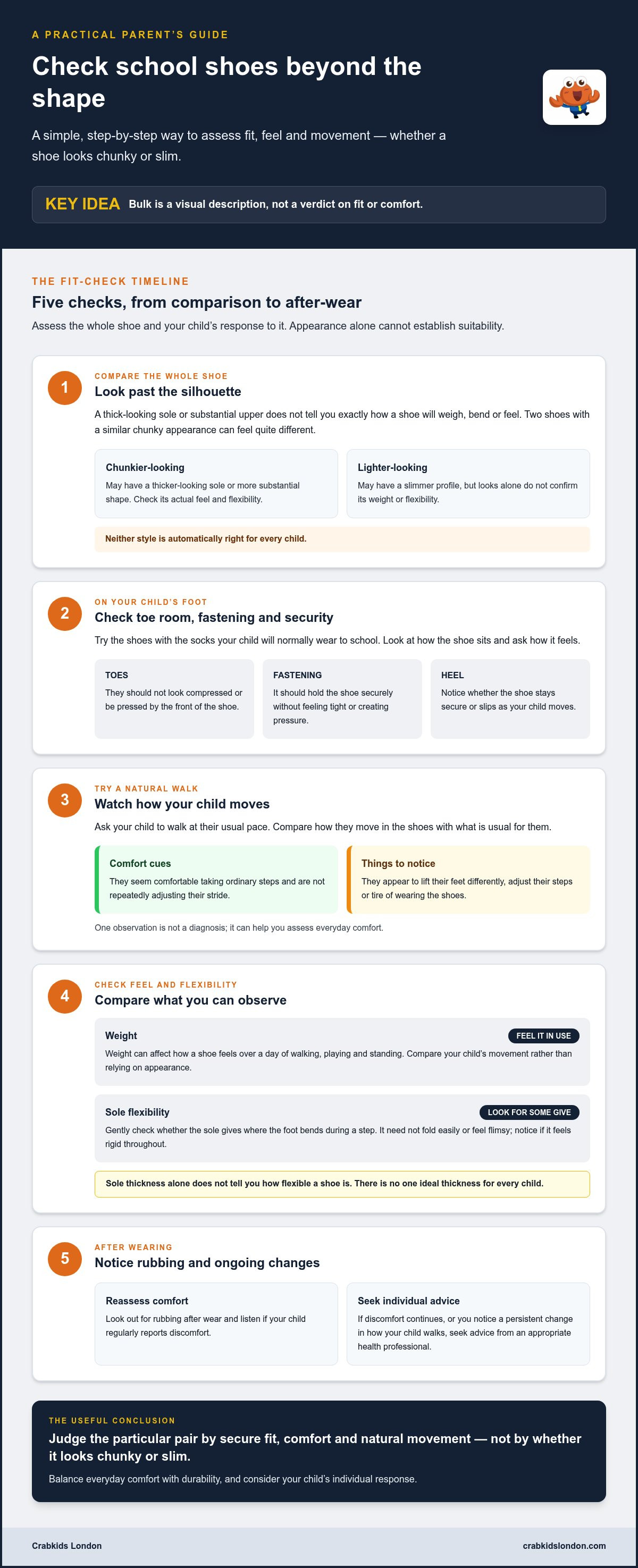
How to check chunky school shoes before and after buying
A shelf or product photo can’t show how a school shoe feels in motion. Check the pair on your child, then pay attention to their comfort during ordinary wear. Use this quick routine for chunky styles and lighter shoes alike.
A quick fit and movement check
- 1. Try both shoes on. Use the socks your child expects to wear to school. Check each foot, as the fit may differ from one side to the other.
- 2. Check the fit and fastening. Look for toes that appear pinched, and make sure the fastening holds the shoe securely without feeling tight or pressing into the foot.
- 3. Watch them walk and turn. Ask your child to walk at their usual pace and turn around. Notice whether the shoes stay in place and whether your child moves comfortably, without repeated slipping or awkward steps.
- 4. Ask how they feel. Invite your child to describe any pressure, rubbing or discomfort. Their feedback is useful, even if the shoes look like a good fit.
Don’t judge the pair on a shelf. Assess your child in the shoes, with the fastening adjusted as they would wear it for school.
What signs should prompt a closer look?
After your child has worn the shoes, check for redness or areas that look irritated, and ask whether anything rubbed or felt uncomfortable. A short period of wear won’t answer every question, so look for patterns rather than treating one isolated comment as definite proof of a poor fit.
If the same complaint returns during ordinary use, recheck the fit and fastening. Look for repeated rubbing, pressure, slipping or reluctance to put the shoes on. Comfort can vary during wear, so observe what happens without assuming that every brief change means there’s a problem.
Routine checks help you assess fit; they can’t diagnose pain or an injury. Seek individual professional advice if your child has persistent pain, an injury or an ongoing concern about their feet or walking. The answer to “are chunky school shoes bad for feet?” still depends on the individual shoe and child, not appearance alone.
Once you know what to look for, explore comfortable children’s school shoes from Crabkids London, designed for active school life.
Choosing school shoes with comfort and durability in balance
The best choice isn’t simply the shoe that looks toughest or lightest. Choose a pair that fits your child, feels comfortable as they move and suits the demands of a school day. Durability matters too: shoes worn for lessons, play and the journey to and from school need to cope with regular use. A sturdy appearance alone, however, doesn’t prove that a shoe will last longer or offer a health benefit.
A practical checklist for making the final choice
Bring the practical checks together before deciding:
- Fit: Check that your child’s toes aren’t compressed and that the shoes feel comfortable on both feet.
- Fastening: Make sure it holds the shoe securely without pressing or feeling uncomfortably tight.
- Movement: Watch your child walk and turn. Their steps should feel natural to them, not restricted by the shoe.
- School-day suitability: Consider the activities and amount of everyday wear the shoes need to handle, alongside any footwear requirements in your child’s school policy.
Keep checking the fit as your child grows, and take note if they mention recurring rubbing or discomfort. A pair that seemed comfortable at first may need another look if their experience changes. The aim isn’t to find one style that suits every child, but to choose based on the individual wearer.
How to keep the choice grounded and reassuring
Don’t reject a style solely because it looks chunky, and don’t choose it just because you like its appearance. Visual bulk can’t tell you how a shoe fits or feels in motion. General guidance can help you assess a pair, but it can’t provide personalised health advice or explain persistent pain. If you have an ongoing concern, seek individual professional advice.
So, are chunky school shoes bad for feet? Bulk alone doesn’t decide. Consider fit, comfortable movement and your child’s feedback alongside the practical demands of school wear. Crabkids London’s children’s school shoes are designed for active school life, with durability and comfort as useful considerations in everyday footwear.
Choose the pair your child can wear comfortably and securely. When you’re ready to compare options, explore the school shoe range.
Choose school shoes with confidence
So, are chunky school shoes bad for feet? Bulk alone can’t tell you. Focus on how the whole shoe fits, feels and moves with your child. Check that it stays secure without pinching, and notice repeated rubbing or discomfort. A shoe suited to your child’s school routine should balance comfort with the durability needed for regular wear.
Keep your child’s feedback at the centre of the decision. A style that looks sturdy isn’t automatically the right choice, and a slim shoe isn’t automatically more comfortable. If pain persists or you have an ongoing concern about your child’s feet or walking, seek individual professional advice.
Crabkids London focuses on durable, comfortable children’s school shoes designed for active school life. Explore durable, comfortable school shoes and use these checks to choose with confidence. The right pair is the one that feels good on your child’s feet and suits their school day.
Frequently Asked Questions
Are chunky school shoes bad for children's feet?
Not necessarily. The question “are chunky school shoes bad for feet” can’t be answered by appearance alone. Check whether the shoes fit securely, feel comfortable and let your child walk without repeated slipping or rubbing. Ask how they feel, and look for signs of pressure around the toes. If your child has persistent pain or an individual health concern, seek advice from an appropriate healthcare professional rather than relying on shoe shape.
Can heavy school shoes affect the way a child walks?
A child may find shoes awkward or uncomfortable if their weight or construction doesn’t suit them, but a substantial appearance can’t predict how they’ll feel. Have your child walk in the shoes and compare their steps with their usual movement. Notice repeated difficulty, rubbing or reluctance to wear the pair. If problems persist, seek individual advice. Don’t assume every chunky-looking shoe affects walking in the same way.
How should school shoes fit around a child's toes?
Your child’s toes shouldn’t look compressed, and the shoe should feel secure without uncomfortable pressure. Check both shoes with the socks they’ll usually wear to school, then have your child walk around. Don’t rely on the printed size alone, as fit can vary between brands, styles and children. A measuring guide can help you check their foot size, but reassess the fit as they grow or if they report discomfort.
Are flexible soles better than stiff soles for school shoes?
Not automatically. There isn’t one sole type that suits every child, and flexibility alone doesn’t prove that a shoe is suitable or harmful. Focus on how the whole shoe fits and feels as your child walks. Check that it stays secure and that movement seems comfortable. If your child regularly experiences discomfort in a particular pair, review the fit and seek individual advice if the problem continues.
What should I do if my child complains that school shoes hurt?
Take the complaint seriously and check for rubbing, pressure, slipping or visible irritation. Ask your child where and when the discomfort happens, then observe them walking in the shoes. Recheck the fit and fastening; don’t assume the chunky shape is the cause. If pain persists, is severe or follows an injury, seek appropriate professional advice for your child rather than relying on general shoe guidance.
Do children need chunky school shoes for support?
No particular appearance is necessary for every child. A chunky look alone doesn’t show whether a shoe offers useful support, and children’s needs can differ. Start by checking fit, comfort and how the shoes feel during ordinary movement. Avoid assuming that a specific shape will correct foot development or prevent problems. If your child has symptoms or specific footwear needs, ask an appropriate healthcare professional for individual guidance.